
Benelli M2-G1 Tactical Shotgun Review: 1,500 Rounds With the New R.P.O. Gas System
We fired 1,500 rounds through the Benelli M2-G1 to test its new R.P.O. gas system for reliability, fouling, recoil, and patterns against the M2 and M4.

Written By
Michael Crites
Licensed Concealed Carry Holder
Reviewed by
Editorial Team
Learn About The Editorial Team
Share:
Products are selected by our editors. We may earn a commission on purchases from a link. How we select gear.
Updated
Nov 2026
We put 1,500 rounds through the new Benelli M2-G1 to test its Rear Piston Operated gas system for reliability, fouling, light-load cycling, slug and buckshot performance, and recoil compared with the inertia-driven M2 and the M4.
The Benelli M2 has been the standard for inertia-driven semi-automatic shotguns for the past two decades, prized for its light weight and fast cycling. On August 17, 2026, Benelli changed what the M2 name means by introducing the M2-G1. Under the skin, it is almost a different gun. Built for home defense, law enforcement, and tactical use rather than field work, the M2-G1 trades the classic inertia operating system for Benelli’s newly developed Rear Piston Operated (R.P.O.) gas system.
The first reviews landed within days of launch and ran anywhere from about 100 to roughly 1,100 rounds, mostly in single range sessions, with few or no failures reported. That is a good sign, but launch-week testing leaves questions open. Few of those reviews documented interior fouling after high-volume use, worked down a ladder of light loads to find where the gun stops cycling, or compared felt recoil directly against an inertia M2 shot alongside it.
This Benelli M2-G1 tactical shotgun review covers 1,500 rounds over several sessions. We tested each claim Benelli makes for R.P.O., namely cleaner operation, less maintenance, and softer felt recoil, and we also looked at ergonomics, patterns, ammunition sensitivity, and durability.
In This Article
Verdict: Where the Benelli M2-G1 Fits
If you want a fast, soft-shooting tactical semi-auto that runs regardless of body position, mounted accessories, or payload, the Benelli M2-G1 delivers on nearly every count. Moving from inertia to a gas system removes the sharp inertia impulse, and it also fixes the old problem of heavy weapon-mounted lights or off-shoulder shooting causing cycling failures.
The classic inertia M2 is still the better buy for waterfowl and upland hunters who want the lightest gun to carry all day. As a defensive shotgun, though, the M2-G1 is one of the softest-shooting and most forgiving tactical 12-gauges you can buy, and it sits squarely between the original M2 and the battle-proven Benelli M4 in both price and capability. The National Tactical Officers Association agrees. Five NTOA members evaluated the M2-G1 through the association’s Member Tested and Recommended Program and gave it a 4.54 out of 5 “Gold Standard” rating.
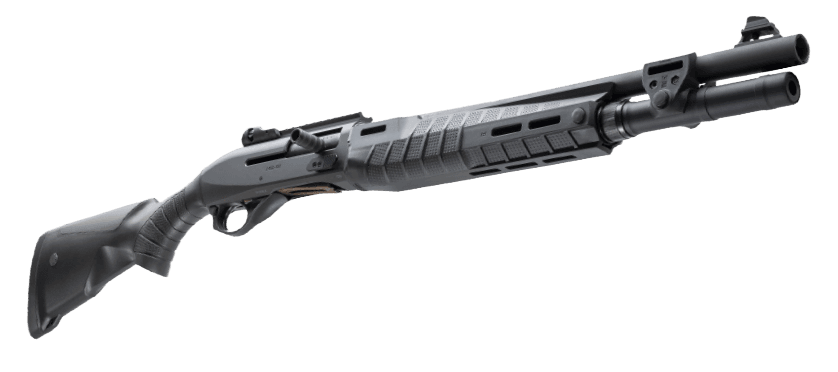
| Feature | Benelli M2-G1 (as tested: SKU 11617) |
|---|---|
Gauge | 12-gauge |
Chamber | 3-inch (2-3/4" and 3" shells) |
Operating System | Rear Piston Operated (R.P.O.) gas system with dual short-stroke pistons |
Barrel Length | 18.5 inches |
Overall Length | 39.5 inches |
Weight (Unloaded) | 8 pounds |
Capacity | 7+1 (extended magazine tube) |
Sights | Ghost ring rear and blade front with MIL-STD-1913 Picatinny rail |
Stock | Five-position collapsible stock with upgraded pistol grip |
Length of Pull | 9.25 to 14 inches |
Choke | Single flush-mount Modified |
Trigger Pull (Measured) | 6.06 pounds |
Warranty | 10 years |
MSRP | $2149 as tested (family ranges from $1829 to $2149) |
Sources: Benelli USA M2-G1 announcement
Benelli M2-G1 Models and Pricing
Benelli launched the M2-G1 as a five-model family, and the configuration you choose changes the capacity, the stock, the weight, and the price. The entry-level gray gun with a fixed standard stock holds five rounds in the tube. Every other model carries the extended magazine tube with seven rounds plus one in the chamber, and every model with the five-position stock gets the 7+1 tube by default. The fixed stock models have a 13-inch length of pull and weigh about half a pound less than the adjustable stock guns.
| SKU | Finish | Stock | Capacity | Weight | MSRP |
|---|---|---|---|---|---|
11610 | Gray | Fixed standard | 5+1 | 7.4 lbs | $1829 |
11611 | Gray | Fixed standard | 7+1 | 7.6 lbs | $1949 |
11612 | Gray | Five-position with pistol grip | 7+1 | 8 lbs | $2049 |
11617 | FDE | Five-position with pistol grip | 7+1 | 8 lbs | $2149 |
11622 | MultiCam Black | Five-position with pistol grip | 7+1 | 8 lbs | $2149 |
For buyers watching the budget, the $1,829 fixed stock 5+1 gun gives up two rounds and the adjustable stock but keeps the same R.P.O. gas system, controls, and sights. The pistol grip models are the ones most shooters will want for duty or home defense, because the collapsible stock lets the gun fit over body armor or a winter coat and then extend for a shooter in a T-shirt.
First Impressions of the Benelli M2-G1
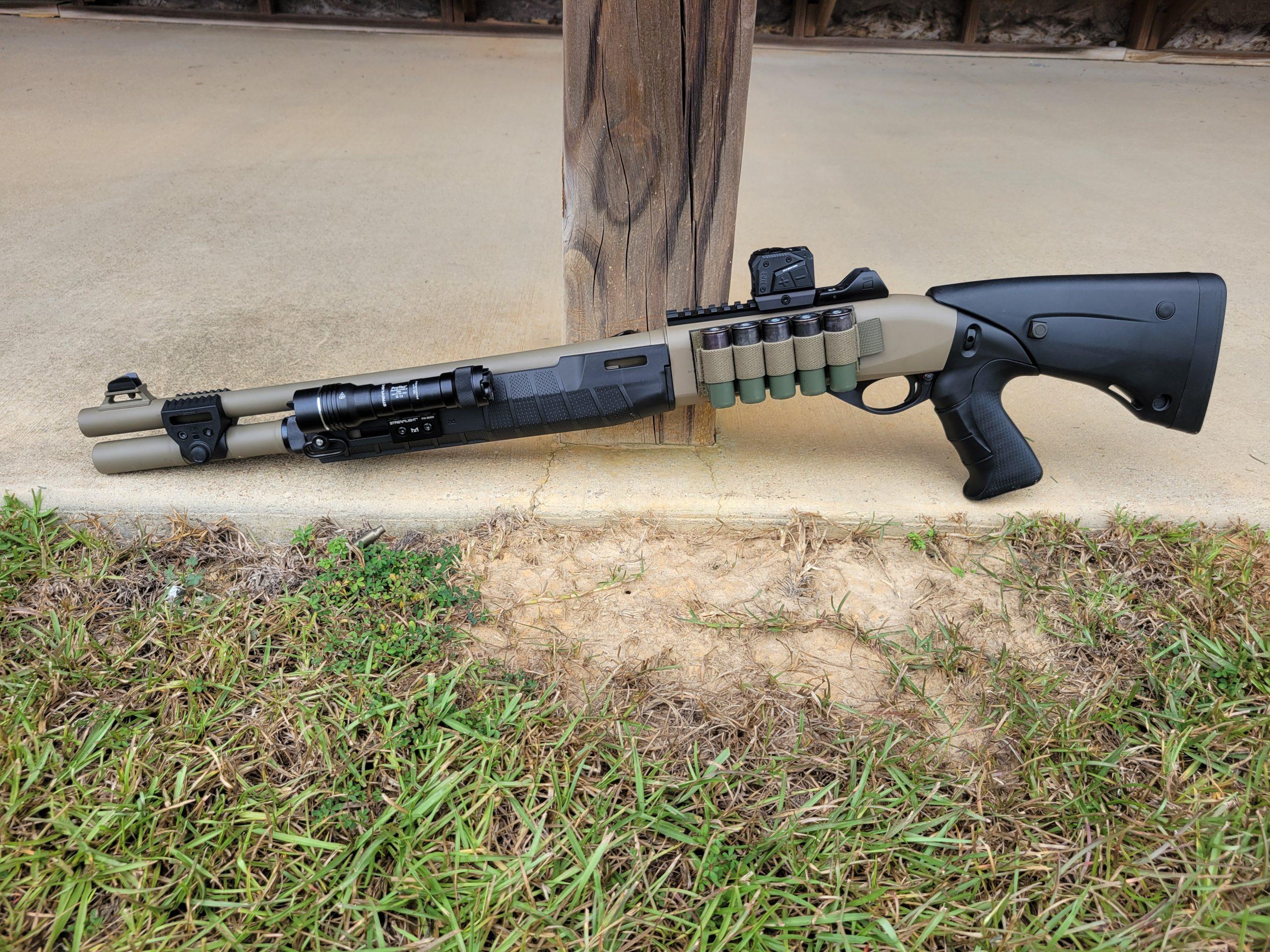
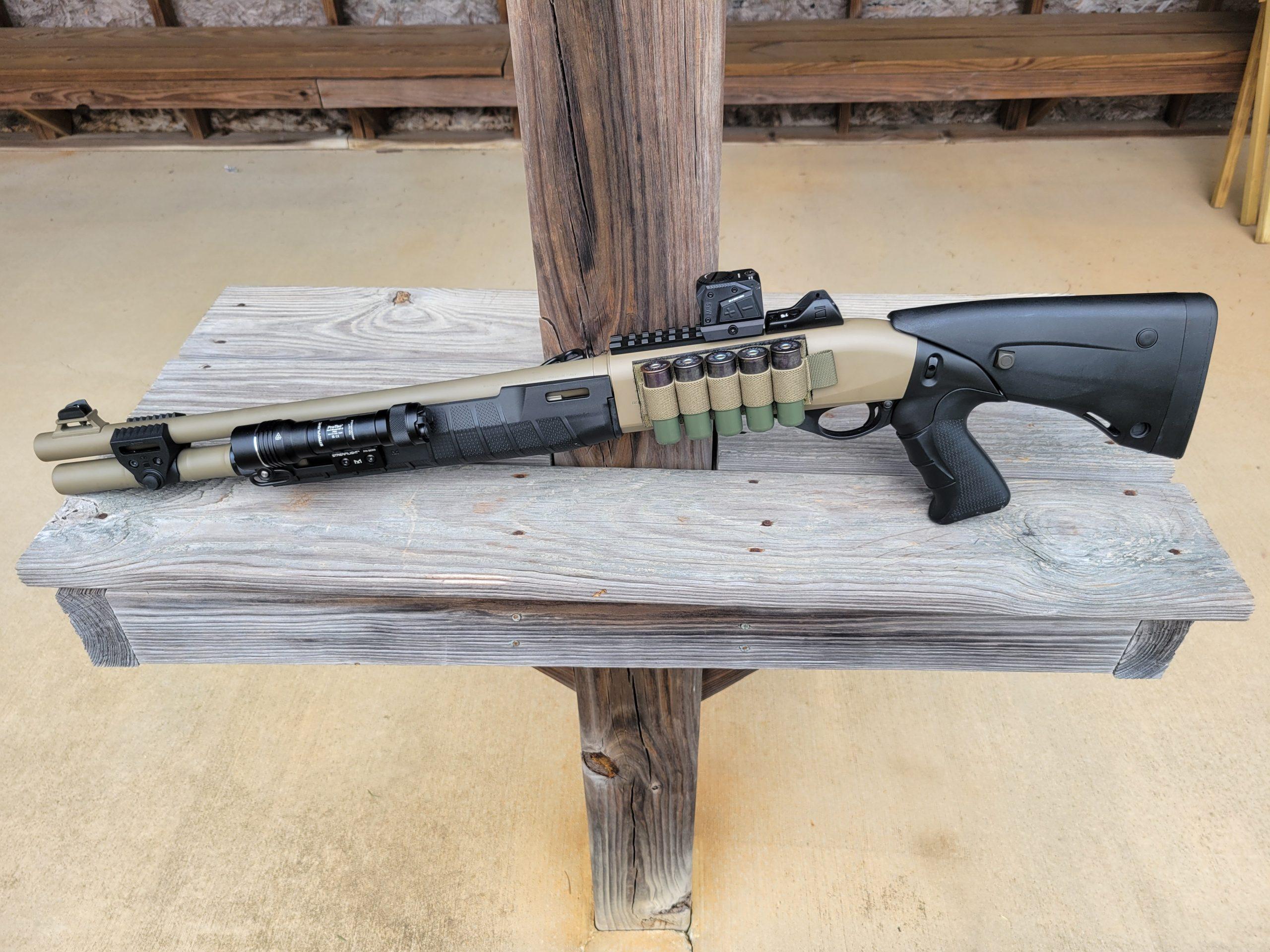
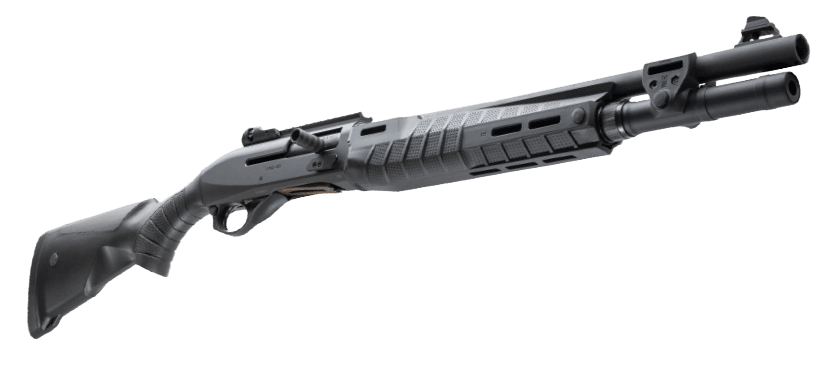
Our test gun arrived in FDE with black furniture, and it looks purpose-built for duty. Gray and MultiCam Black are the other color options. Shouldering the M2-G1 for the first time shows how the gas system changes the balance. Because the gas pistons sit rearward near the chamber instead of out along the barrel, the weight stays centered between the hands, and the gun keeps the quick handling the M2 is known for.
The stock gives a natural cheek weld that lines the eye up with the ghost ring sights without forcing your head down. The controls, including the oversized bolt release, the enlarged charging handle, and the beveled loading port, are easy to find without looking. The textured upgraded pistol grip gives positive traction and makes fast target transitions feel controlled. At about 8 pounds unloaded, this configuration weighs more than the inertia M2 Tactical and about the same as an M4 Tactical, while the fixed stock models come in lighter.
What's in the Box
The Benelli M2-G1 ships with a short list of accessories. In the box you get the shotgun with its 18.5-inch barrel and ghost ring sights, one flush-mount Modified choke tube, the owner’s manual, a warranty registration card, and a cable lock.
Benelli says the Modified constriction gives the best all-around performance with both slugs and buckshot, and our patterns backed that up. Shooters who want Improved Cylinder or a tighter constriction will need to buy additional tubes separately. We could not find a digital copy of the owner’s manual online at the time of this review.
Design and Features of the M2-G1
Receiver, Barrel, and Finish
The receiver is machined aluminum, anodized to resist salt spray, humidity, and rough handling. The M2 earned its reputation for durability in bad weather, and the M2-G1 keeps that tradition, with the operating components parkerized for corrosion resistance. The 18.5-inch barrel is smoothbore with a 3-inch chamber and accepts both 2-3/4-inch and 3-inch shells.
M-LOK Forend and Optics Mounting
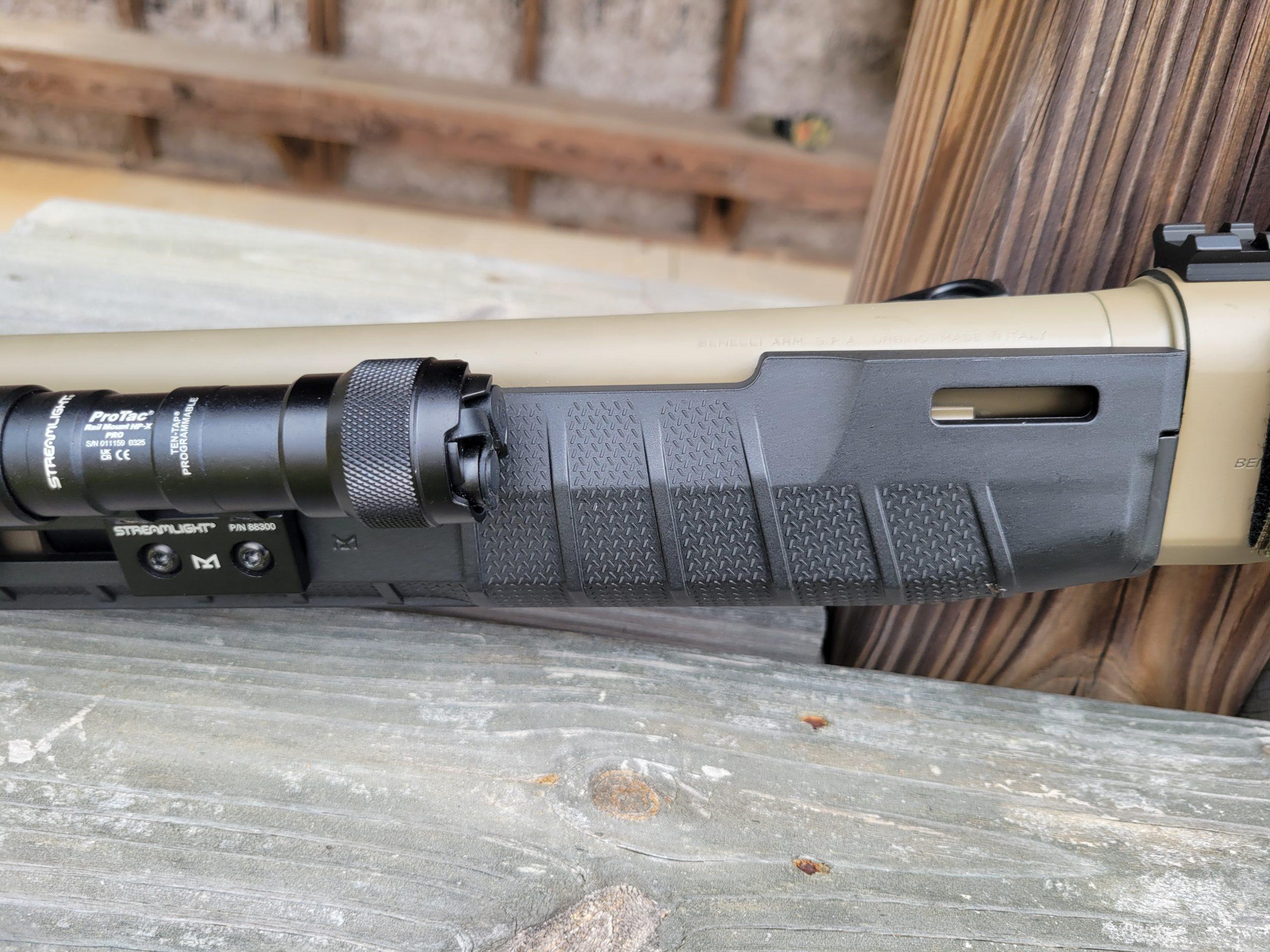
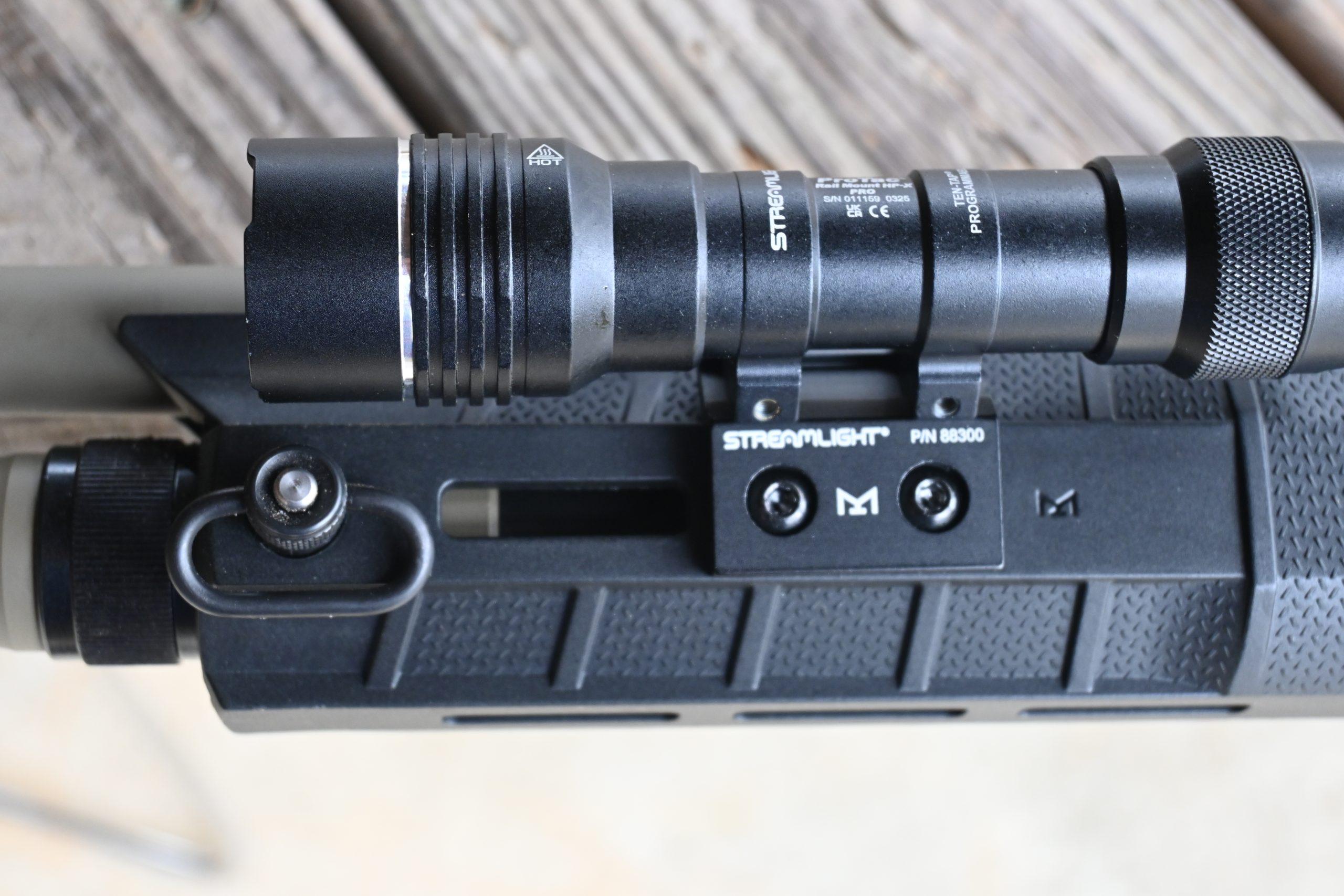
Unlike older Benelli forends, the M2-G1’s forend has molded M-LOK slots at the 3, 6, and 9 o’clock mounting positions. That lets you attach a weapon light, a hand stop, or a QD sling mount directly without bulky clamp-on barrel rings. The stippled texturing gives a good grip without chewing up bare hands.
A factory MIL-STD-1913 Picatinny rail runs over the drilled-and-tapped receiver so a red dot stays zeroed under heavy recoil. We ran a Steiner MPS on a Picatinny mount for most range sessions and saw no shift in point of impact.
Controls, Ergonomics, and Loading Port
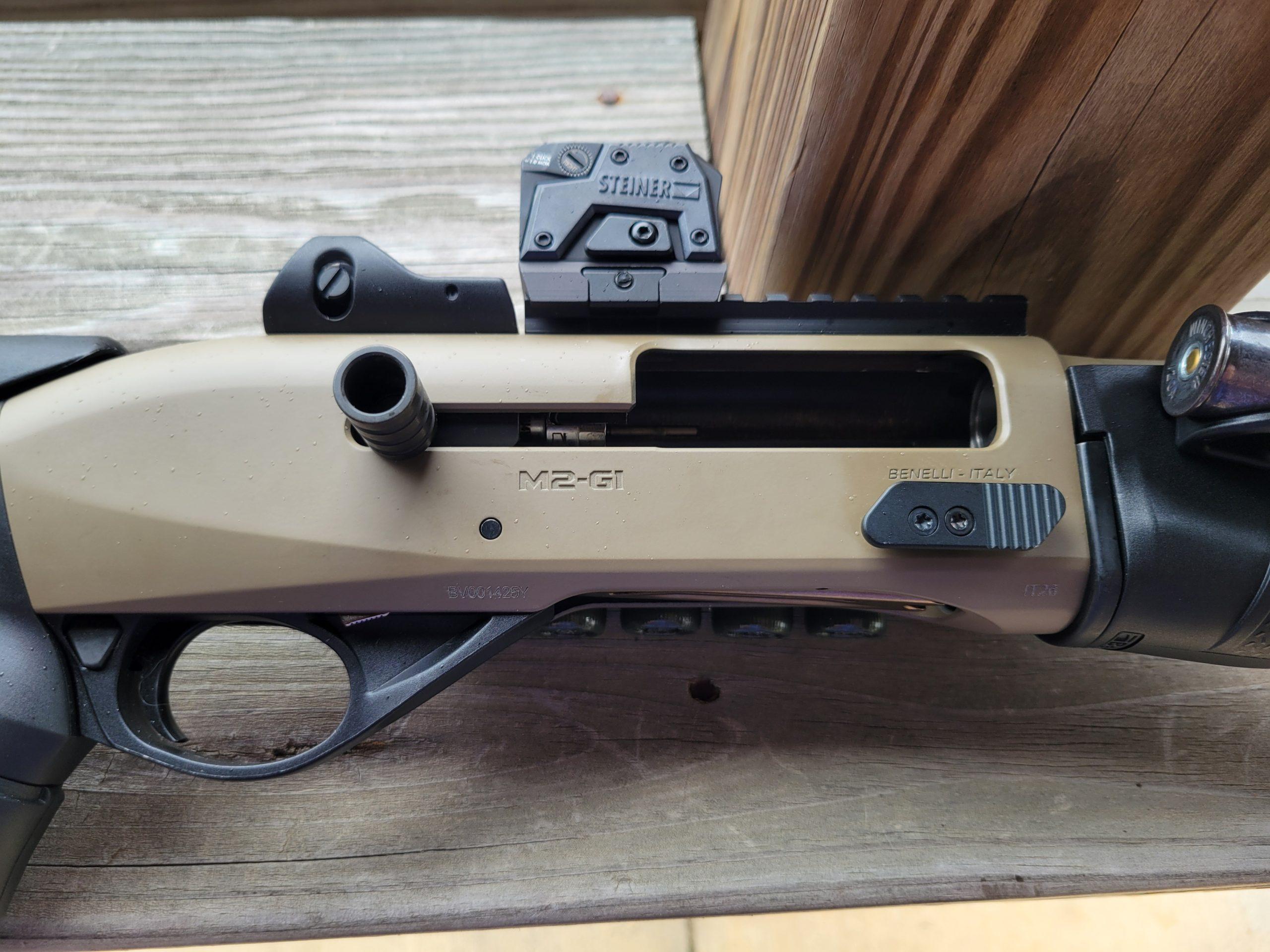
Benelli upgraded the key contact points at the factory. The knurled steel charging handle is enlarged so you can grab it with wet or gloved hands. A wide, pad-style bolt release replaces the small round button found on earlier guns. The beveled loading port and a shell lifter without sharp edges end the “Benelli thumb” problem when you quad-load or dual-load quickly.
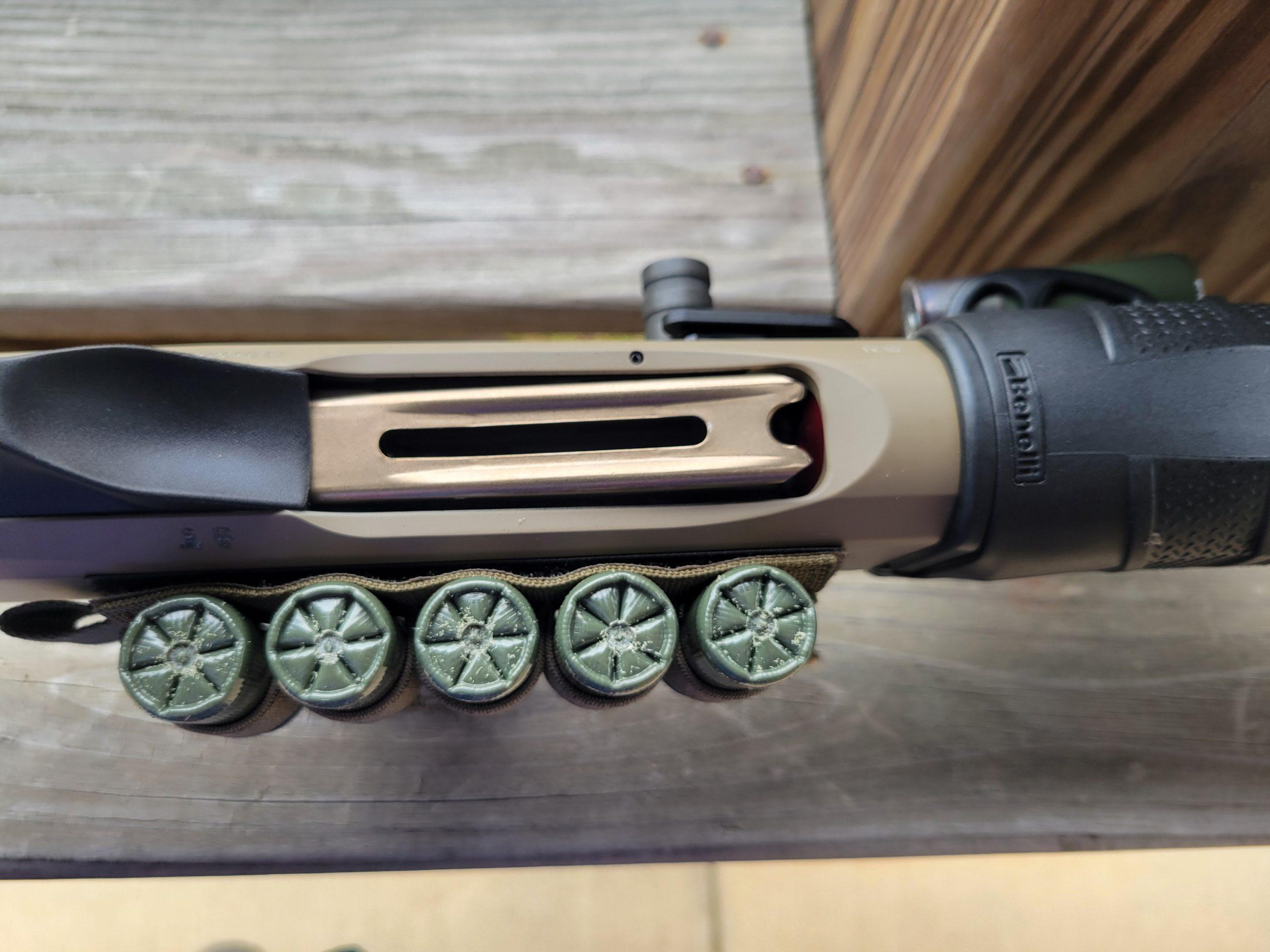
On the safety, the off-side button is kept small so you are less likely to bump the gun back onto safe by accident.
Cleaner Operation: The R.P.O. Gas System Explained
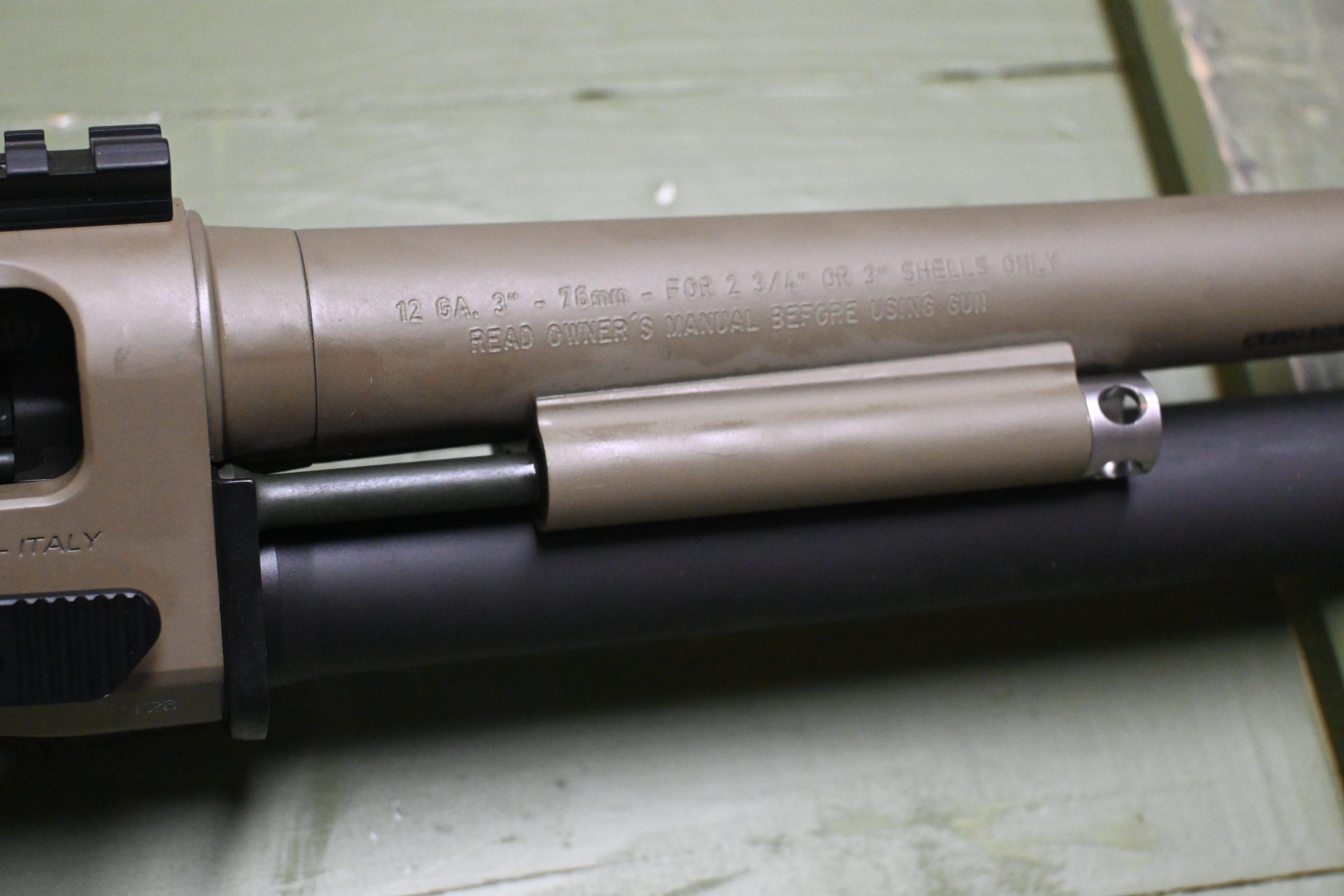
The heart of the M2-G1 is the Rear Piston Operated gas system. Most traditional gas-operated semi-automatic shotguns put their gas ports and pistons 8 to 12 inches down the barrel. A common example uses long action bars or sleeves, and it spreads carbon, unburned powder, and plastic wad shavings along the magazine tube and inside the forend.
How R.P.O. Works
R.P.O. taps propellant gas through ports just ahead of the chamber, where pressure and temperature are highest. Gas at that point is hotter and burns more completely, so less unburned carbon reaches the moving parts. The gas drives dual short-stroke pistons housed close to the chamber. The pistons travel rearward and push the bolt carrier, the rotating bolt head unlocks from the barrel extension, and the bolt body completes the cycle, extracting and ejecting the empty hull before chambering the next shell.
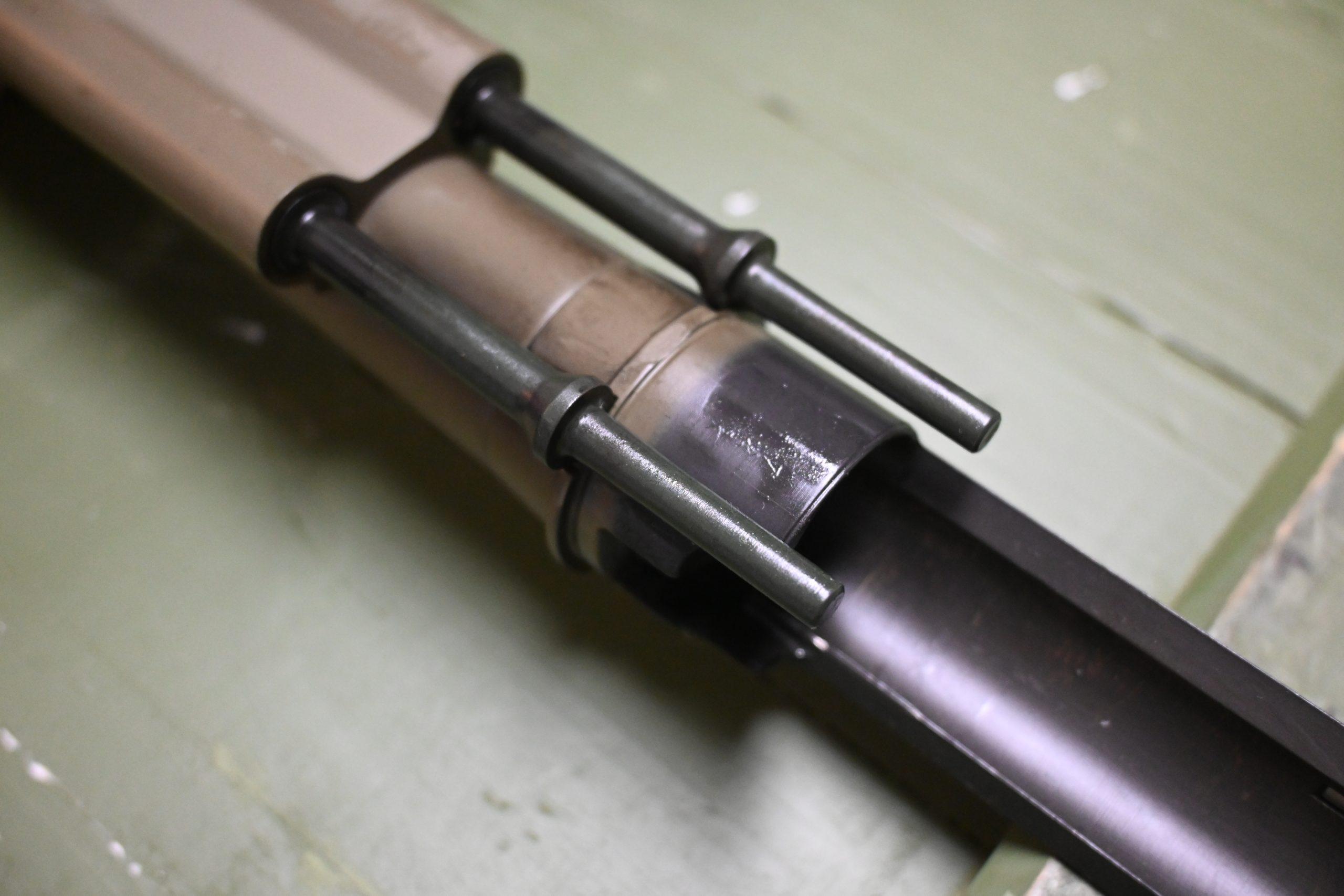
The other half of the design is the recoil system. Benelli moved the recoil spring assembly into the stock, away from the gas and carbon in the action. Keeping the recoil spring isolated is one of the main reasons Benelli says the M2-G1 will run cleaner and stay consistent over long strings of fire.
How R.P.O. Differs From the M4’s A.R.G.O. System
R.P.O. shares clear lineage with the Auto Regulating Gas Operated (A.R.G.O.) system in the M4, but Benelli is careful to say the two are not the same. A.R.G.O. is self-regulating and self-cleaning, and Benelli still treats it as its flagship combat system. R.P.O. is neither auto-regulating nor self-cleaning. In practice, that means the M2-G1 depends a little more on proper break-in and sensible ammunition choices, and its pistons will eventually need to be cleaned by hand. In exchange, it costs several hundred dollars less than an M4.
Fouling and Maintenance Results
We inspected the gun internally every 500 rounds, and R.P.O. kept the magazine tube clean. Traditional gas shotguns often need the piston scrubbed every 300 to 500 rounds to prevent sluggish cycling. The M2-G1 showed only light carbon on the short-stroke pistons, and the action never got sluggish. After 1,500 rounds of quality factory ammunition, the gun still did not need cleaning to keep running, which backs up Benelli’s claim of less maintenance for this design.
Benelli M2 Inertia vs. M2-G1 Gas Operation
Understanding how the classic inertia M2 differs from the gas-operated M2-G1 is the most important part of choosing between the two.
Inertia vs. Gas Dynamics
The classic Benelli M2 uses an inertia spring between the bolt body and the rotating bolt head. When the gun is fired, the shotgun moves rearward into your shoulder while the bolt body stays put, compressing the spring. When the spring rebounds, it unlocks the bolt head and cycles the action. That design is clean and simple, but it has two known weak points. It needs a firm shoulder mount to cycle reliably, especially with low-recoil target loads. And because the system depends on the gun moving, heavy tactical accessories such as weapon lights, side saddles, and red dot sights add mass that soaks up recoil energy and can cause failures to eject.
The M2-G1 runs on chamber pressure instead. You can fire it from the hip, one-handed around a barricade, or loaded with accessories without changing how it cycles. This is the same reason the military wanted a gas gun it could hang lights and optics on, and it is the main reason the M2-G1 exists.
Felt Recoil Evaluation
The original M2 is lightweight, which makes its recoil sharp with heavy loads. The M2-G1’s gas system diverts some high-pressure gas to drive the pistons instead of letting all of the force go straight into your shoulder, and the recoil spring compressing in the stock spreads the push over a slightly longer time. Firing 1-1/8-ounce loads at 1,250 fps side by side, the M2-G1 felt noticeably softer than the inertia M2, and muzzle rise on fast follow-up shots was lower. The roughly 1.3 pounds of extra weight helps too.
Ergonomics, Trigger, and Stock
Safety and Trigger Guard
The crossbolt safety sits at the rear of the oversized polymer trigger guard. It has a triangular profile with enlarged button faces, so you can push it off with the pad of your trigger finger while you get a sight picture. The trigger guard leaves enough room for a gloved finger.
The trigger breaks cleanly with very little creep. Over ten pulls on a digital gauge, the trigger pull averaged 2,750 grams (6.06 pounds), with less than 150 grams of variation. The reset is easy to feel and hear, which helps control during fast strings.
Five-Position Collapsible Stock and Pistol Grip
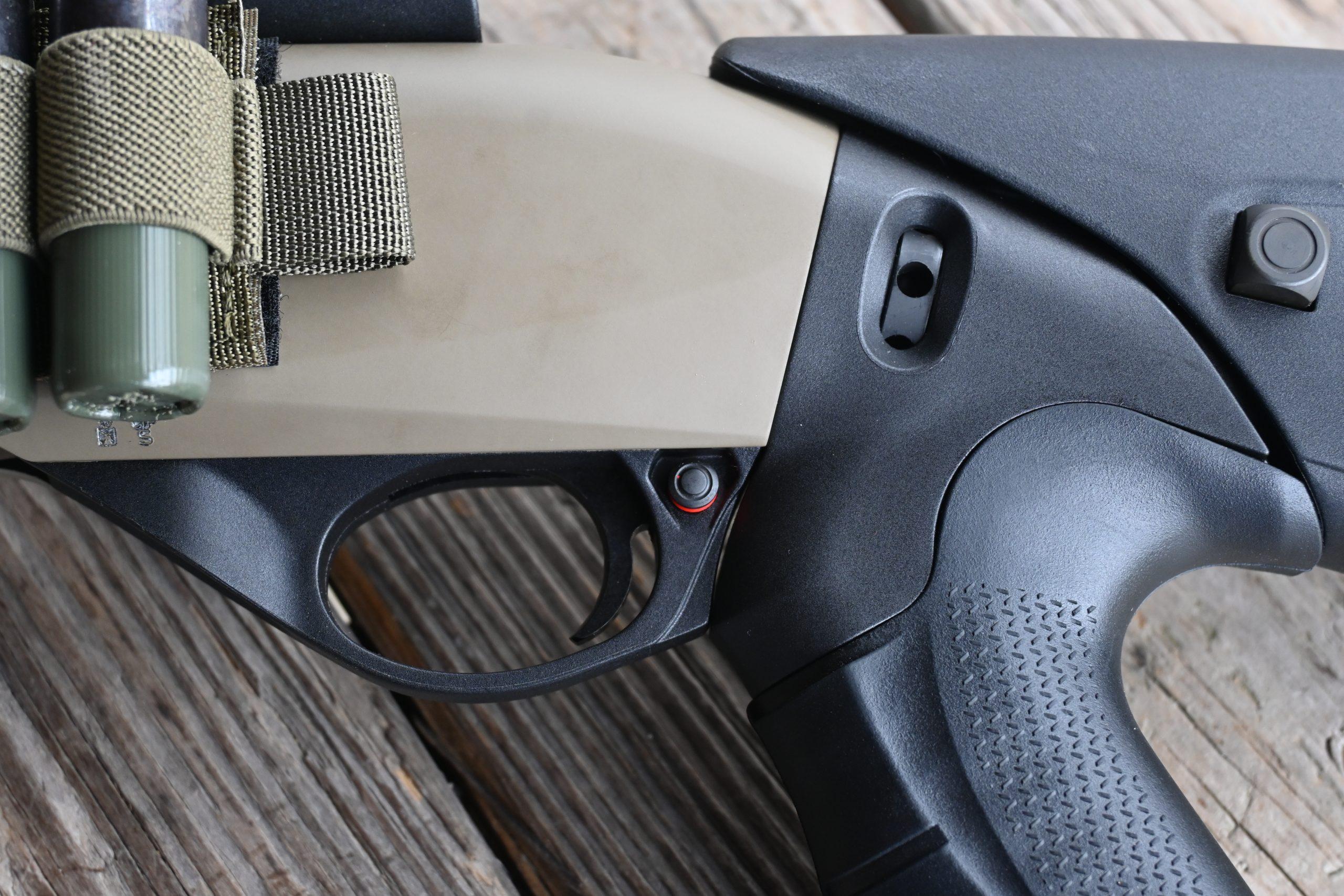
The pistol grip models use a five-position collapsible stock that you adjust with a single square push button on the left side. Length of pull runs from 9.25 to 14 inches, which covers everyone from a shooter in heavy body armor to a tall shooter in summer clothes. The stock design works for both left- and right-handed shooters, though the gun itself is a right-hand configuration that ejects to the right. A soft recoil pad caps the stock, and there is a QD socket plus a slot for running a sling without metal hardware.
We were not a fan of how the stock looked at first, but it is comfortable and adjusts quickly, and the upgraded pistol grip puts the hand at a natural angle for driving the gun.
Range Testing: Reliability, Patterns, and Accuracy
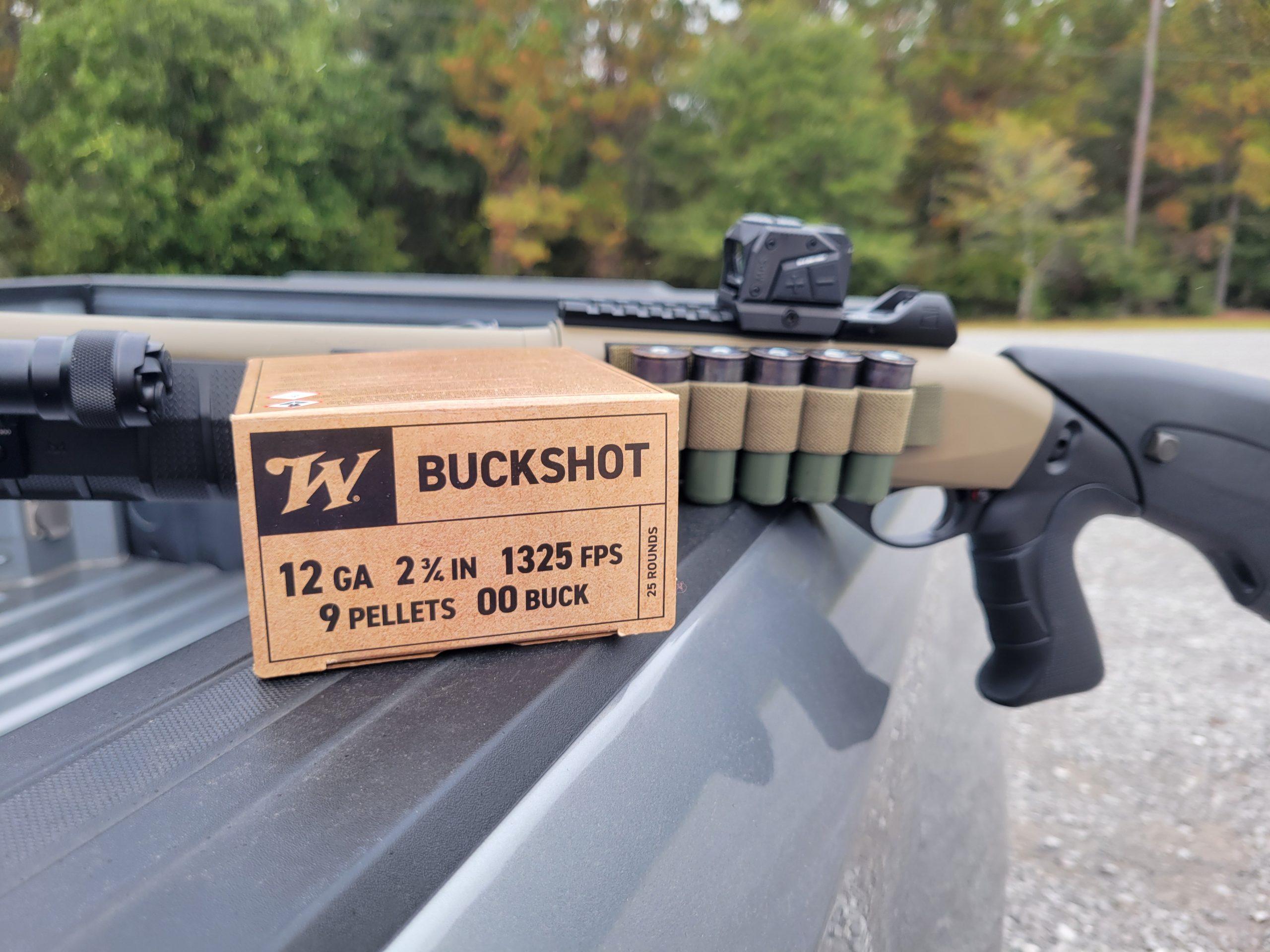
We ran the M2-G1 through 1,500 rounds of mixed ammunition and did not clean it after the initial 50-round break-in period.
Break-In Period and Reliability
Benelli recommends a break-in period of 50 high-brass field loads, at least 1-1/8 ounces of shot at a minimum of 1,200 fps, before you rely on the gun with lighter ammunition. We wanted to see what would happen if an owner skipped that step, so the first 50 rounds were light 1-ounce target loads at 1,145 fps. That produced two failures to eject (stovepipes). After running the recommended break-in with full-power loads, the R.P.O. system cycled every light 1-ounce target load cleanly for the remaining rounds of the test. It also ran buckshot and slugs with no stoppages.
That matches what other early testers reported. One launch review ran about 300 rounds of defensive loads and buckshot with no failures, and others ran cheap birdshot and even water-damaged shells without problems. Taken together, the early evidence suggests the M2-G1 is duty-grade dependable for high-volume use, as long as you break it in with the right ammunition. Do the break-in, and you can expect the gun to run.
Patterning and Accuracy
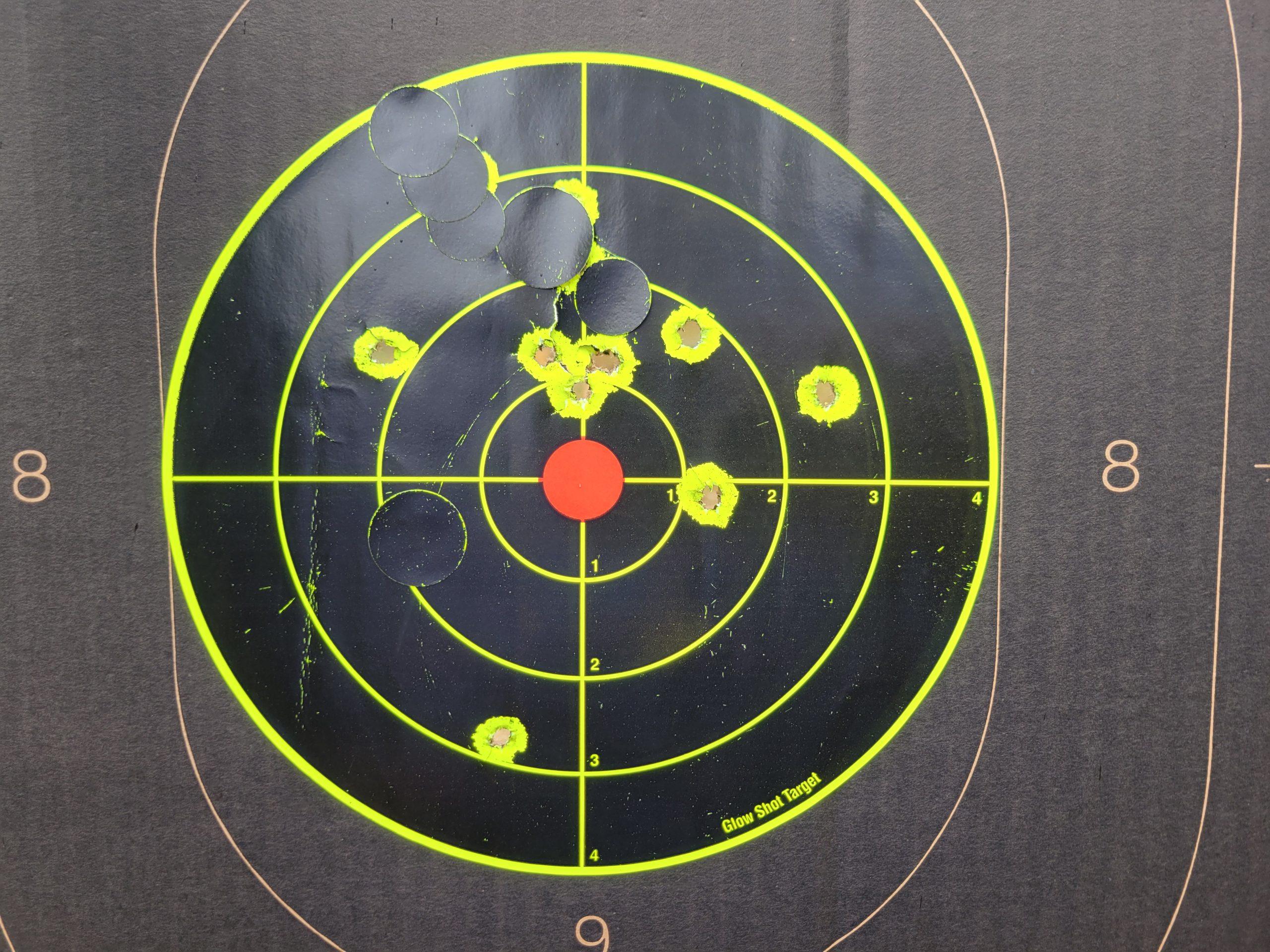
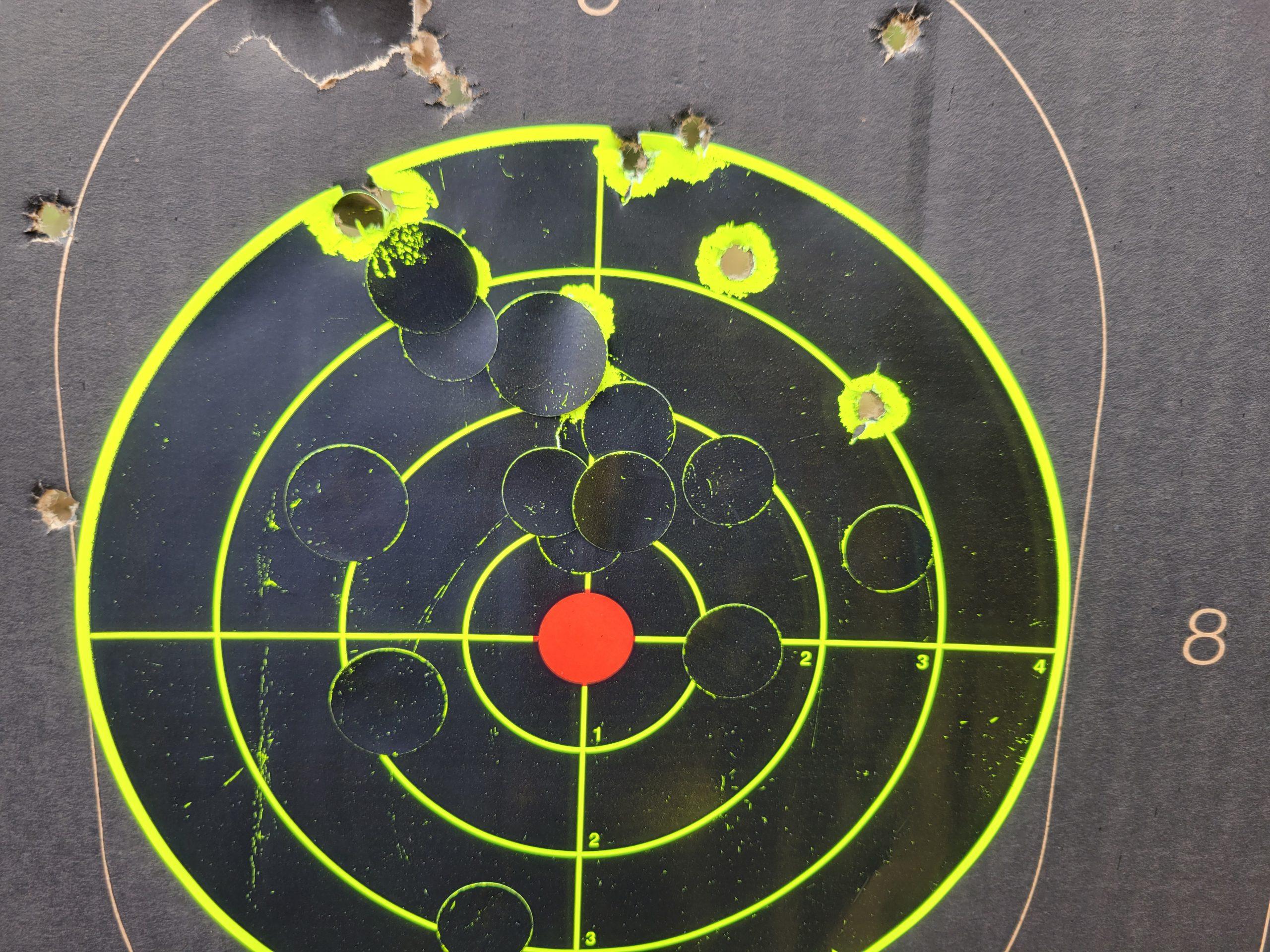
We tested accuracy at 25 yards with Federal Premium FliteControl 8-pellet 00 buckshot and at 50 yards with Hornady American Gunner 1-ounce rifled slugs, all through the factory Modified choke.
| Load | Distance | Result |
|---|---|---|
Federal FliteControl 8-pellet 00 Buck | 25 yards | Patterns averaged 4.8 inches overall |
Hornady American Gunner 1 oz Rifled Slug | 50 yards | Five-shot groups averaged 4.5 inches from a bench rest with ghost ring sights |
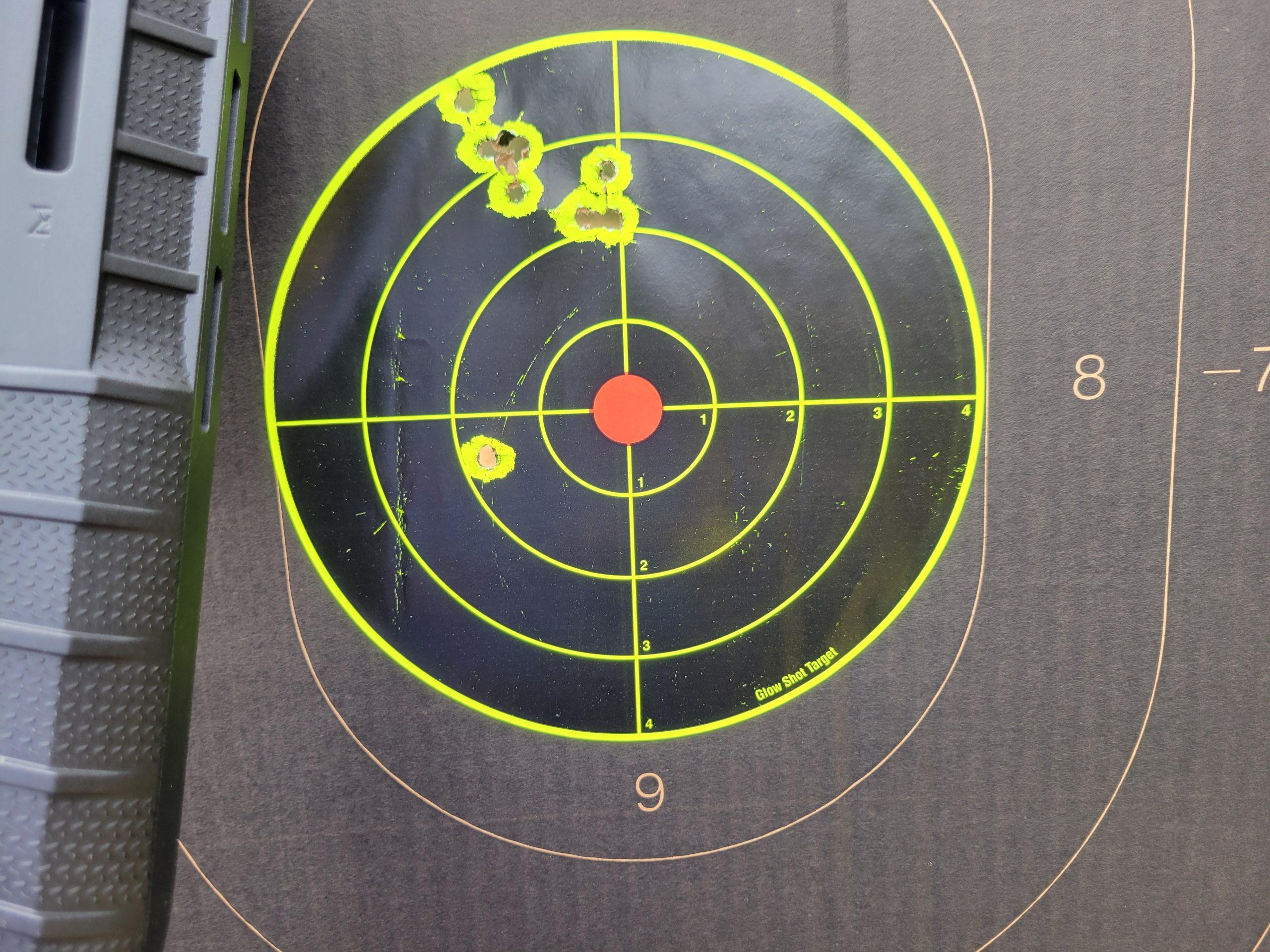
The FliteControl patterns were tight and even, keeping every pellet well inside a torso-sized target. Slugs grouped as expected from the factory iron sights at 50 yards, and point of impact matched point of aim right out of the box. With a red dot mounted, the gun was even easier to shoot fast at close range on steel.
Accessories, Optics, and Upgrades
The standard M-LOK slots and top Picatinny rail make the M2-G1 easy to set up the way you want.
Red Dot Mounting
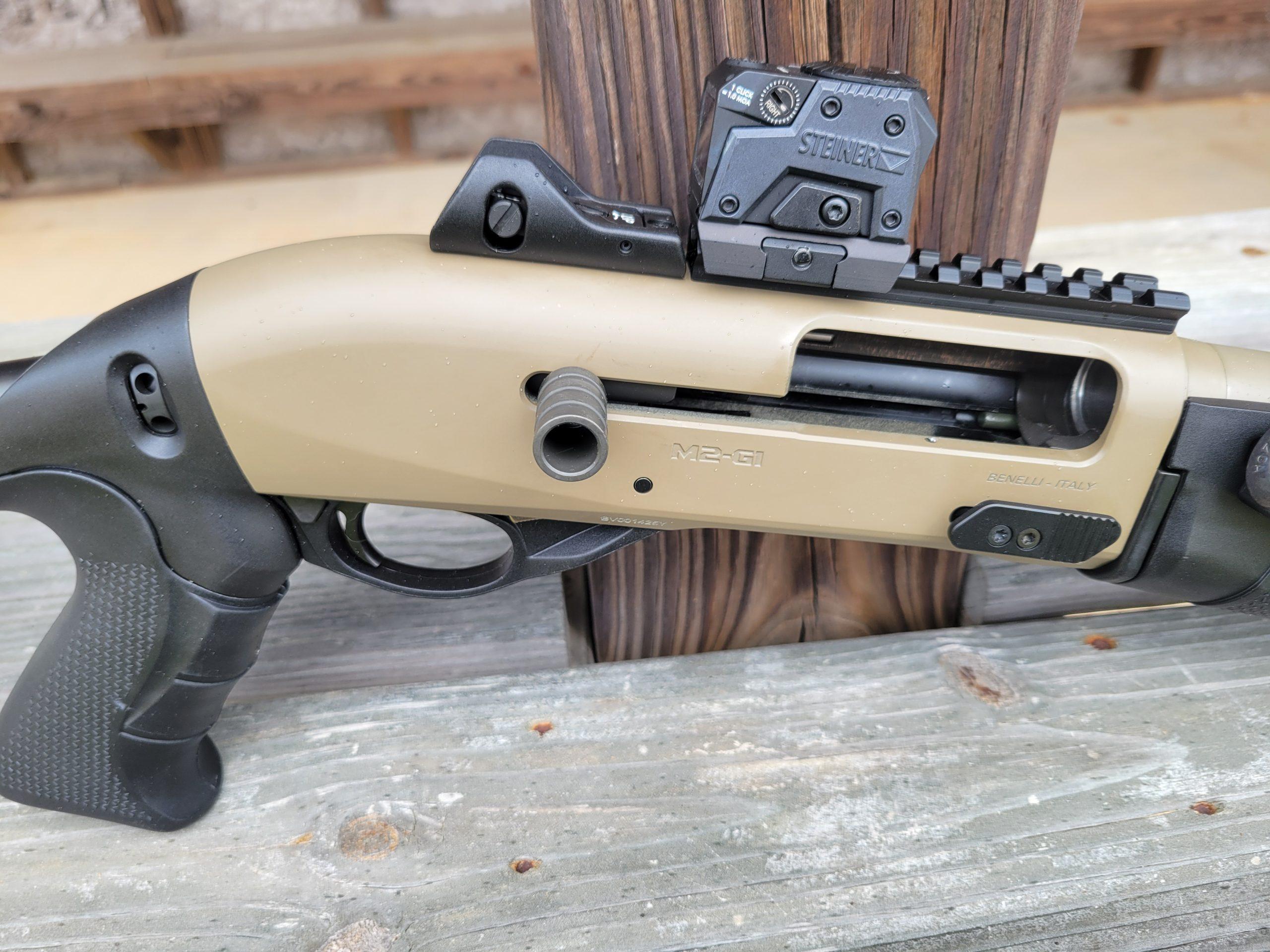
When you mount a micro red dot on the receiver rail, use a low-profile mount so you keep a solid cheek weld and can still co-witness with the ghost ring sights through the window. Torque the mounting screws to 18 to 20 inch-pounds with medium-strength threadlocker.
Sling Points, Side Saddles, and Capacity
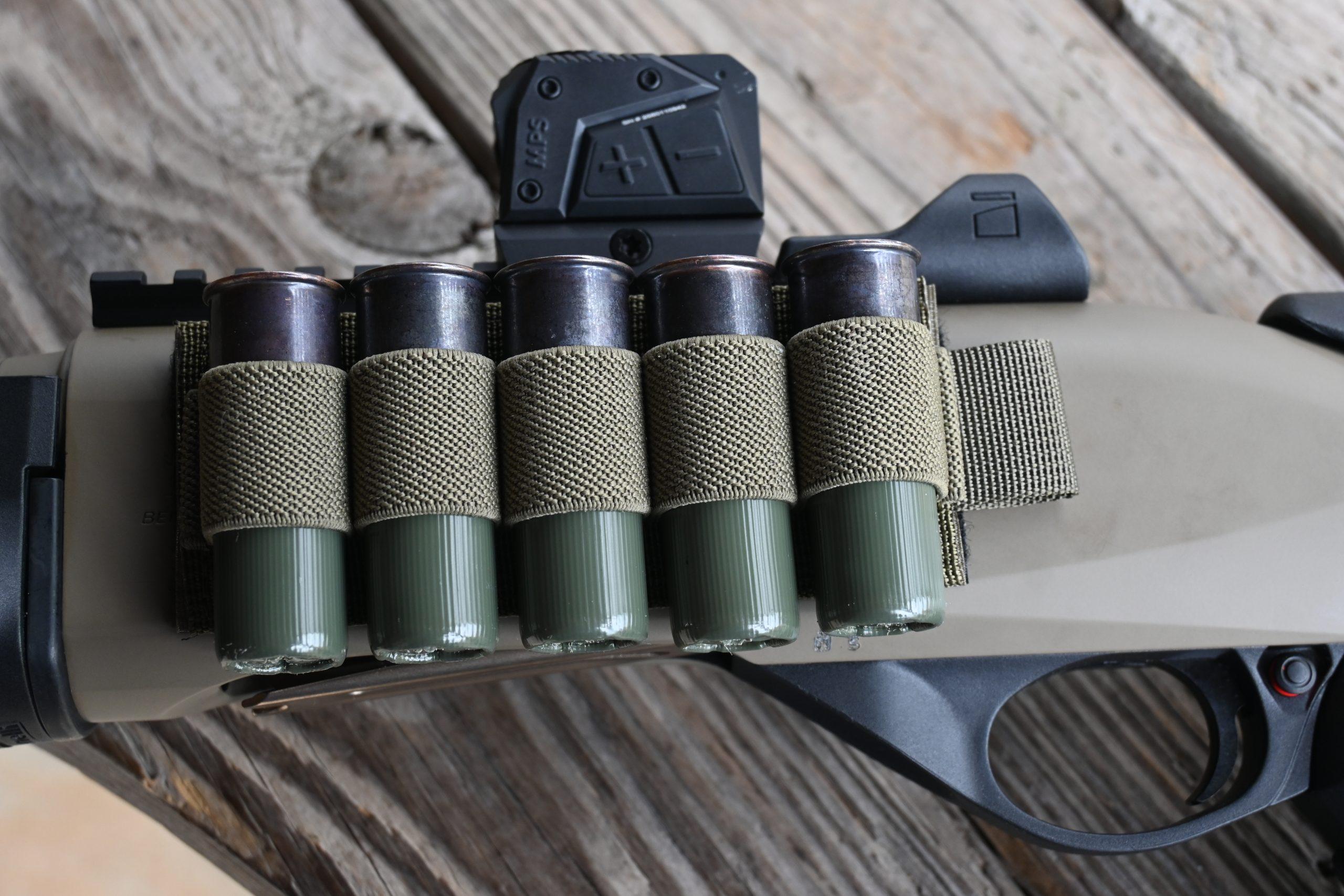
The M2-G1 has QD sling sockets in the stock and at the magazine tube cap, and an aluminum side saddle can be added using the receiver’s threaded holes without interfering with the bolt. If you plan to add a magazine extension to a 5+1 gun or go longer on a 7+1, use a quality magazine follower, ideally the factory part, so shells feed smoothly from the longer tube. Some shooters also ghost-load an extra round by placing a shell on the lifter after the magazine is full, which can push onboard capacity one round higher. Practice that technique with dummy rounds first.
Maintenance, Cleaning, and Disassembly
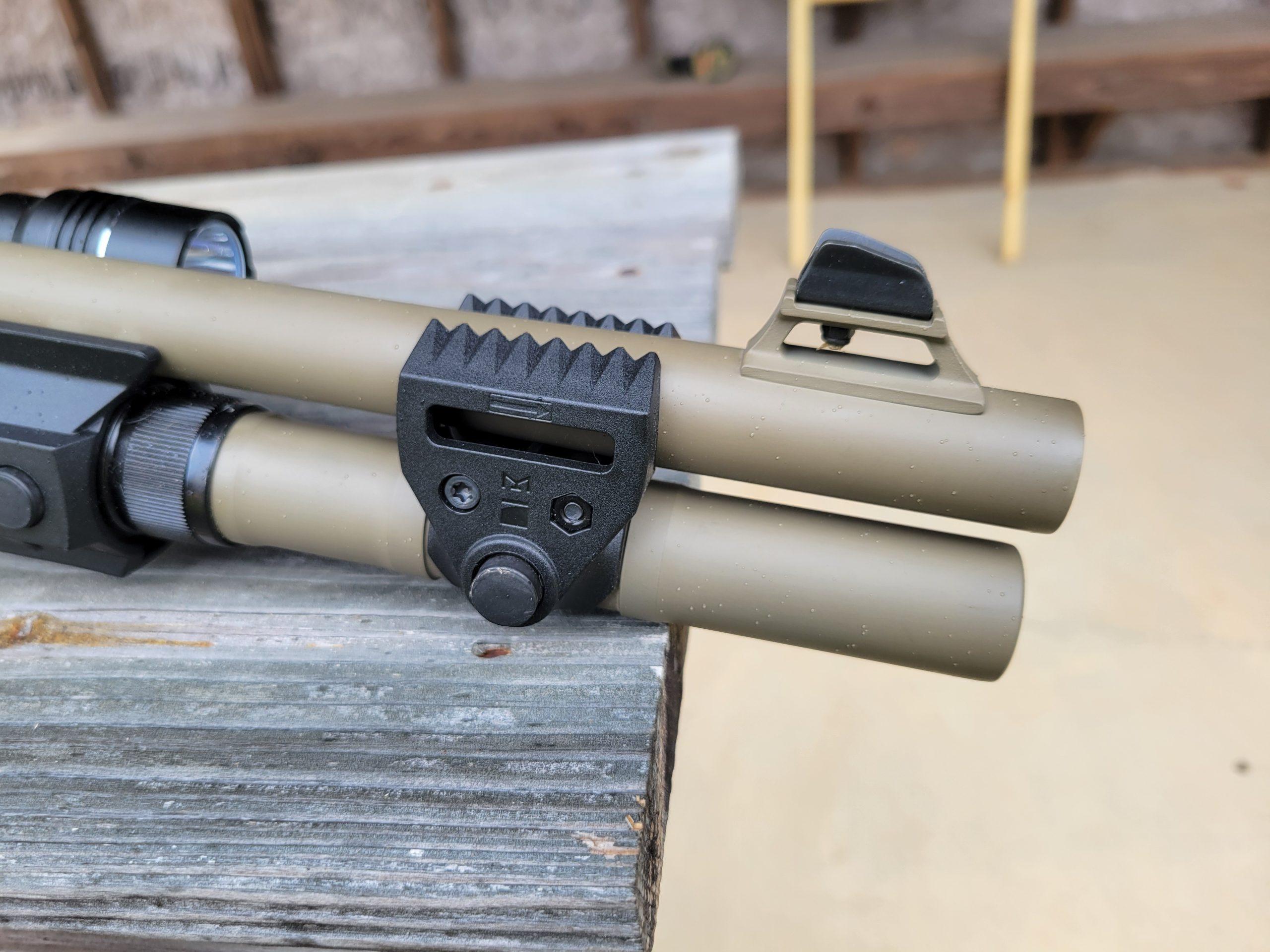
Field stripping the Benelli M2-G1 takes no tool and can be done in under a minute. A choke wrench is the only tool you need for routine cleaning.
Field Stripping
Start by making sure the chamber and magazine tube are empty, then lock the bolt to the rear and engage the crossbolt safety. Remove any magazine clamp, then unscrew the magazine cap counterclockwise. Slide the forend forward off the magazine tube and pull the barrel straight out of the receiver. With the barrel off, remove the twin short-stroke pistons from their housings near the chamber, following the sequence in the owner’s manual. Finally, pull the charging handle straight out of the bolt and slide the bolt body and rotating bolt head forward out of the receiver.
Cleaning and Inspection
At each cleaning, inspect the rotating bolt head lugs and the piston faces for wear or burrs. Clean the short-stroke pistons and their cups with solvent and a brass brush. Based on our test, every 1,500 rounds is a reasonable interval with quality ammunition, but clean them sooner if you shoot a lot of dirty, low-cost loads. Keep the magazine tube clean and dry, and avoid heavy oil that attracts powder residue.
Durability and Long-Term Considerations
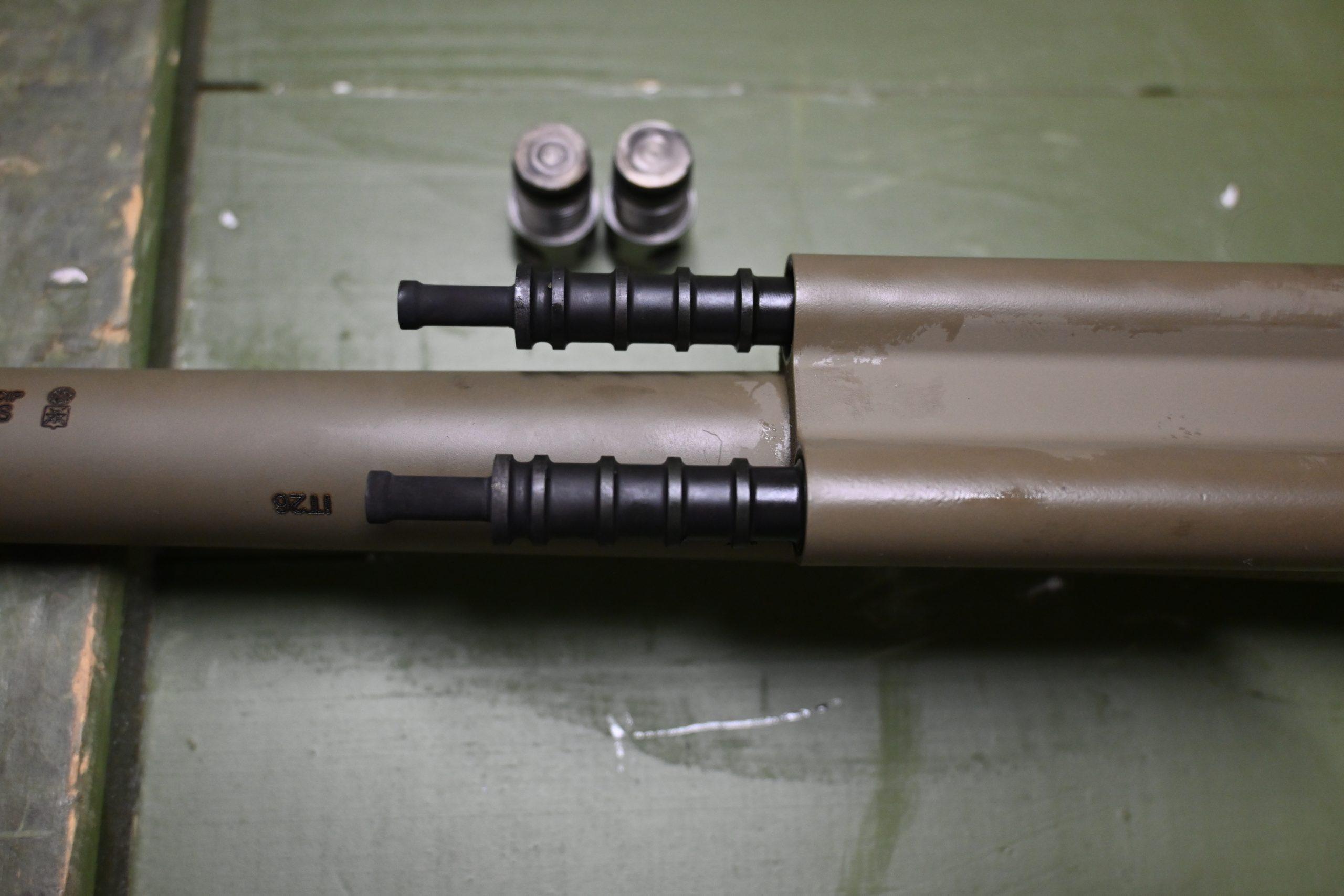
The M2 has long been a favorite of law enforcement officers and 3-gun competitors, and the M2-G1 builds on that foundation. After 1,500 rounds, wear was minimal. We found no peening on the piston contact points, no cracks around the gas ports, and no unusual finish wear inside the receiver. Benelli backs the M2-G1 with a 10-year warranty covering manufacturing and material defects.
The real long-term test for any new operating system is time in service. R.P.O. has only been on the market since August 2026, while A.R.G.O. has decades of military and police use behind it. The NTOA rating and the clean early round counts are encouraging, but we will update this review as our round count grows.
M2-G1 vs. M2 Tactical vs. Benelli M4
To help you choose, the table below compares the M2-G1 to the inertia-driven M2 Tactical it replaces in the defensive role and to Benelli’s flagship M4 Tactical.
| Feature | Benelli M2-G1 | Benelli M2 Tactical | Benelli M4 Tactical |
|---|---|---|---|
Operating System | Gas (R.P.O. dual short-stroke pistons) | Inertia-Driven | Gas (A.R.G.O. dual pistons) |
Self-Regulating / Self-Cleaning | No | Not applicable | Yes |
Weight (Unloaded) | 7.4 to 8 lbs | 6.7 lbs | 7.8 lbs |
Capacity | 5+1 or 7+1 | 5+1 | 5+1 (extensions available) |
M-LOK Forend | Standard | No | Aftermarket |
Accessory Sensitivity | None noted | Heavy accessories can affect cycling | None |
Recoil Feel | Soft | Sharp with heavy loads | Very soft |
MSRP | $1829 to $2149 | $1949 | From $2299 |
Shooters cross-shopping outside Benelli will usually look at the Beretta 1301 Tactical, another fast-cycling gas gun and a common pick in competition. The M2-G1 stands out with its rear-mounted pistons, recoil spring in the stock, M-LOK forend, and 7+1 capacity in the standard configuration.
Who Should Buy the Benelli M2-G1
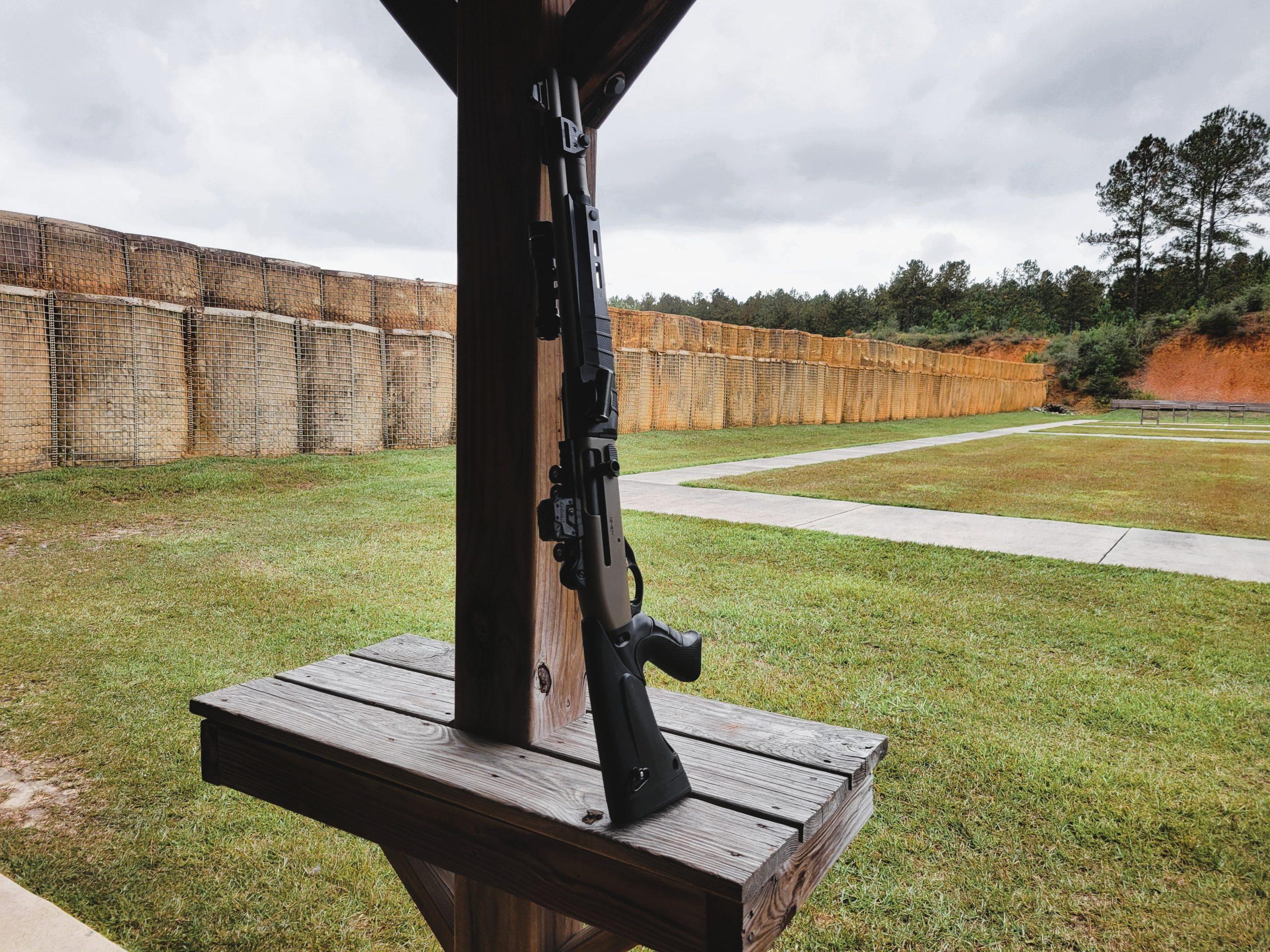
For home defense and duty use, the M2-G1 is easy to recommend. You can mount a heavy weapon light, an optic, and a side saddle without hurting reliability, and that makes it an excellent choice for personal protection or patrol work. Anyone moving up from a pump action will appreciate how much faster and softer it shoots.
3-gun and tactical competition shooters should also take a close look. The big loading port, soft recoil, and reliable cycling with light target loads after break-in give you an edge from the first match. It is not a trap or sporting clays gun, and it was never supposed to be, but it will break clays if you want to practice.
For field hunting and waterfowl, the classic inertia M2 is still the lighter and simpler choice for long days in the field.
Pros and Cons
| Pros | Cons |
|---|---|
Stays reliable with a light and optic mounted | Not self-cleaning or auto-regulating like the M4's A.R.G.O. system |
Noticeably softer recoil than the inertia M2 | Needs a 50-round high-brass break-in for reliable light-load cycling |
Recoil spring isolated in the stock away from fouling | About 1.3 lbs heavier than the M2 Tactical in pistol grip form |
M-LOK forend and Picatinny rail come standard | Ships with only one choke tube |
Five-position stock fits over armor | No digital manual available at launch |
7+1 capacity on most models | New system with a short service record |
Final Thoughts on the Benelli M2-G1
The Benelli M2-G1 is a smart evolution of Benelli’s tactical shotgun line. By swapping the inertia action for the R.P.O. gas system, Benelli fixed the biggest weaknesses of inertia guns, namely light-load sensitivity and accessory weight, while keeping most of the M2’s light, quick handling. Our testing found it reliable after break-in, cleaner inside than conventional gas guns, and softer shooting than the gun it replaces.
It is damn near the tactical shotgun most shooters wished the M2 had been all along, for several hundred dollars less than an M4.
FAQs
Is the Benelli M2-G1 gas or inertia operated?
Does the Benelli M2-G1 need a break-in period?
How many rounds does the Benelli M2-G1 hold?
What is the difference between R.P.O. and A.R.G.O.?
How much does the Benelli M2-G1 cost?
Is the M2-G1 better than the Benelli M4?
Sources: NTOA Gold Standard rating and launch details (Benelli USA); Benelli M2 Tactical specifications
Meet the Experts

Written By
Michael Crites
Licensed Concealed Carry Holder
- Founder of AmericanFirearms.org
- Licensed Concealed Carry Holder
Hands-On Product Reviews
Further Reading
Sign up for our newsletter
Get discounts from top brands and our latest reviews!
Our Top Picks
Benelli M2-G1