Best Competition Pistols: Top Picks for Matches and Self-Defense
From an $899 Canik Rival-S to a $3,925 Vudoo Priest, we rank 11 competition pistols for USPSA and IDPA with our own round counts, splits and groups.

Written By
Michael Crites
Licensed Concealed Carry Holder
Reviewed by
Editorial Team
Learn About The Editorial Team
Share:
Products are selected by our editors. We may earn a commission on purchases from a link. How we select gear.
Updated
Nov 2026
A match is won and lost in tenths of a second, and the pistol on your belt decides how many of those tenths you hand away before you ever pull the trigger. Weight, trigger, sight system, and magazine capacity all show up on the timer, which is why the gun that rides comfortably in your waistband on Tuesday is rarely the one that wins Saturday’s stage.
This guide ranks 11 pistols that will shoot competitively right out of the box, from an $899 steel-frame striker gun to a hand-fitted 2011 at $3,925. American Firearms staff have put seven of them through extended, hands-on testing, including a 2,400-round run with the Bersa M2Xi and a 2,500-round, three-month carry test of the CZ Shadow 2 Carry. Where we have range data, you’ll see it. Where we don’t, we say so and lean on verified manufacturer specs.
In This Article
Quick Picks
| Pick | Best For | Price |
|---|---|---|
Best budget competition pistol | $899.99 MSRP | |
Best Carry Optics striker under $750 | $599–$650 street | |
Best value 2011 | $1,479 MSRP | |
Best match-bred carry gun | $1,350–$1,500 street | |
Best precision 2011 for Open and Limited Optics | $3,925 MSRP |
Competition Shooting: What This Guide Covers
At heart, a competition pistol is a full-size 9mm tuned for the shot timer. Builders add mass to soak up recoil, lighten and flatten the trigger, mill the slide for a red dot, flare the magwell for faster reloads, and push magazine capacity as high as the rules allow. None of that is exotic anymore. What used to require a custom shop now ships from the factory, often for less than the cost of a mid-tier hunting rifle.
Those features matter because every stage is a string of small events: the draw, the first shot, the split between shots, the transition between targets, and the reload. A heavier gun returns the sights faster, a crisp trigger shortens the split, and a funneled magwell shaves time off every reload. Stack those gains across a 32-round field course, and the difference between platforms is measured in whole seconds, not fractions.
This guide covers optics-ready striker guns, steel- and aluminum-frame hammer guns, and double-stack 2011s, the three platforms that dominate USPSA, IDPA, and centerfire Steel Challenge in 2026.
Rimfire Steel Challenge guns are a different conversation, and our Best .22 LR Pistols guide handles them.
How We Selected Candidates for Competition Shooting
We prioritized recoil control and follow-up speed. We weighed frame material, slide mass, and features like ports and lightening cuts, then looked for evidence of how quickly each gun settles between shots. On the guns we tested ourselves, that evidence includes measured split times, such as the 0.20- to 0.25-second single-action splits we logged with the CZ Shadow 2 Carry.
Optics readiness and sighting options came second. A factory optic cut or a direct-mount system like Springfield’s Variable Interface System is close to mandatory for Carry Optics and Limited Optics, so we noted which footprints each slide accepts and whether you need a plate to get there.
Ergonomics and magazine capacity followed. Grip angle, undercut depth, control placement, and the number of rounds in a flush magazine all show up on the timer, and capacity determines how many reloads a long field course forces on you.
Parts availability, reliability, and price rounded out the list. A gun that jams costs you the stage, and a gun nobody makes holsters or magazines for costs you the season. We used our own round counts and malfunction logs. Our testing on the seven pistols we have shot in depth ranged from roughly 850 rounds with the Kimber 2K11 to more than 2,400 rounds with the Bersa M2Xi.
Finally, we checked each pick against current division rules. Equipment eligibility changes, so confirm your specific configuration against the USPSA and IDPA rulebooks before you buy.
Aluminum Frame Versus Steel and Polymer Choices
Frame material is the single biggest lever on how a 9mm feels under recoil. Frame mass resists muzzle rise and returns the sights to the target faster. That is why the full-size CZ Shadow 2 weighs 46.5 ounces and still dominates Production– the shooter barely has to manage the gun.
An aluminum frame splits the difference. It adds rigidity and a few useful ounces over polymer without the belt-sagging penalty of steel. Smith & Wesson’s M&P9 M2.0 Competitor and CZ’s Shadow 2 Carry both use 7075-T6 aluminum, the same alloy found in AR-15 lower receivers, and both land near 30 ounces. In our Shadow 2 Carry test, that weight produced a recoil impulse that felt like a straight push rather than an upward snap, with the sights lifting about half an inch before settling.
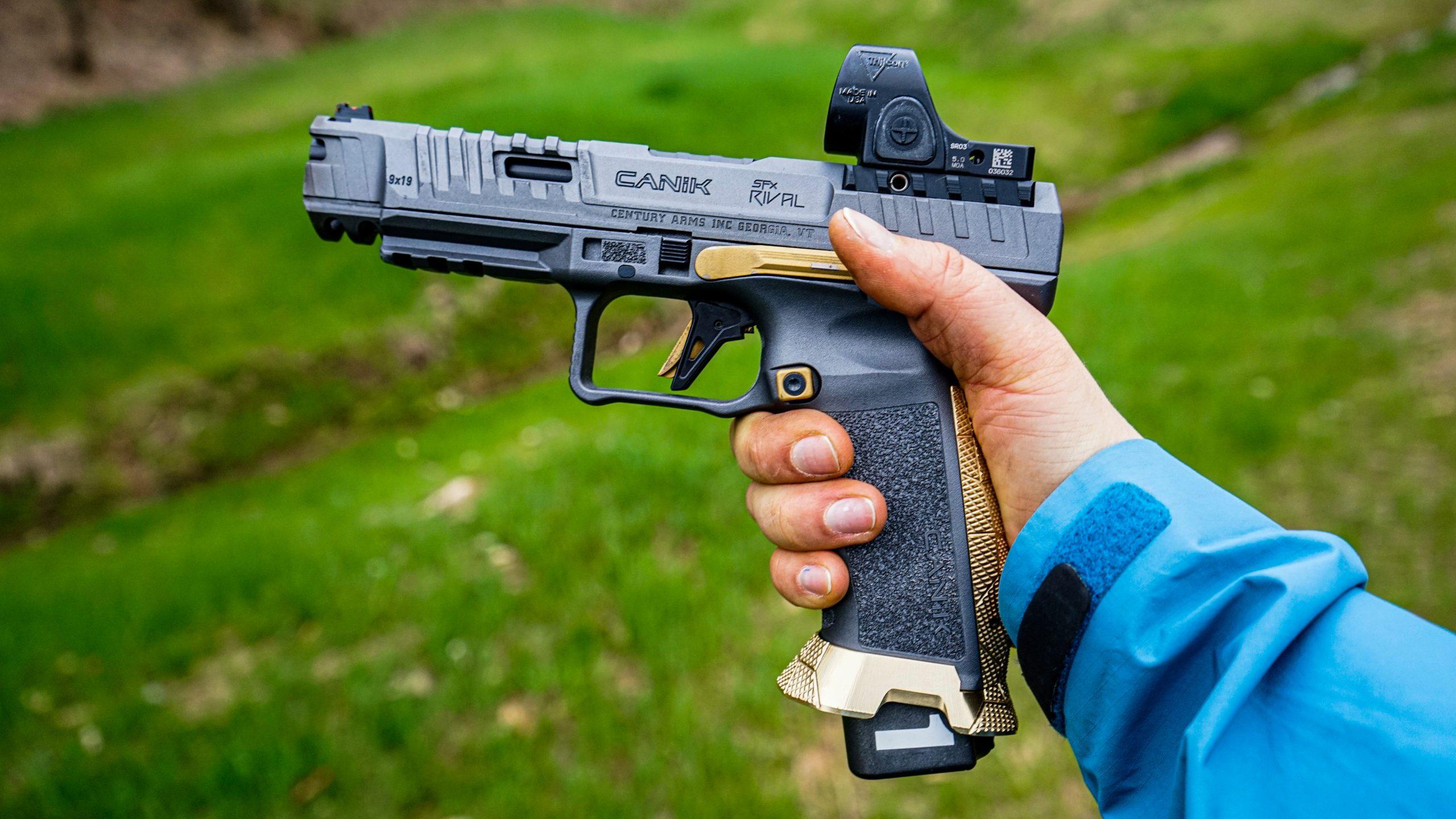
Steel soaks up the most recoil and is the right answer for a dedicated match gun that never sees a concealment holster. Polymer is the lightest and least planted, but it is also the cheapest way into the sport and the easiest to tune with aftermarket weight. Our reviewer Kenzie Fitzpatrick added a LOK Grips brass backstrap and magwell to her polymer Canik SFx Rival and reports it now shoots close to as flat as the steel-frame Rival-S.
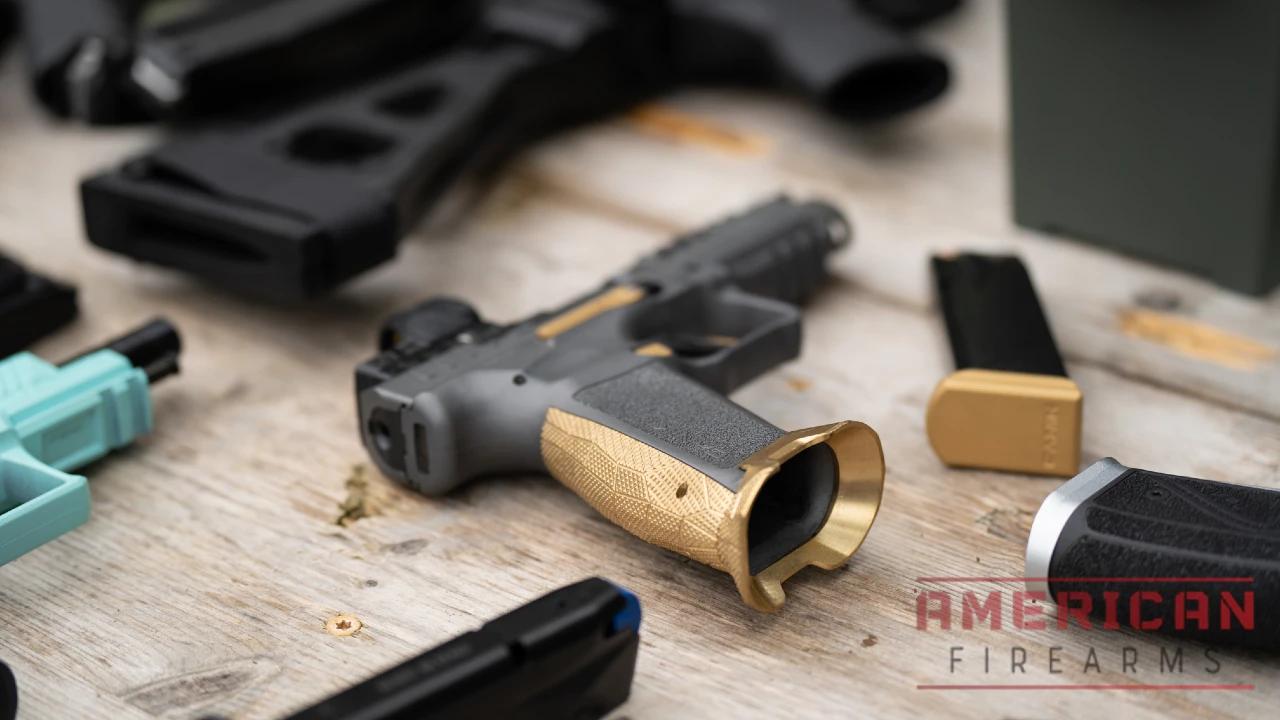
If you want one gun for matches and occasional carry, start with aluminum. If the gun lives in a range bag, buy steel. If budget is the deciding factor, polymer with a few ounces of brass gets you surprisingly close.
| Pistol | Frame / grip material | Unloaded weight | Barrel |
|---|---|---|---|
CZ A01-SD OR | Steel | 47 oz | 4.925 in. |
Canik SFx Rival-S | Steel | 42.72 oz | 5 in. |
Bersa M2Xi | 416 stainless frame; polymer grip | 38.5 oz | 5 in. |
Kimber 2K11 (9mm) | Stainless subframe; aluminum grip | 38.5 oz | 5 in. |
Springfield Prodigy (5 in.) | Forged steel frame; polymer grip | 33 oz | 5 in. |
CZ Shadow 2 Carry | 7075-T6 aluminum | 30.7 oz | 4 in. |
Canik SFx Rival | Polymer | 29.5 oz | 5 in. |
S&W M&P9 M2.0 Competitor | 7075-T6 aluminum | 29 oz | 5 in. |
Springfield Echelon 4.0FC | Polymer; steel COG chassis | 24 oz | 4 in. |
Weights are manufacturer or AF-measured unloaded figures without optics.
Top Competition Pistols for Timed Matches
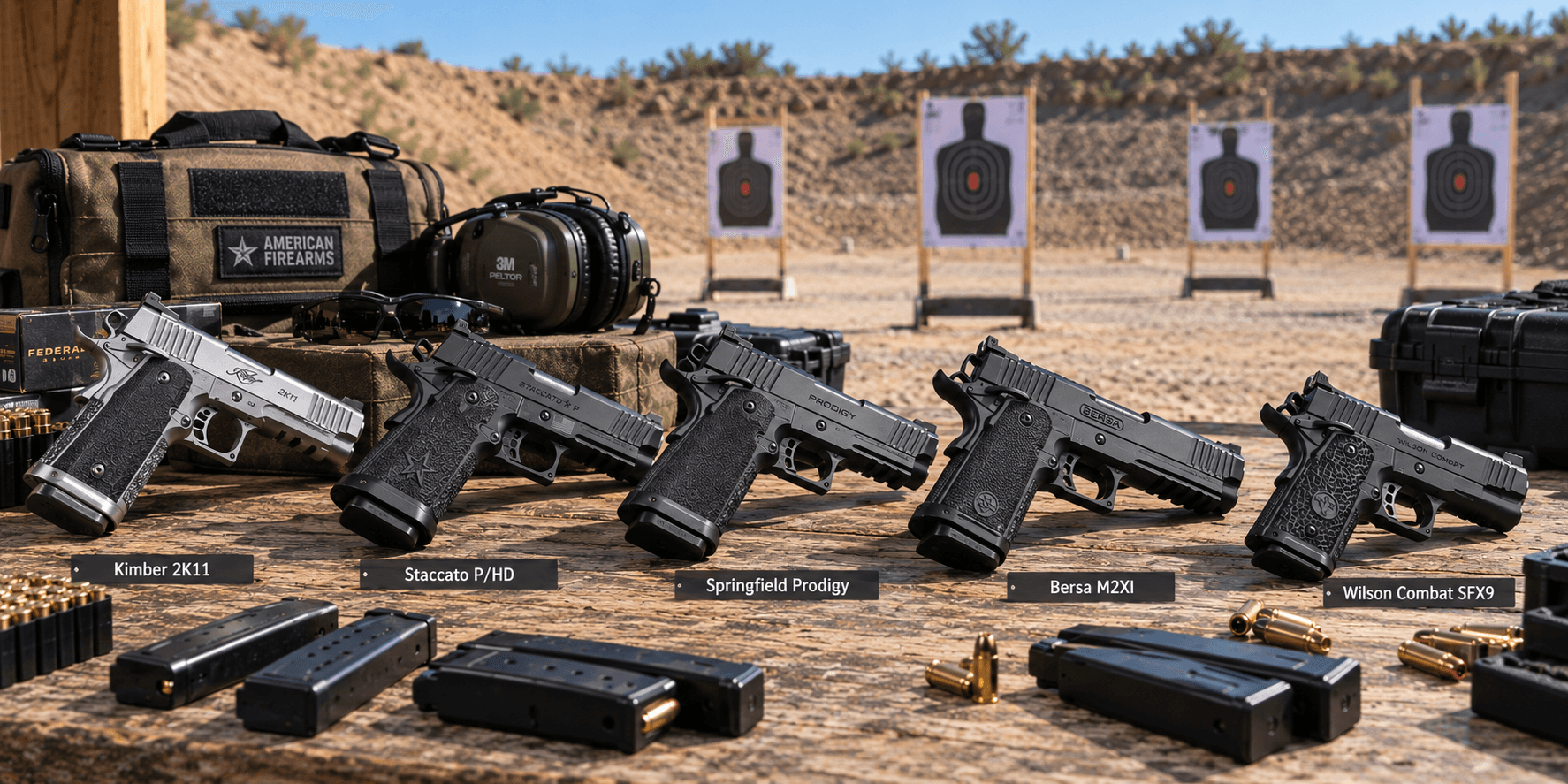
We ranked 11 pistols across three platforms so every reader finds a gun built the way they like to shoot: striker-fired guns for shooters coming from a Glock or M&P, DA/SA hammer guns for the CZ crowd, and 2011s for those chasing the best single-action trigger money can buy. Each entry weighs recoil mitigation, trigger, optic system, capacity, and cost. Entries marked “AF Tested” reflect our own range time; the others are ranked on verified specifications and are flagged as such.
Striker-Fired Picks
1. Canik SFx Rival-S — Best Budget Competition Pistol (AF Tested Platform)
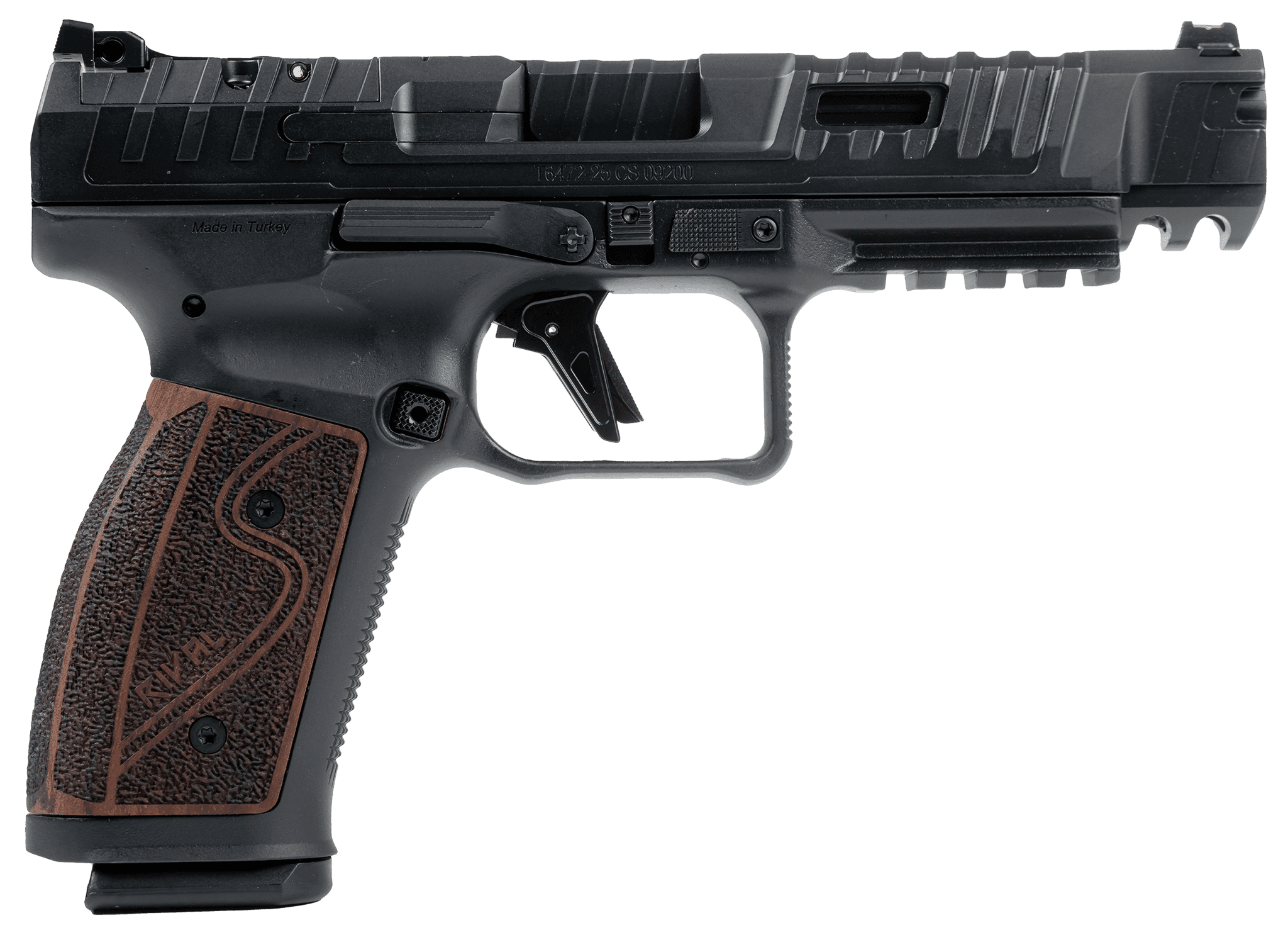
Nothing has lowered the price of a competitive Carry Optics setup like the Rival-S. Canik took the SFx Rival, a polymer gun our reviewer Kenzie Fitzpatrick has run through thousands of rounds in USPSA Carry Optics, Steel Challenge, and 3-Gun, and rebuilt it on an all-steel frame. The result weighs 42.72 ounces, holds 18+1, and sells for $899 in black and $949 in chrome.
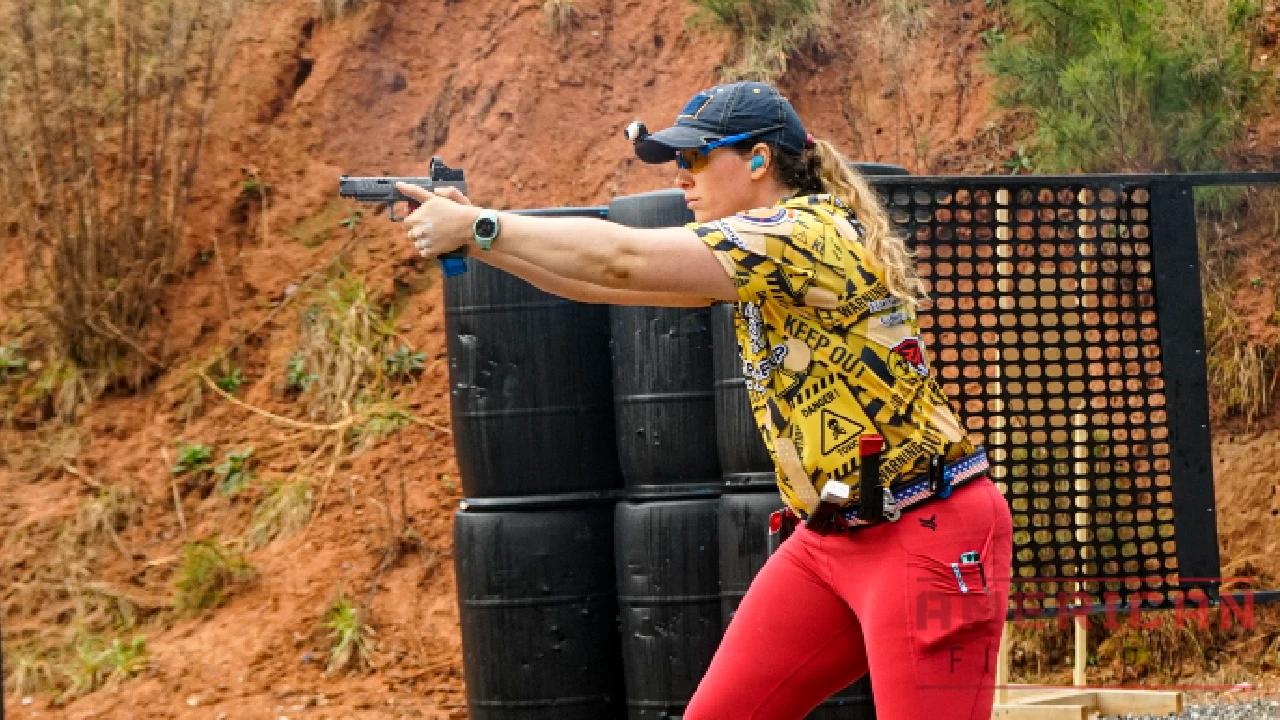
Fitzpatrick owns both the polymer Rival and the Rival-S, and her testing found zero failures to feed or eject across reloads, factory range ammo, Federal Syntech, and defensive hollow points. Her gun prefers 147-grain loads; Super Vel’s competition 147-grain ammunition makes USPSA minor power factor and, in her words, sends the sights back to where they started shot after shot. The platform’s flat, 90-degree aluminum trigger is the part she refuses to replace, which she doesn’t say about most stock guns. Carry Optics national champion Nils Jonasson has won with the Rival platform, which shows the gun isn’t the limiting factor.
The box is the other reason to buy one. Canik ships five optic plates, an external magwell, a holster, two aluminum base pads, three backstraps, three magazine-release extensions, a tool kit, and a spare fiber optic. That is a first-match kit, minus the optic and the ammo.
- Key strengths: price, trigger, generous magwell, everything in the box
- Possible limitations: at nearly 43 ounces, it is no carry gun; long, top-heavy slide can feel unwieldy in small hands; Canik’s U.S. service network is thinner than domestic brands’
Specs: 9mm | 18+1 | 5-in. barrel | 42.72 oz | steel frame | $899–$949 MSRP. Read our full Canik SFx Rival review.
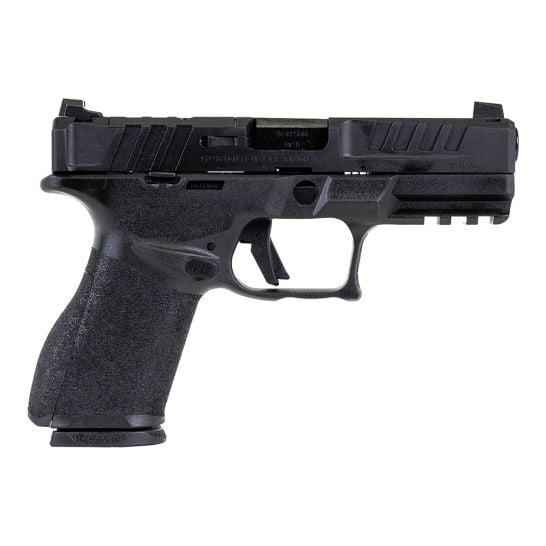
2. Springfield Armory Echelon — Best Carry Optics Striker Under $750 (AF Tested)
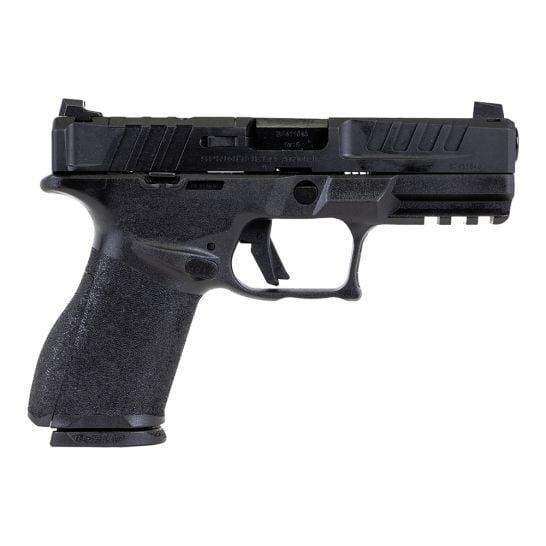
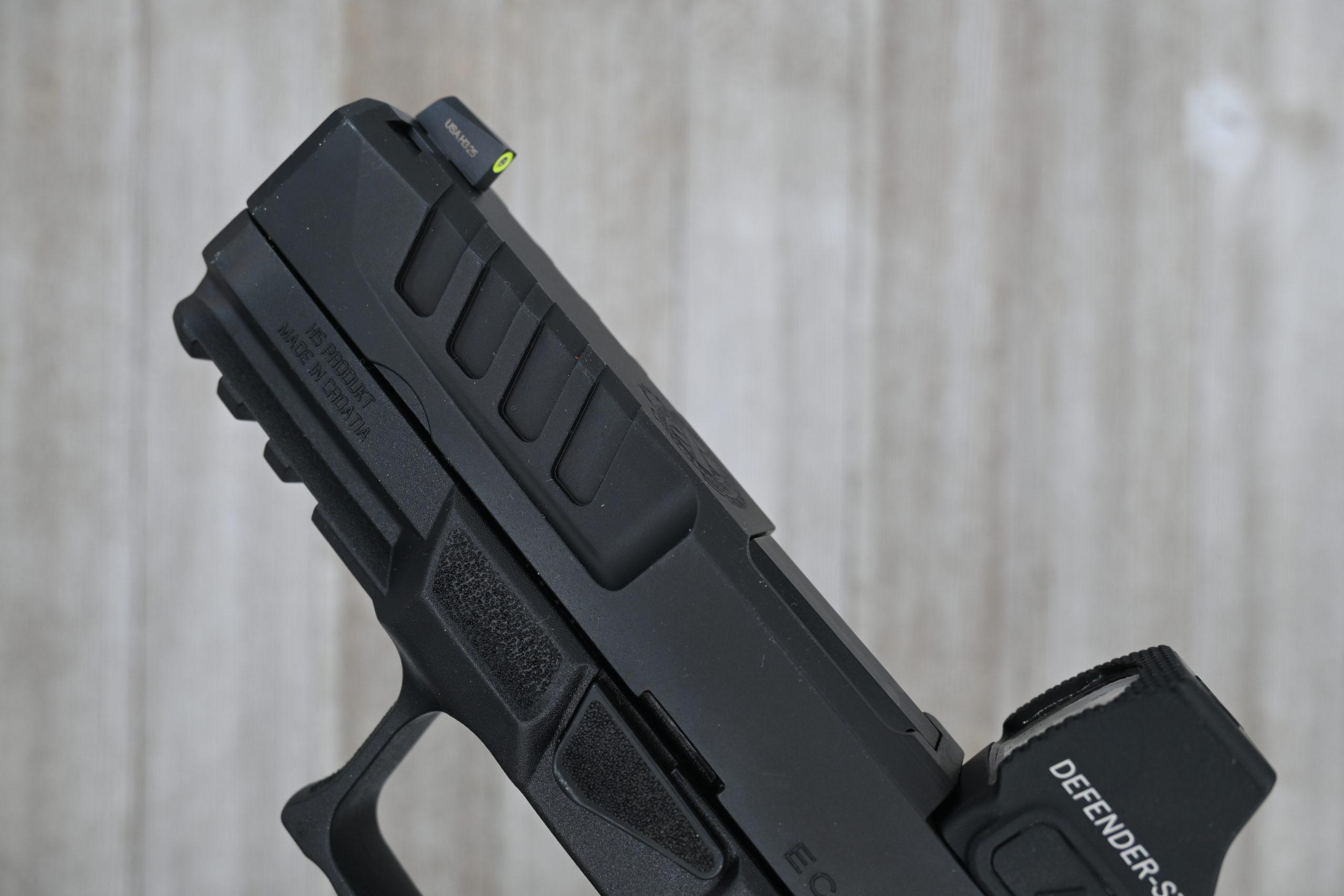
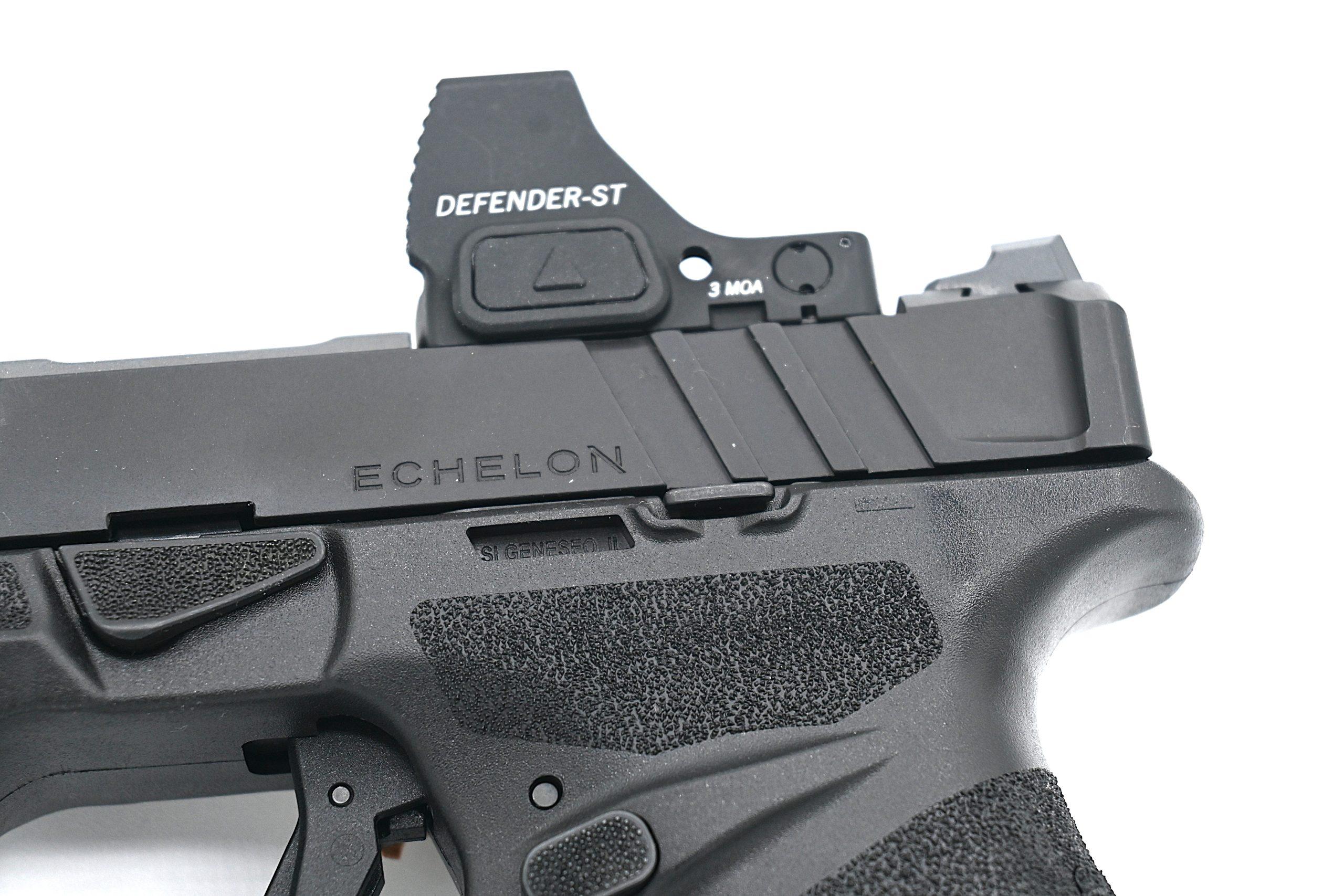
The Echelon is the striker gun on this list that we actually took to matches. Over three months and 2,127 rounds, our 4.0FC test gun logged three malfunctions, two light strikes on Winchester NATO and one stovepipe on dirty Remington UMC, for a 99.86 percent reliability rate. We shot it in two USPSA matches and one IDPA match. In Carry Optics, our times ran within 3 to 5 percent of dedicated race guns costing twice as much, and the VIS-mounted Vortex Defender held zero through more than 400 match rounds.
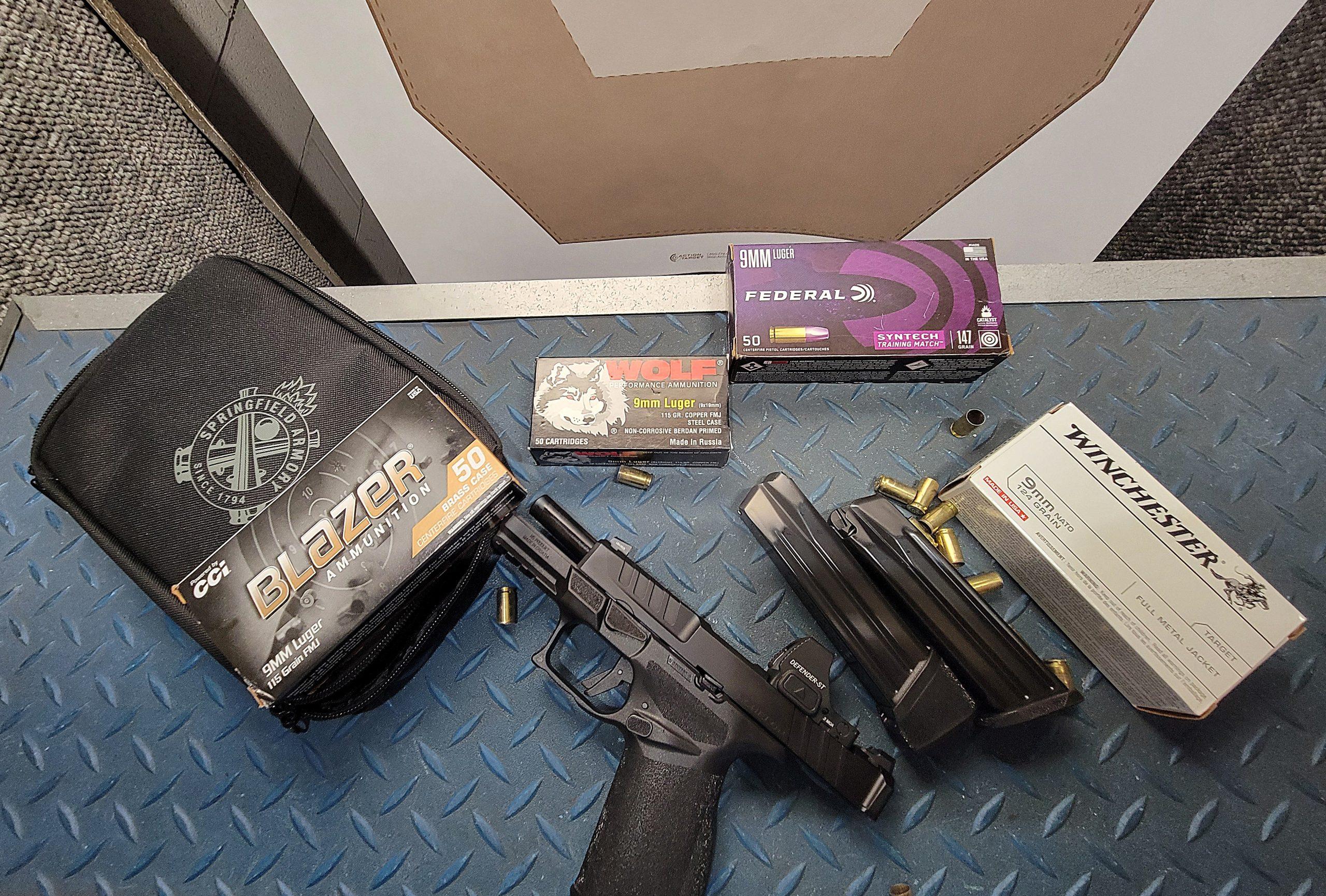
The Variable Interface System is the reason to buy one. Eccentric pins clamp more than 30 optics directly to the slide without a plate, putting the dot low enough to co-witness with standard irons. The grip geometry, deep undercut, and a takedown lever that doubles as a support-hand gas pedal kept splits at 0.25 seconds, against 0.28 with our Glock 19 Gen 5. The factory trigger averaged 5.75 pounds across 20 pulls on a Wheeler gauge with a short 0.15-inch reset.
For dedicated Carry Optics work, step up to the Echelon 4.5F Comp, which adds integral compensator ports for $749 MSRP. The 4.0FC we tested sells for $599 to $650.
- Key strengths: VIS optic mounting, ergonomics, flat-shooting recoil, 17+1 or 20+1 capacity
- Possible limitations: stiff takedown lever out of the box; aftermarket still growing; some shooters ride the low slide release and stop it from locking back
Specs (4.0FC): 9mm | 17+1 | 4-in. barrel | 24 oz | $599–$650 street. Read our Springfield Echelon 4.0FC review.
3. Smith & Wesson M&P9 M2.0 Competitor — Best Aluminum-Frame Striker
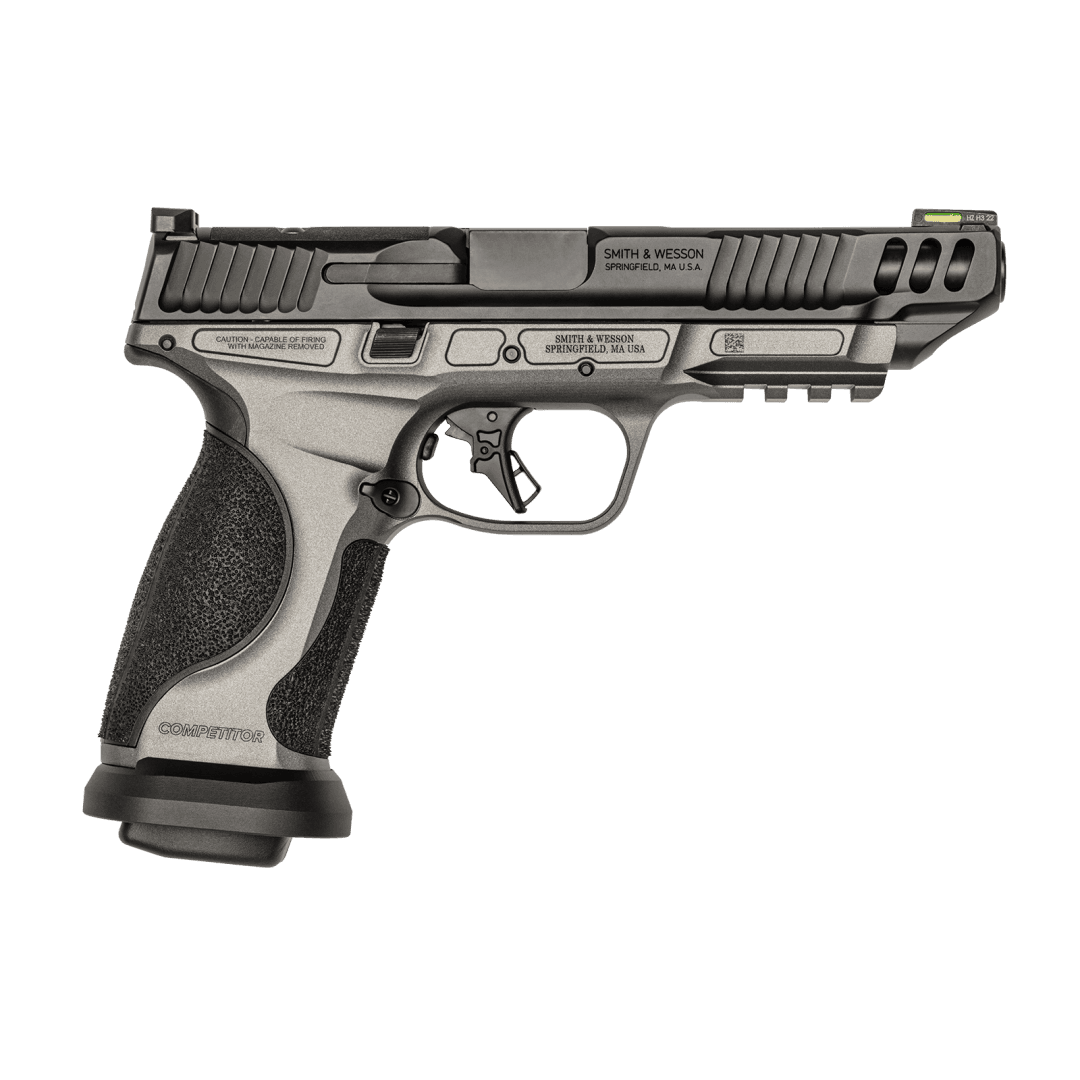
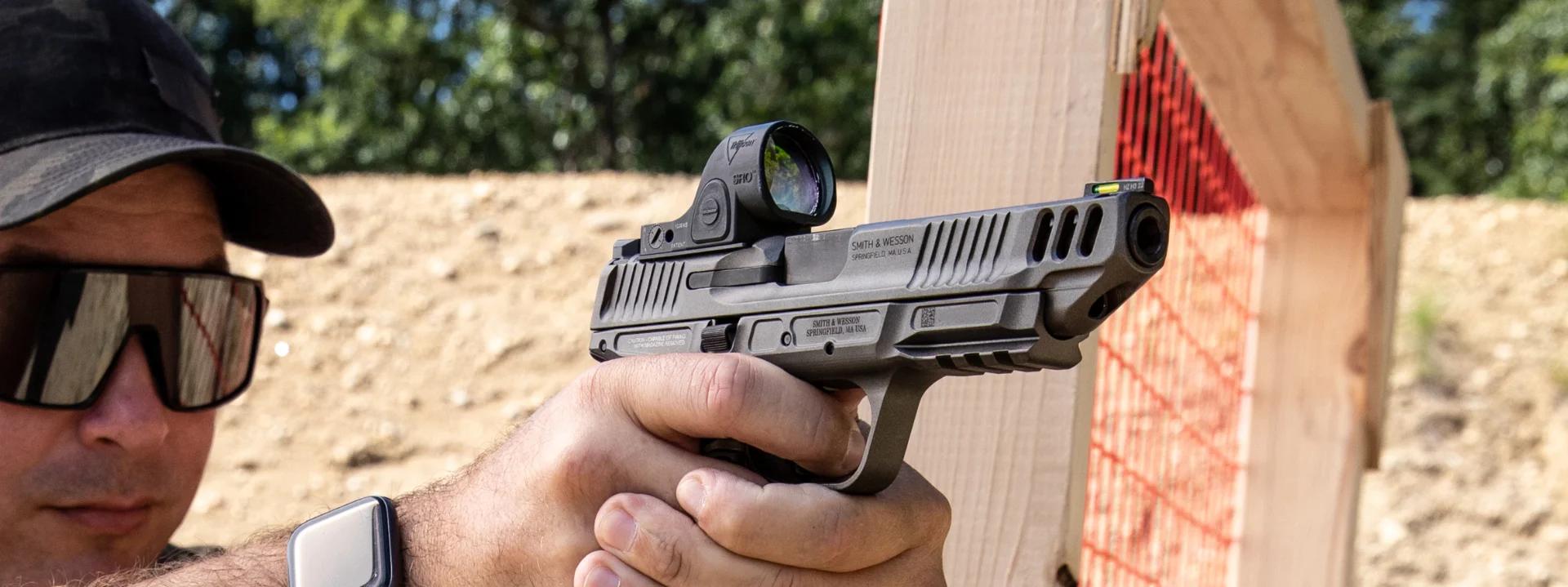
Smith & Wesson’s Performance Center built the Competitor on a 7075-T6 aluminum frame, then cut weight out of the stainless slide so the gun’s balance point moves back toward the hand. The finished pistol weighs 29 ounces, slightly less than a standard polymer M&P9, with a 5-inch barrel, an enhanced sear for a lighter break, a flared magwell, and an optics-cut slide over a green fiber-optic front sight. It ships with four magazines in 17+1 or 10+1 and lists for $999.
We covered the Competitor at launch but have not put a test gun through our protocol, so this ranking rests on its specs and the M&P2.0’s track record. The appeal is clear: a metal-frame gun that still carries comfortably, with the M&P’s familiar grip and a large holster ecosystem.
- Key strengths: recoil mitigation for its weight, sub-$1,000 price, M&P ergonomics
- Possible limitations: lighter than steel guns, so less recoil soak; confirm division eligibility of the lightened slide; fewer aftermarket parts for the metal frame than for polymer M&Ps
Specs: 9mm | 17+1 | 5-in. barrel | 29 oz | aluminum frame | $999 MSRP. For upgrade options, see Best M&P 2.0 Triggers.
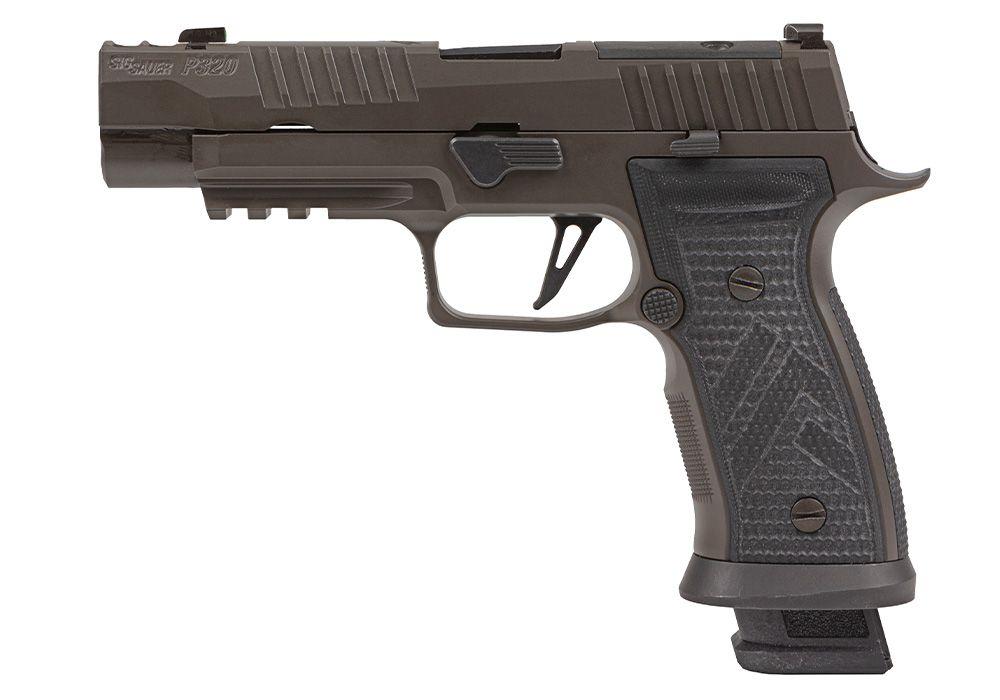
4. Sig Sauer P320-AXG Legion — Best Modular High-Capacity Setup
$1649.99
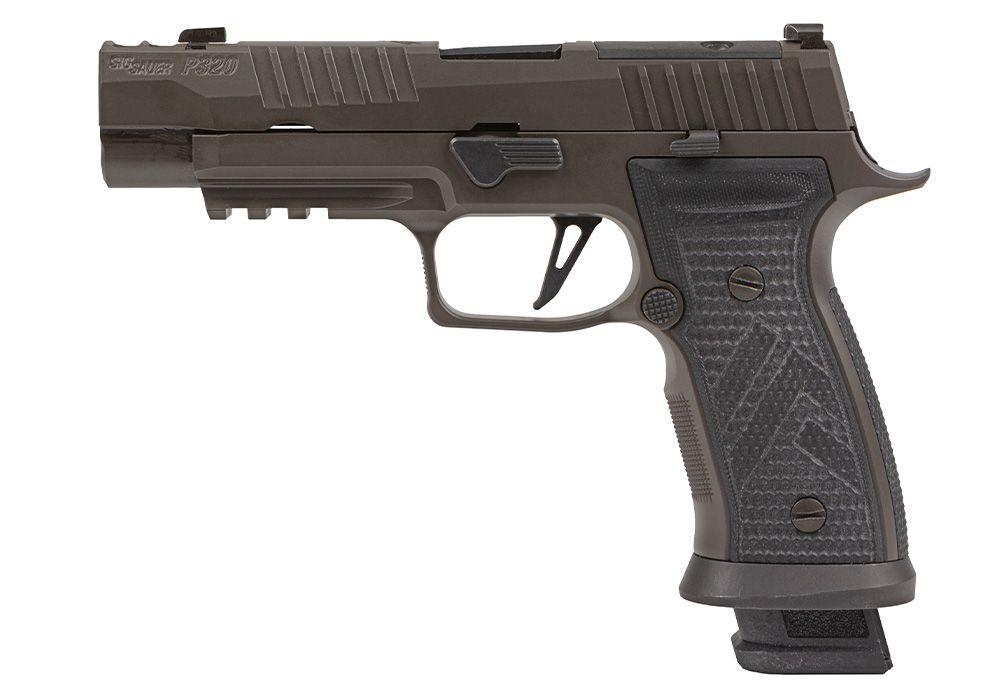
The AXG Legion bolts the P320’s fire-control unit into an all-aluminum grip module with Hogue G10 panels and an extended magwell, then adds a two-port expansion chamber in the slide that Sig credits with up to 25 percent less felt recoil. It ships with three 21-round steel magazines and accepts the ROMEO1Pro, ROMEO2, DeltaPoint Pro and RMR without fuss. One caution: standard 17-round P320 magazines will not seat in the aluminum magwell.
We have not range-tested the AXG Legion. SIG lists a 3.9-inch barrel inside a full-size slide, with the extra length machined into the expansion chamber, and a weight of 36.1 ounces with a magazine, so treat it as a heavy, flat-shooting duty-and-match crossover rather than a pure race gun. Pricing has climbed from a $1,529 launch MSRP, and current listings start around $1,650.
- Key strengths: flat Legion trigger, P320 modularity, optics readiness, 21+1 capacity
- Possible limitations: priced well above the Canik and Echelon; ported slide needs a division check; magazine compatibility is narrower than other P320s
Specs: 9mm | 21+1 | 3.9-in. barrel | 36.1 oz | aluminum grip module. See our Sig P320 upgrades guide and P320 M17 review.
5. Shadow Systems DR920 — Best Glock-Pattern Option (AF Tested)
$840.99

52
EXCEPTIONAL
2026 Awards & Rankings
Performance Scores
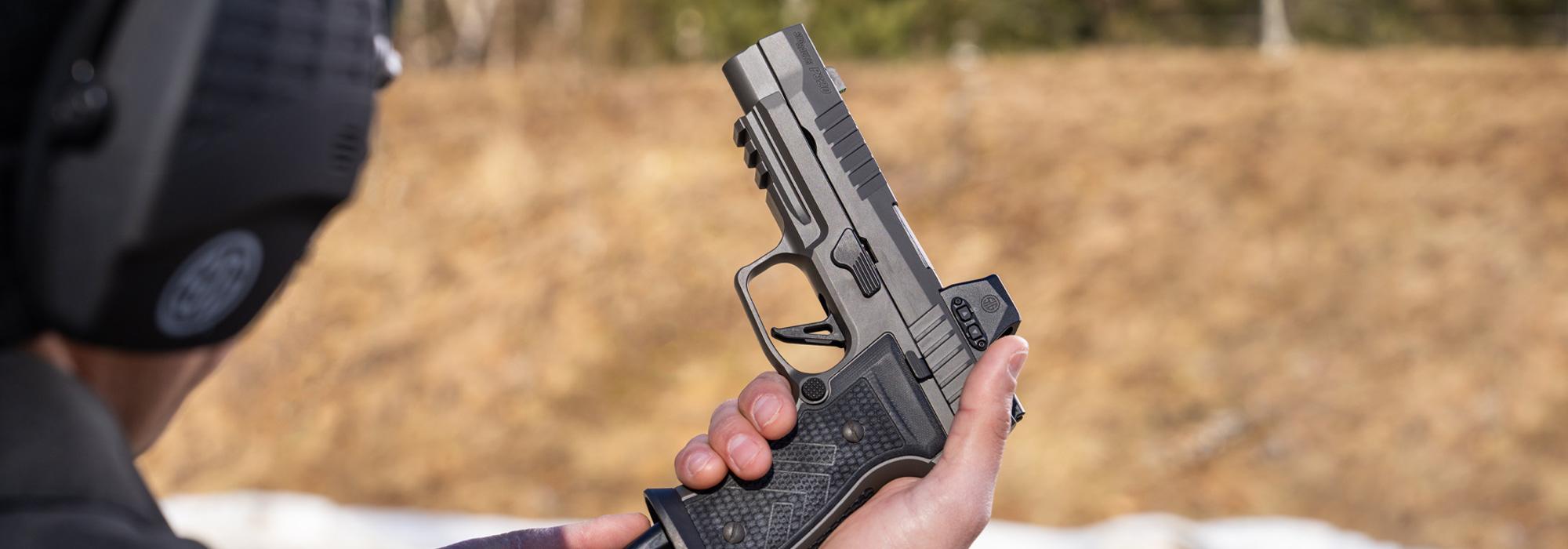
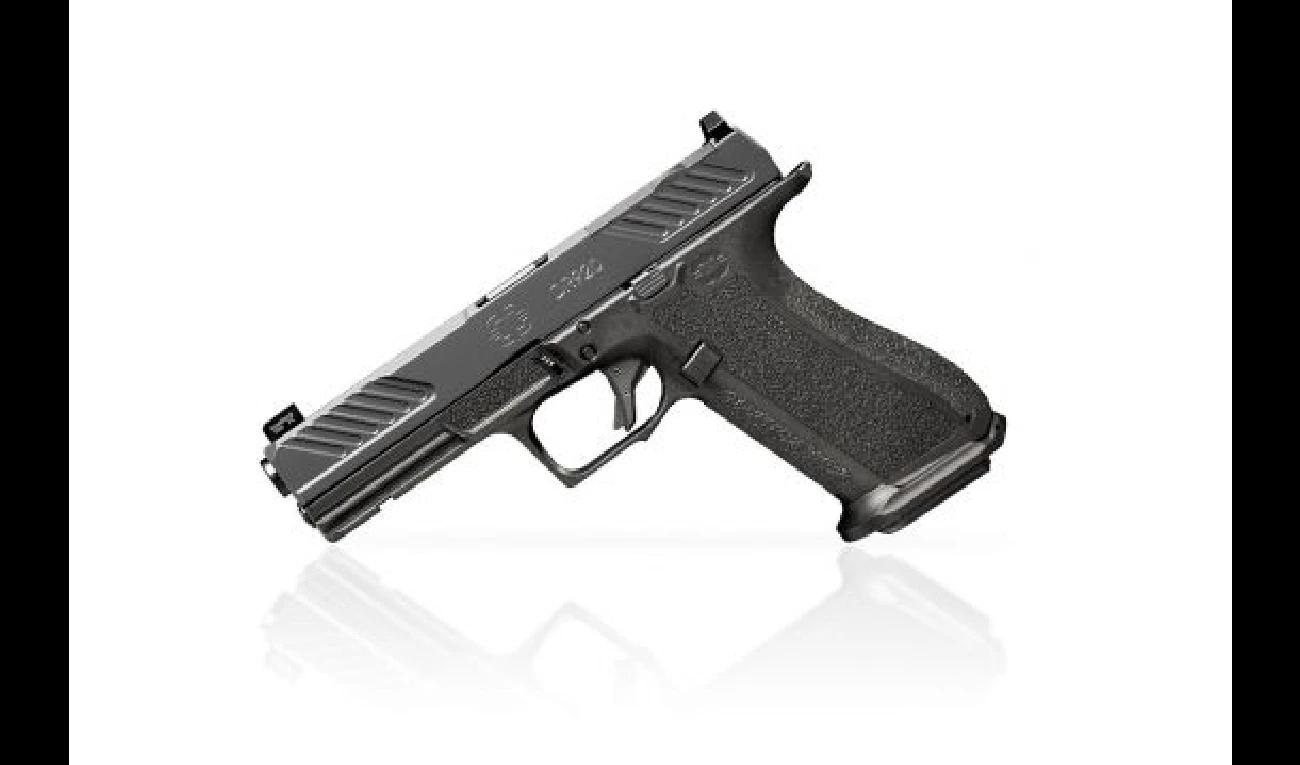
With the Glock 34 out of production since Glock’s November 2025 catalog purge, the Shadow Systems DR920 is the most sensible way to stay on the Glock 17 pattern without settling for a stock trigger. Our reviewer Jeff Wood shot his for six months without a single malfunction, mostly on Winchester 124-grain, and kept groups under 2 inches at 10 yards. He ran the trigger across his scale about 30 times and got 4.5 pounds nearly every pull.
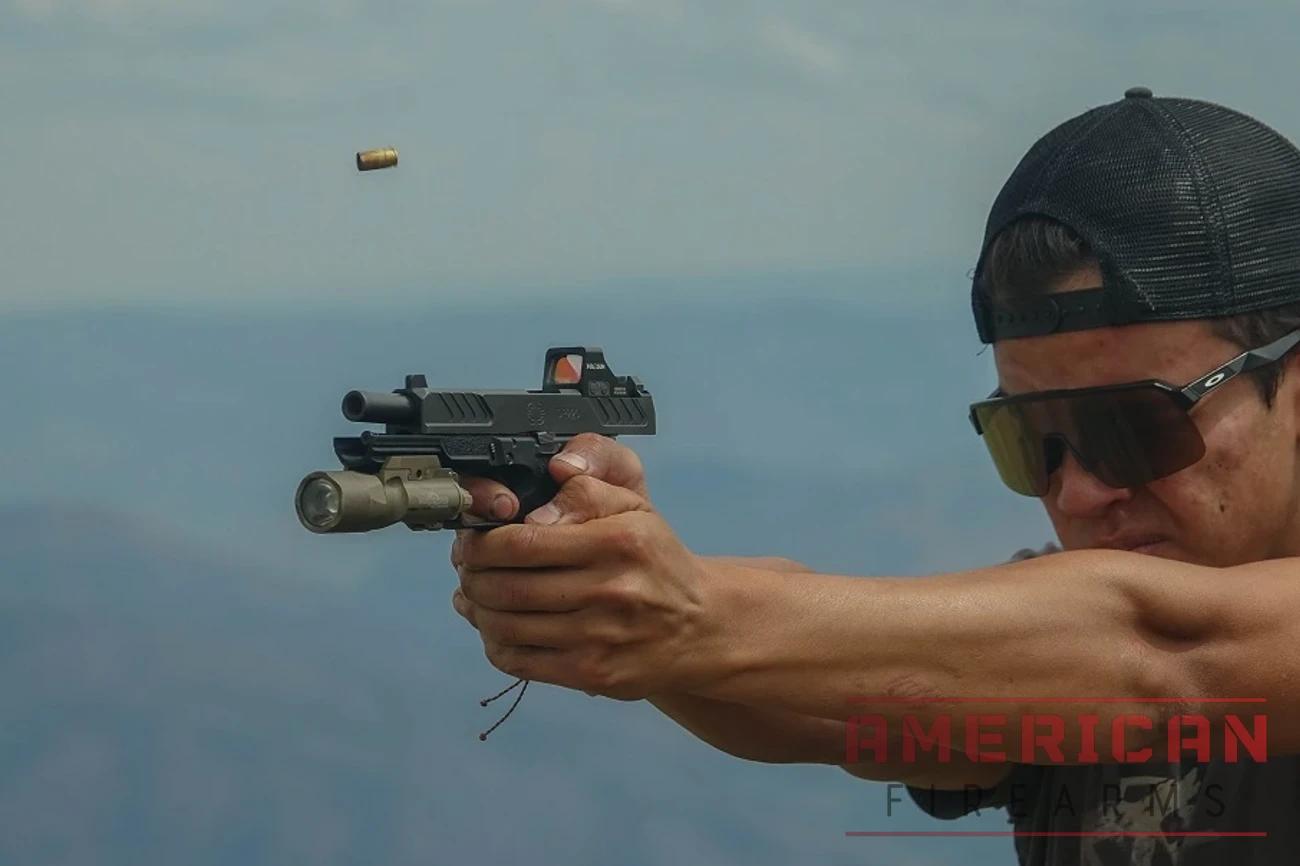
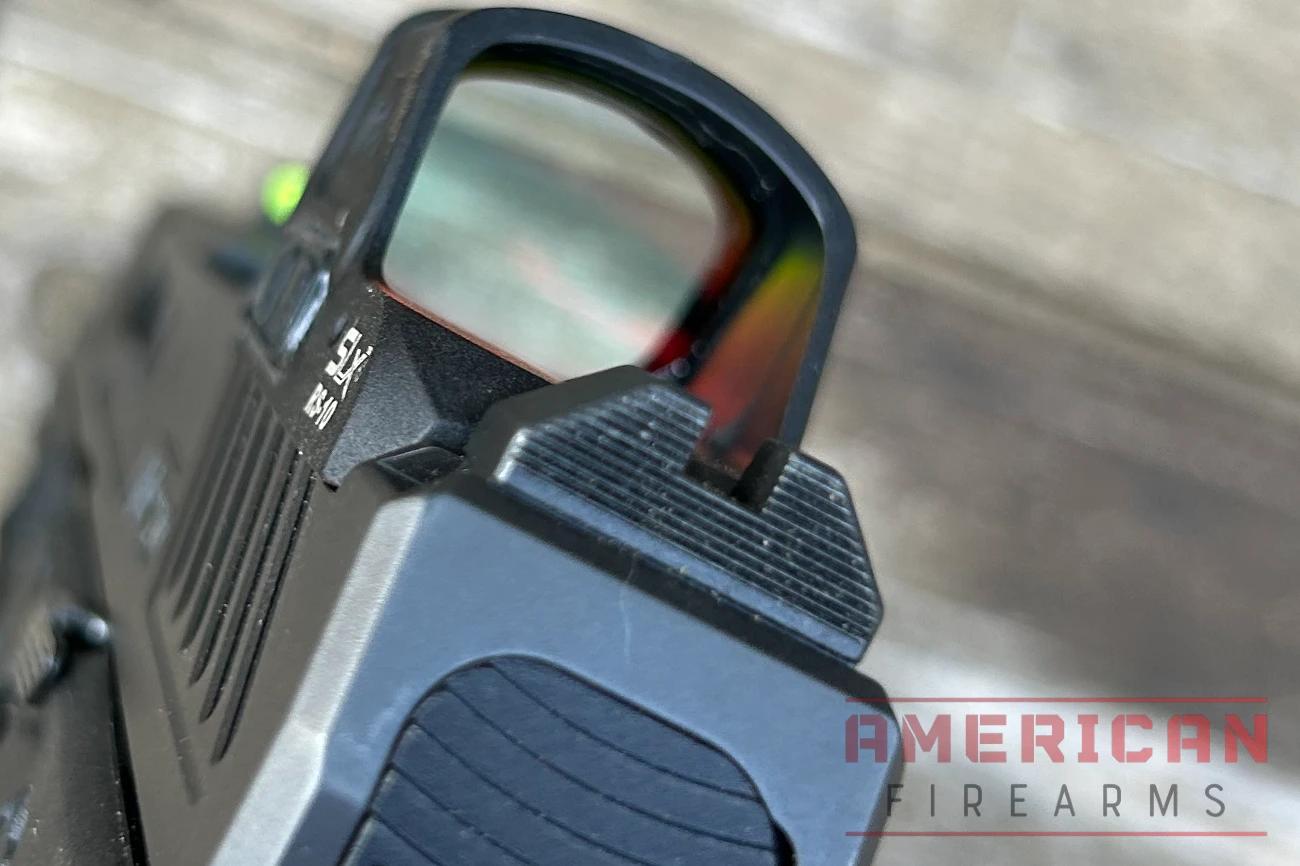
The optic cut uses polymer spacers to accept about ten popular optics, from the RMR and SRO to the DeltaPoint Pro, and sits deep enough to co-witness with the factory irons. Three NPOA backstraps change the grip angle from Glock-like to almost 1911-like, and the gun takes Glock 17 magazines, holsters, and parts. For a closer analog to the discontinued G34, Shadow Systems offers the long-slide DR920L, which we have not tested.
- Key strengths: Glock aftermarket compatibility, consistent trigger, versatile optic cut, adjustable grip angle
- Possible limitations: grip is as blocky as a Glock’s; the undercut is shallow; slide and magazine releases feel budget for the price
Specs: 9mm | 17+1 | 23 oz | 4.5-lb trigger (AF-measured) | $889 MSRP. Read our Shadow Systems DR920 review and Best Glock Clones.
DA/SA Hammer Guns
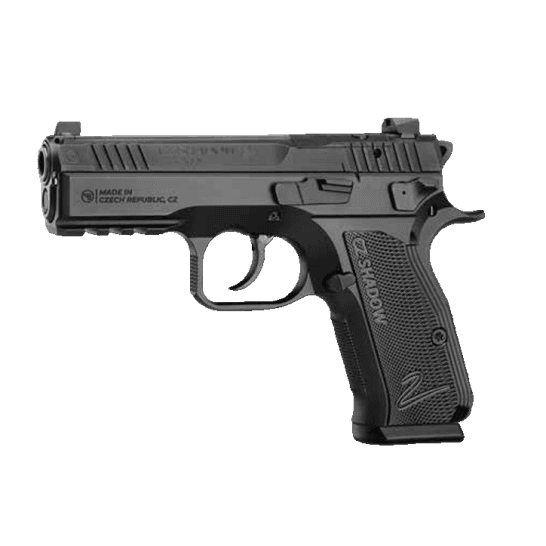
6. CZ Shadow 2 Carry — Best Match-Bred Carry Gun (AF Tested)
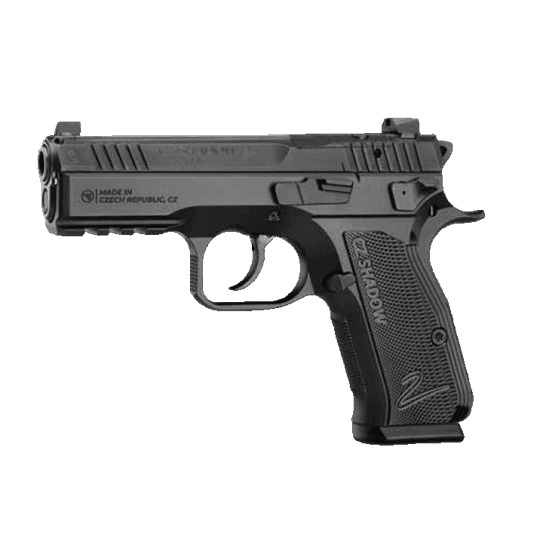
The full-size Shadow 2 has been the benchmark Production gun since 2016, but at 46.5 ounces with a manual safety and no firing pin block, it was never a carry gun. The Shadow 2 Carry is CZ’s answer for shooters who want that trigger on their belt. It swaps the safety for an ambidextrous decocker, adds a firing pin block, installs tritium night sights, and direct-mounts Shield RMSc-pattern optics on a 7075-T6 aluminum frame that weighs 30.7 ounces.
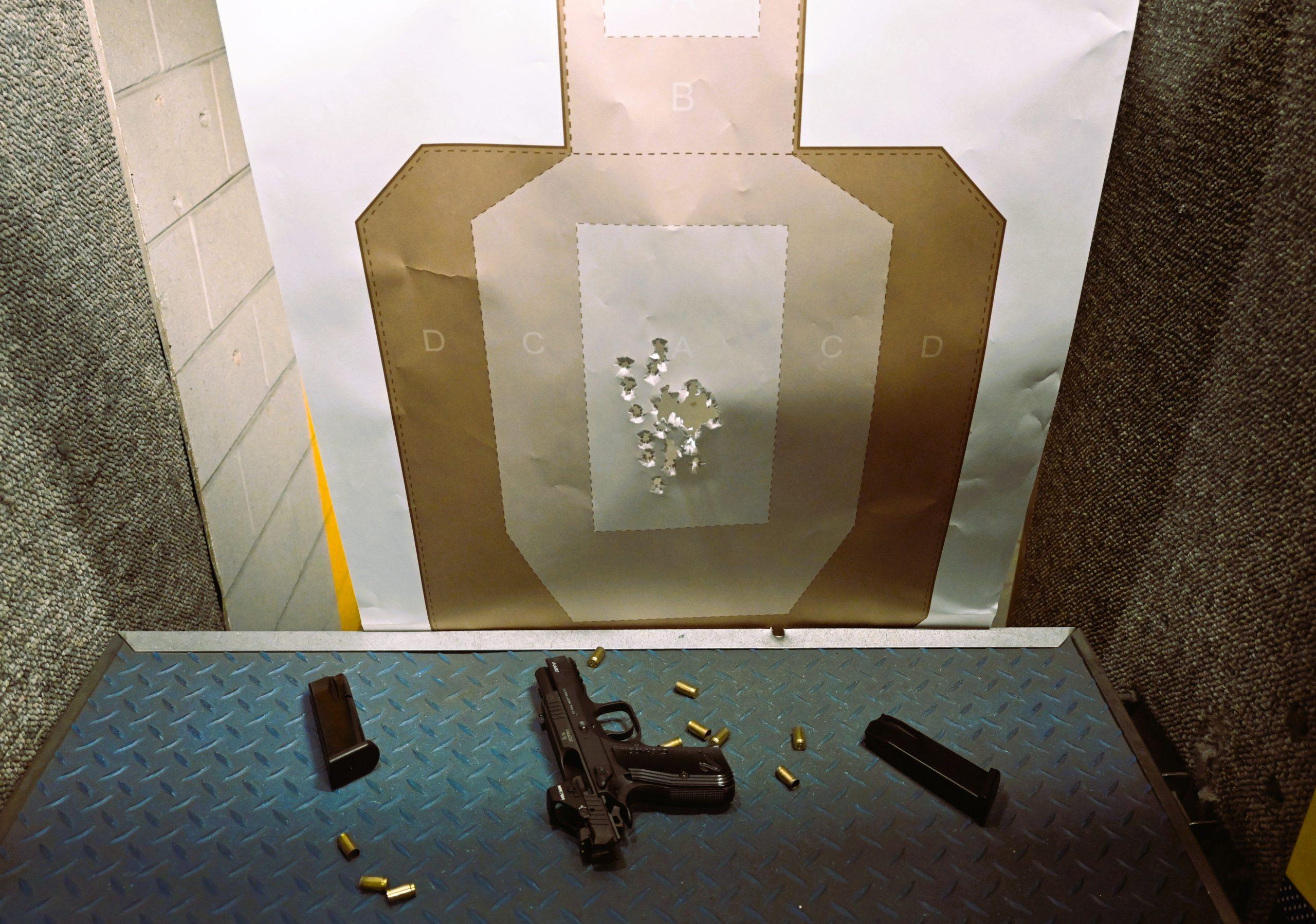
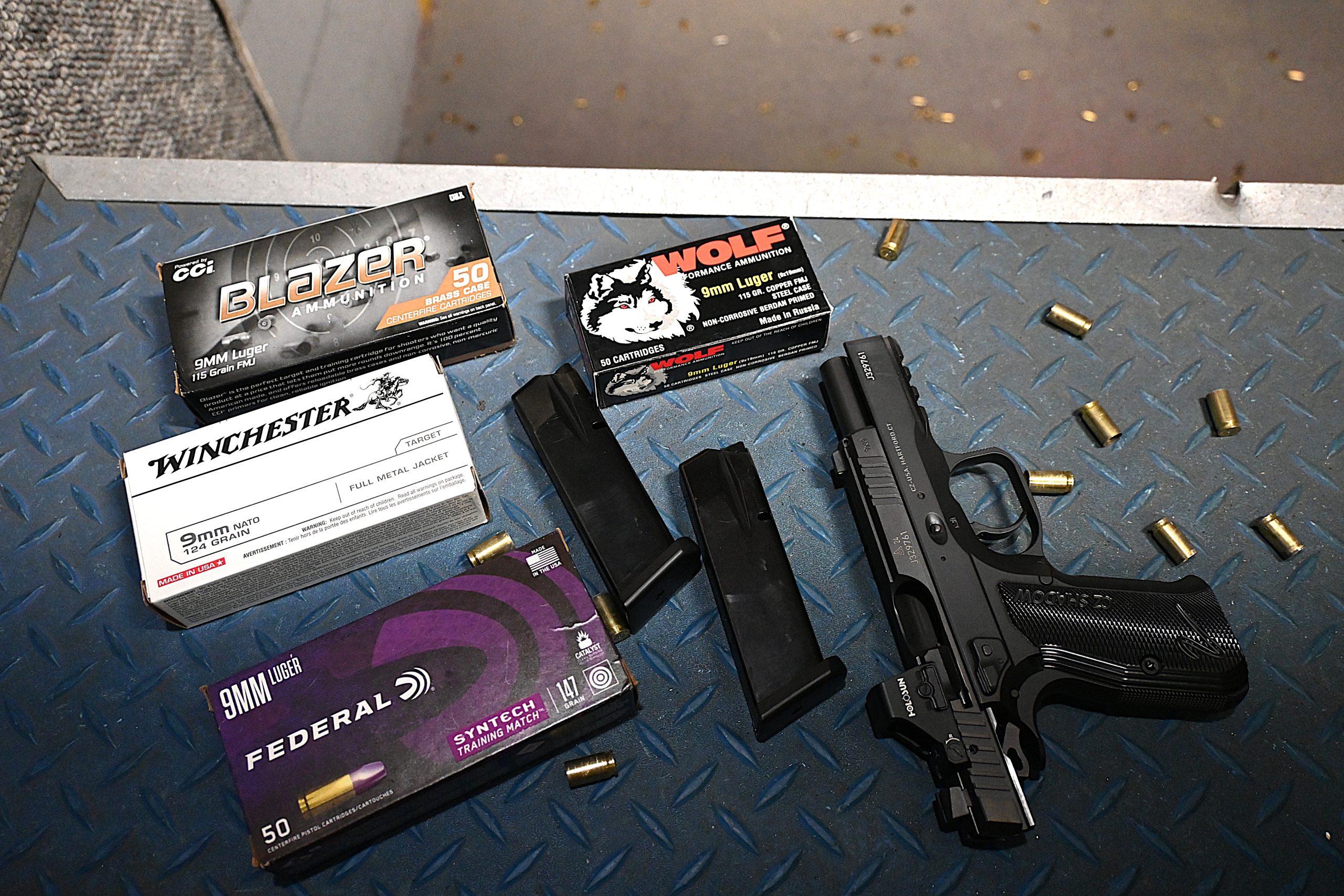
We carried and shot ours for three months and about 2,500 rounds with zero malfunctions attributable to the gun. From the bench at 25 yards, Federal Syntech 115-grain averaged 2.1 inches with a best of 1.7, and Federal HST 124-grain averaged 2.3. A Holosun 407K tightened those to 1.5 to 2.0 inches. Bill Drills from the holster ran 2.3 to 2.5 seconds, and single-action splits held between 0.20 and 0.25 seconds, which is race-gun territory.
The firing pin block costs something. The single-action break measured 3.75 pounds, heavier than the Shadow 2 Compact’s 2.5 to 3.5 pounds, and behind a smooth 10.5-pound double-action first shot. For a pure match gun, the full-size Shadow 2 OR remains the better tool; for a shooter who wants to compete and carry the same pistol, this is the one.
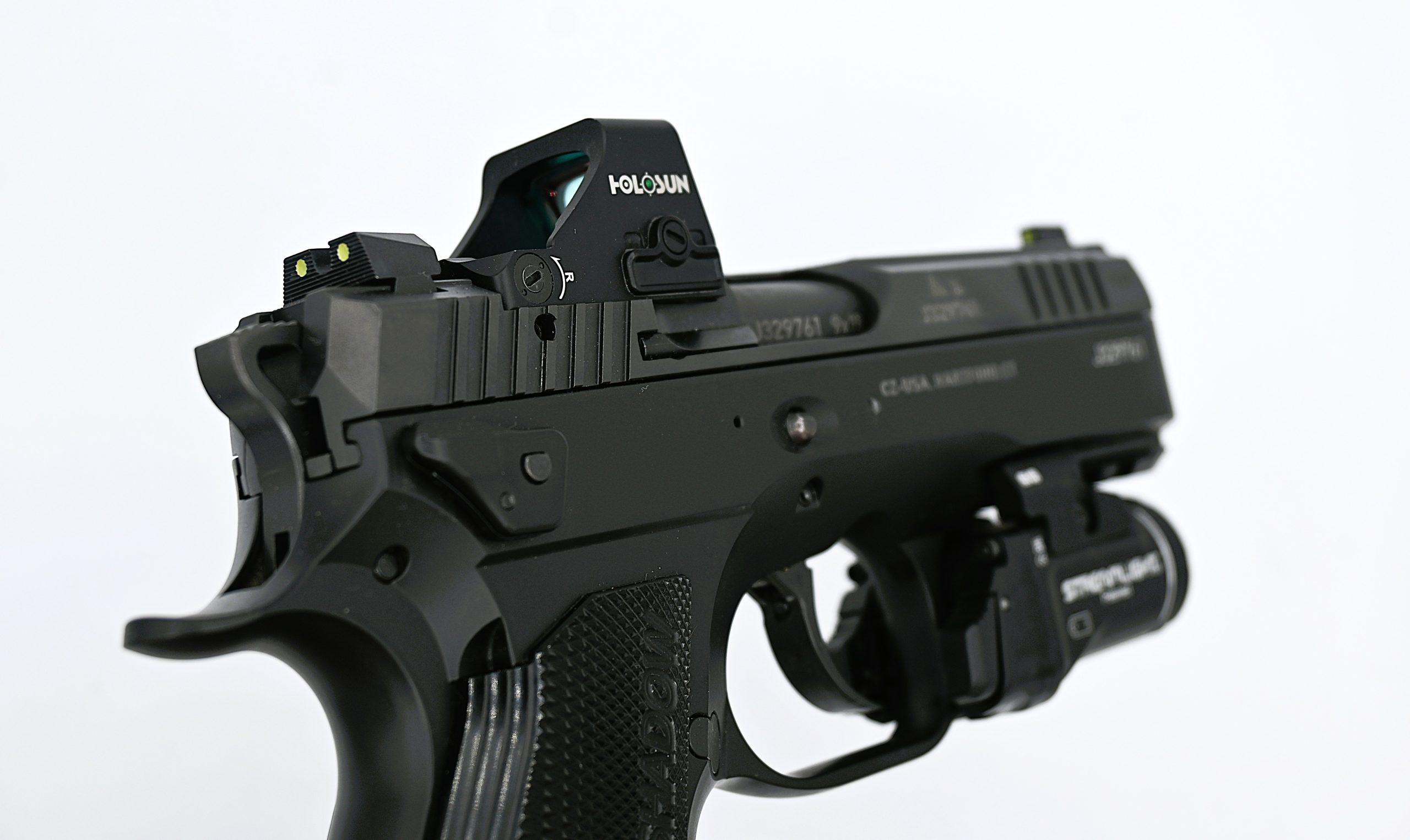
- Key strengths: trigger quality, 25-yard accuracy, recoil management, drop-safe decocker setup
- Possible limitations: heavy for carry at 35 ounces loaded; $1,350–$1,500 street; DA/SA demands dedicated practice
Specs: 9mm | 15+1 | 4-in. barrel | 30.7 oz | $1,599 MSRP. Read our CZ Shadow 2 Carry review and Best CZ Pistols.
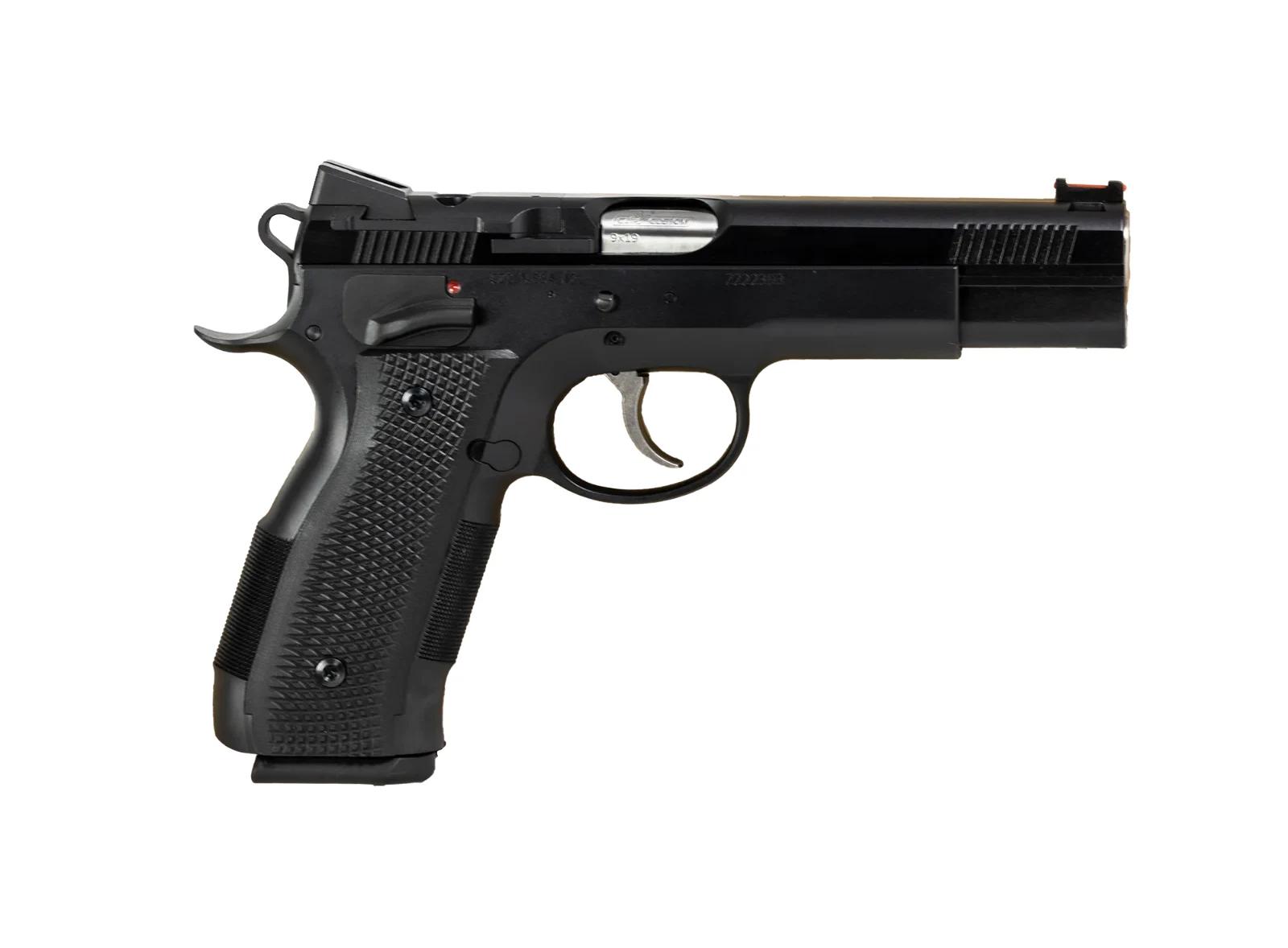
7. CZ A01-SD OR — Best Traditional DA/SA Match Pistol
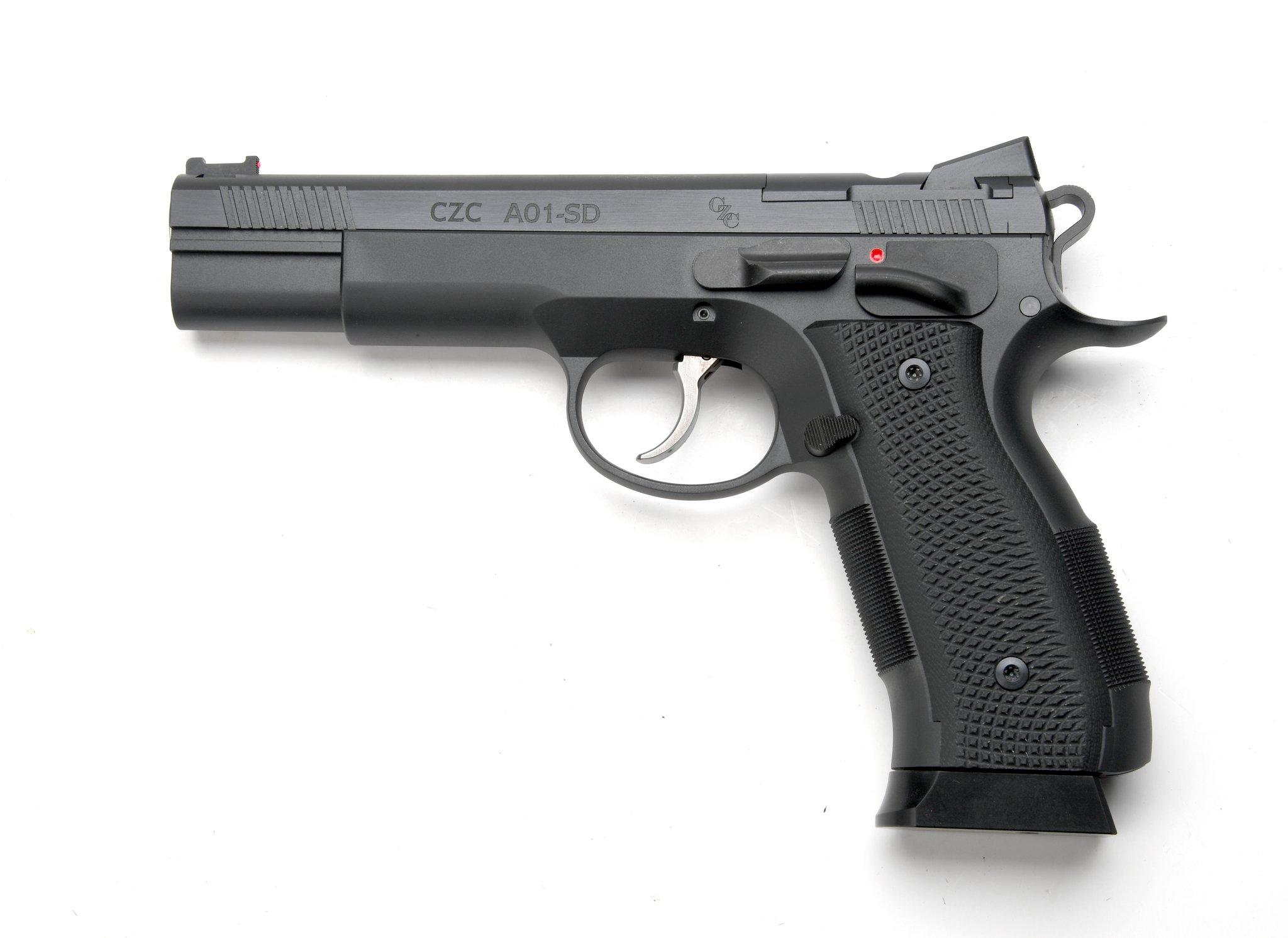
The A01 is CZ Custom’s evolution of the Shadow line, built for shooters who already love a CZ and want the custom-shop version from the factory. The hammer-forged steel frame carries a short dustcover that moves the balance point toward the hand for quicker transitions, and the lockwork includes a CZ Custom competition hammer, short-reset disconnector, extended firing pin, and a CZ 85-style trigger. Retailers list the single-action break at 3 to 3.5 pounds and the double-action at 8 to 8.5.
It weighs 47 ounces, runs a 4.925-inch match-grade bull barrel, holds 19+1 in P-09 magazines, and ships with DPP and RMR plates. A manual thumb safety allows cocked-and-locked carry. We have not tested the A01-SD OR, but our Shadow 2 Carry results give a good read on what this lineage does at 25 yards.
- Key strengths: ergonomics, crisp single action, 19+1 capacity, custom-shop internals
- Possible limitations: $2,699 launch MSRP, with current listings between roughly $2,600 and $3,445; 47 ounces is strictly a match weight
Specs: 9mm | 19+1 | 4.925-in. barrel | 47 oz | steel frame.
2011 Picks
8. Bersa M2Xi — Best Value 2011 (AF Tested)
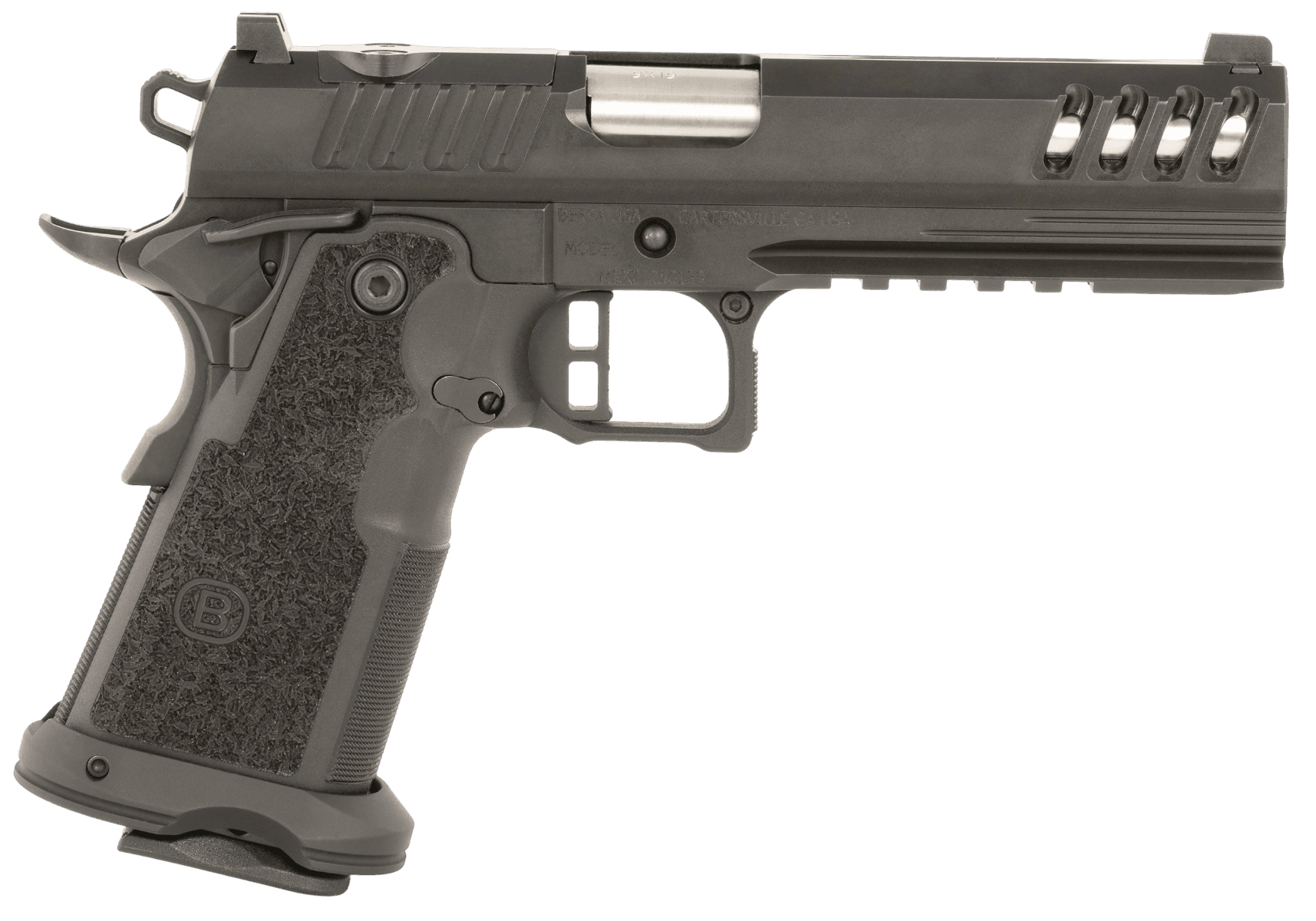
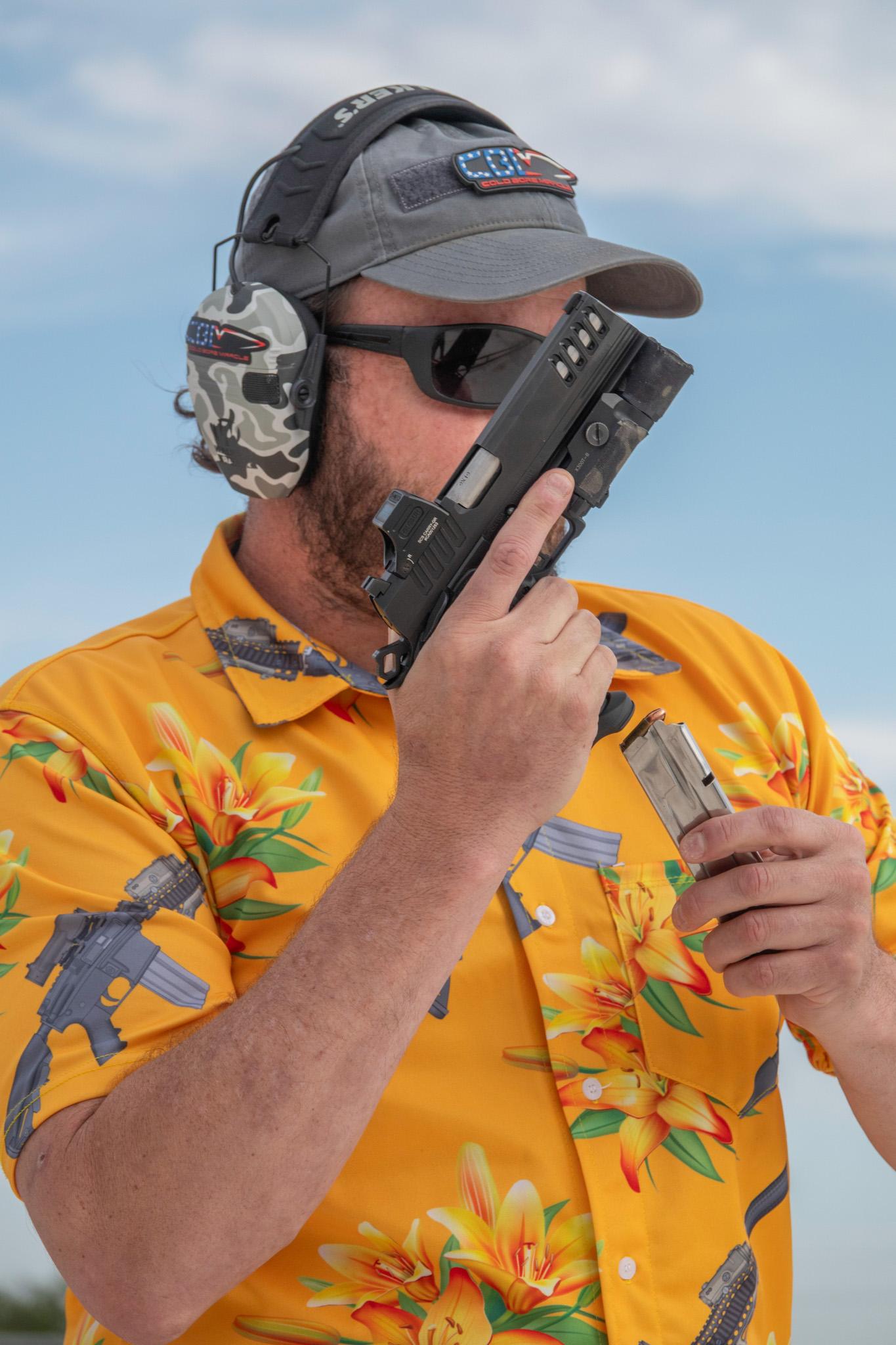
Bersa’s first double-stack 1911 surprised us more than any gun on this list. Reviewer Jeff Wood put more than 2,400 rounds through it over three months, with three other shooters running drills, and logged only two failures. From a sandbagged rest at 25 yards, it averaged 1.25 inches, with Federal Champion 115-grain printing a 1-inch average. His Lyman gauge recorded a 2.5- to 2.75-pound trigger across 12 pulls, lighter than the Kimber 2K11’s 3.1-pound break.
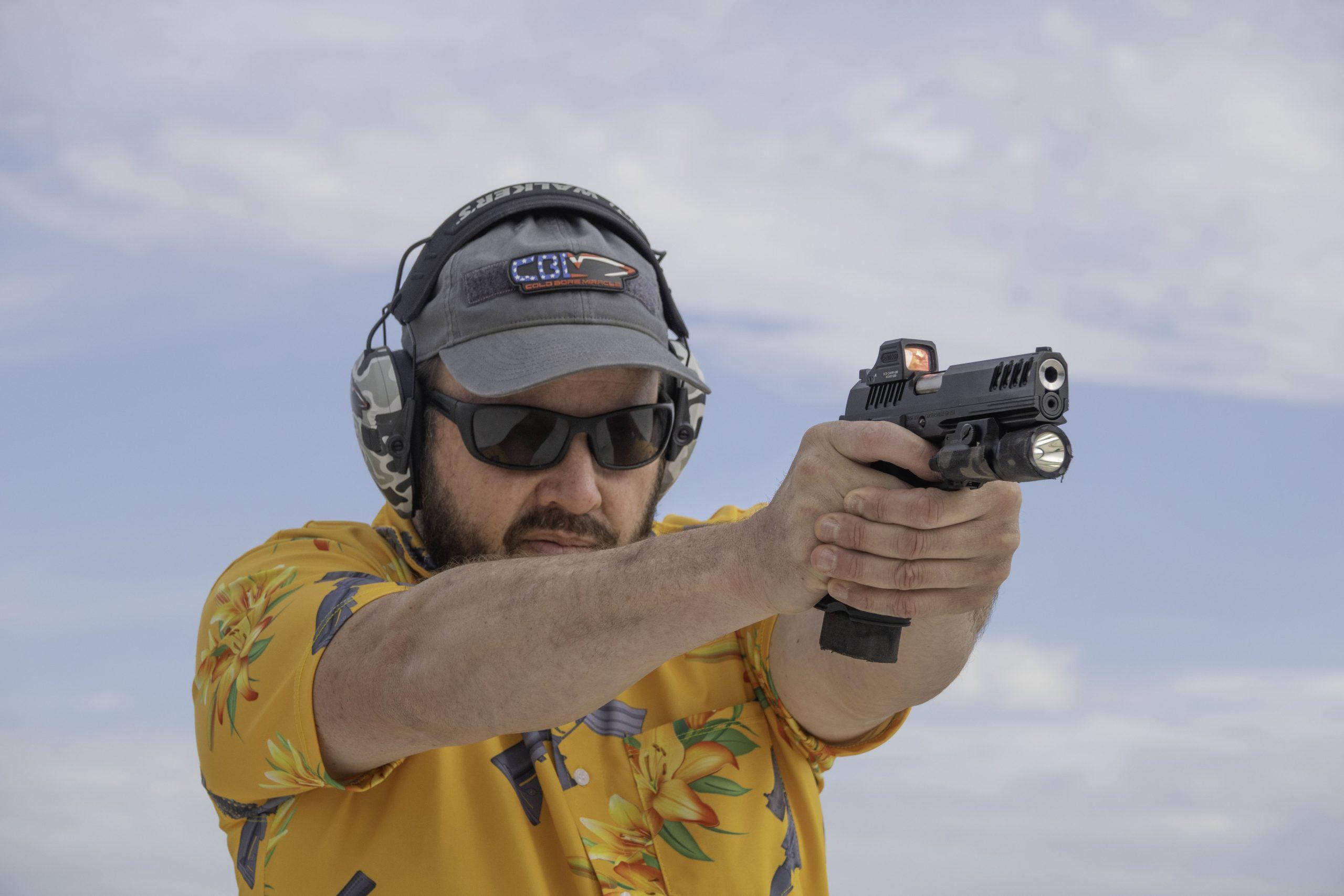
The M2Xi is built on a 416 stainless frame and slide with a polymer grip module, a bushingless 5-inch bull barrel, and a Wilson/Nowlin-style feed ramp that fed everything smoothly, even with the slide eased forward. The extended ambidextrous slide release lets you drop the slide without breaking your grip, a detail Wood did not know he wanted until he had it. It weighs 38.5 ounces and ships with two 18-round magazines.
- Key strengths: accuracy, trigger, tight slide-to-frame fit, price under the Prodigy
- Possible limitations: optic cut accepts only the Holosun K-series footprint; no 4.25-inch model yet; two-piece guide rod is fussy to reassemble
Specs: 9mm | 18+1 | 5-in. barrel | 38.5 oz | $1,479 MSRP. Read our Bersa M2Xi review.
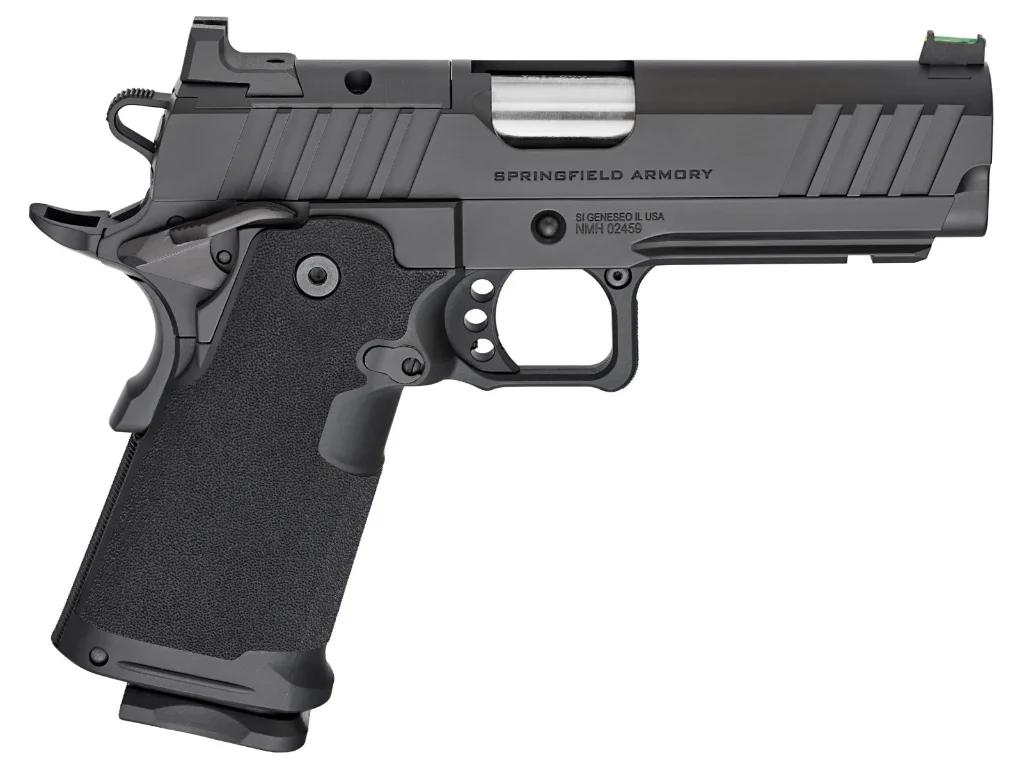
9. Springfield Prodigy — Best 2011 for Upgraders (AF Tested)
$1567.99
50
EXCEPTIONAL
Performance Scores
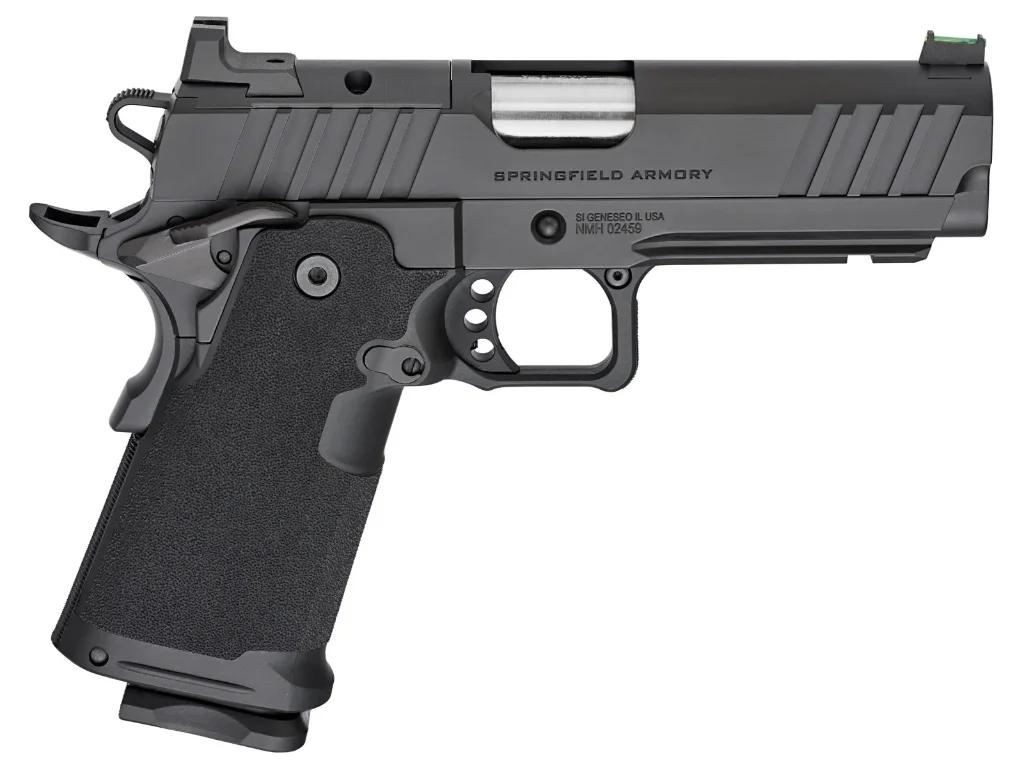
The Prodigy brought the factory 2011 under $1,500 at launch and drew “Staccato killer” headlines, then a wave of early reliability complaints. Our reviewer Kenzie Fitzpatrick, a professional 3-Gun competitor, owns both the 5-inch and 4.25-inch versions and runs the 5-inch in USPSA Limited Optics. Her current-production guns ran every bullet profile without issue after a 200- to 300-round break-in.
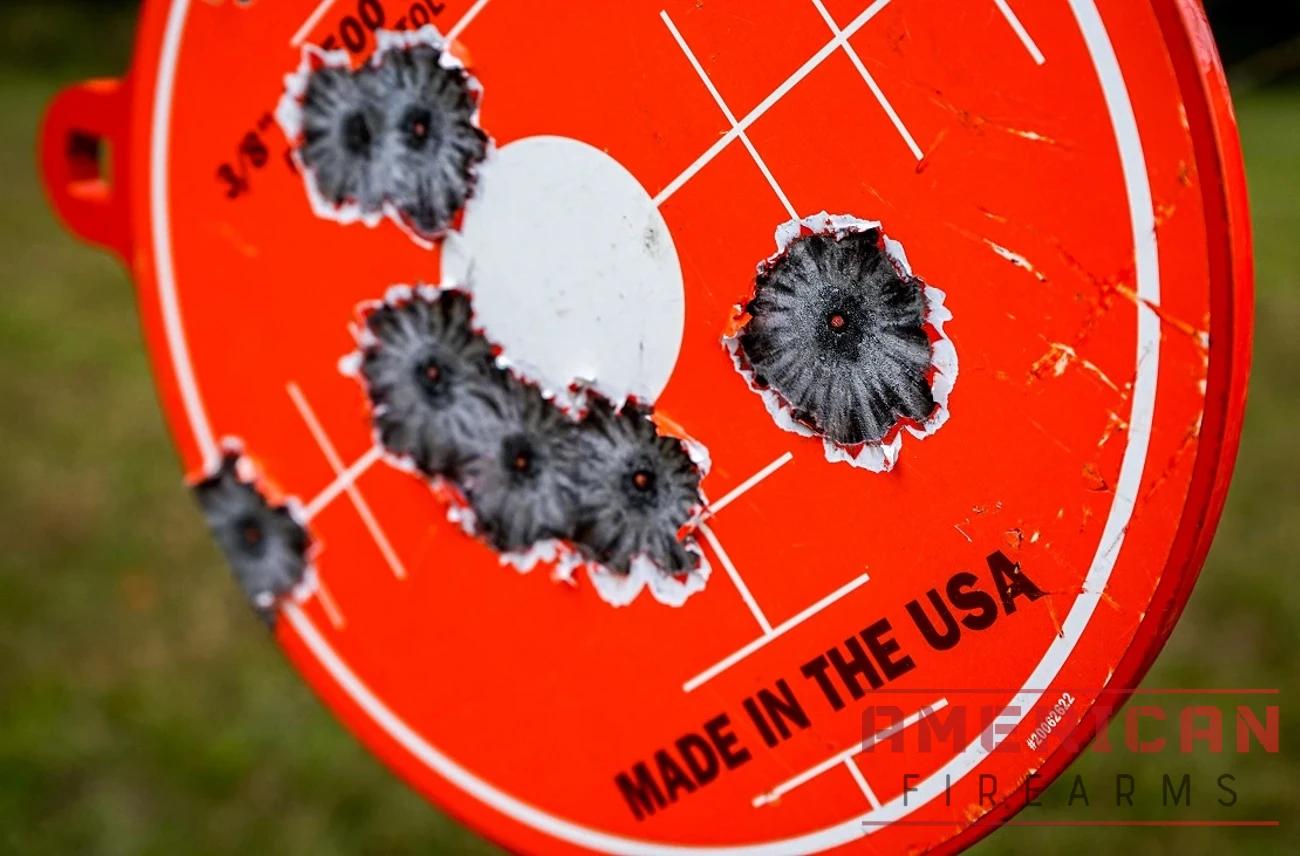
Accuracy was the soft spot. With a red dot from a sandbag at 25 yards, the 5-inch averaged 1.75 inches with Federal Syntech 124-grain Training Match and 2.25 with American Eagle; the 4.25-inch opened to 2.25 to 3.00 inches. The stock trigger broke at about 4.5 pounds, and the flush slide stop is nearly impossible to use under the timer. Her race configuration adds a Phoenix Trinity aluminum grip module, Taran Tactical magwell, Red Dirt flat trigger, and EGW slide stop and ignition kit, and that is the point: the Prodigy takes 2011 parts, so it is a platform to build rather than a finished race gun.
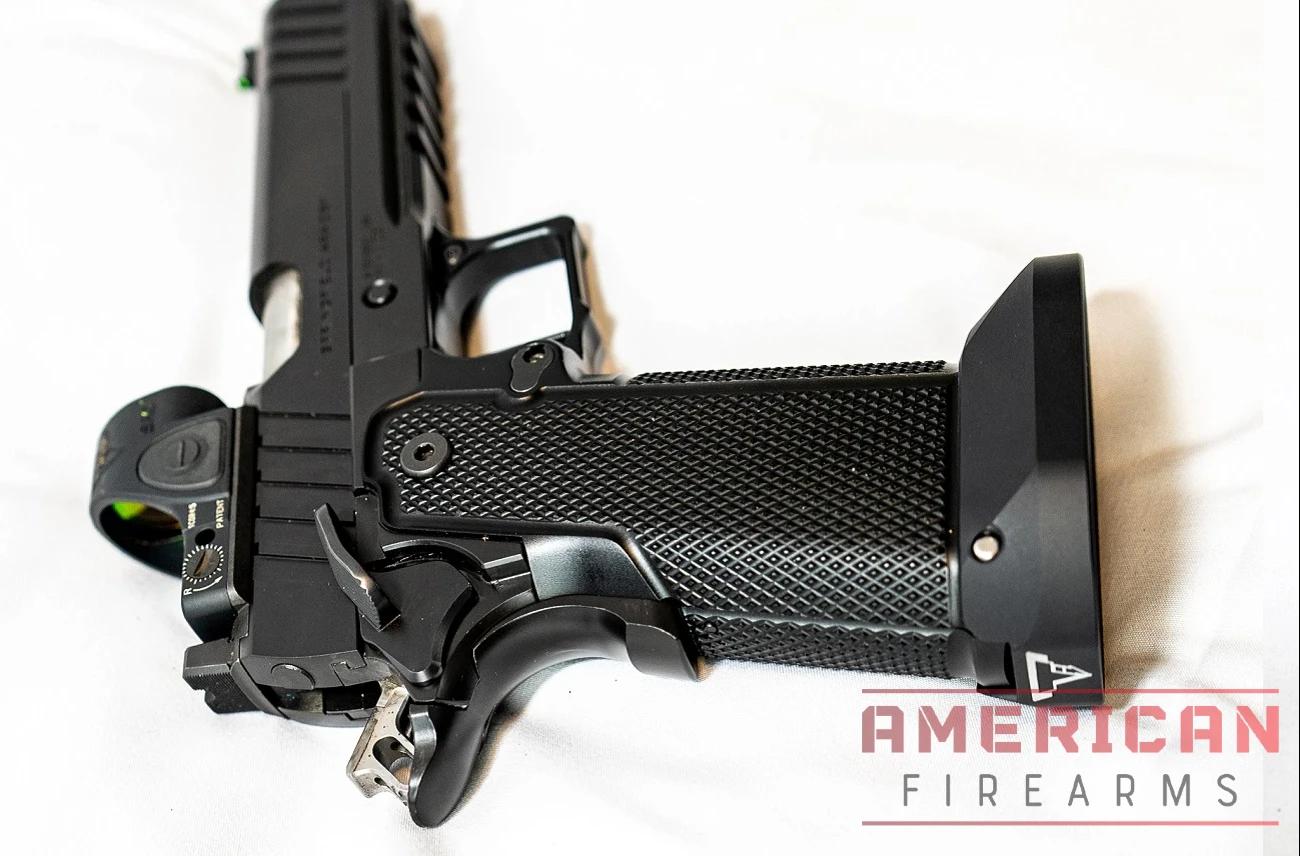
- Key strengths: price, AOS optic system, 17- and 20-round magazines, deep aftermarket
- Possible limitations: looser groups than the M2Xi or 2K11; slick, flush slide stop; AOS plates are expensive
Specs (5-in.): 9mm | 17+1 or 20+1 | 33 oz | forged steel frame | $1,499 launch MSRP, about $1,630 today. Read our Springfield Prodigy review.
10. Kimber 2K11 — Best Mid-Price 2011 (AF Tested)
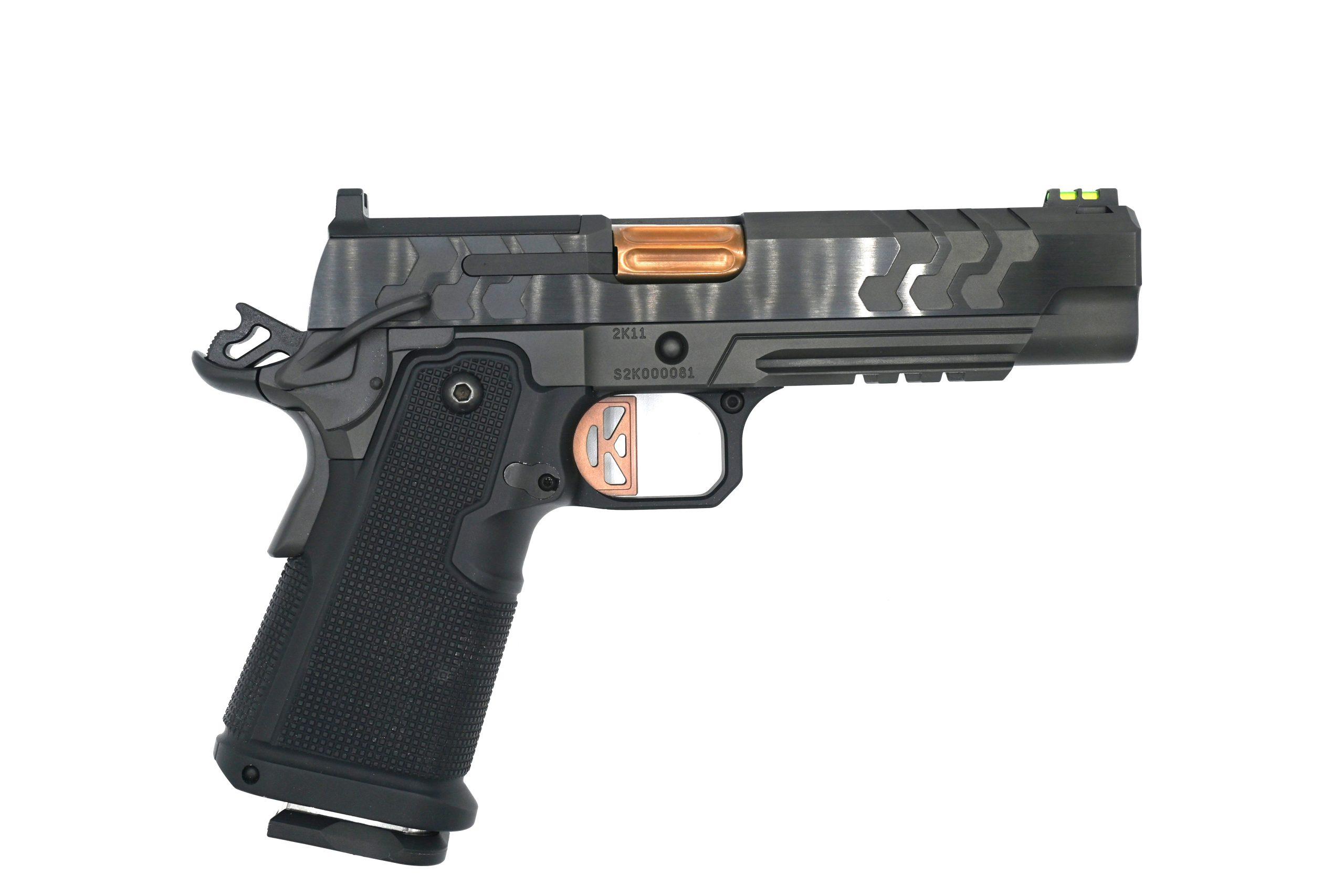
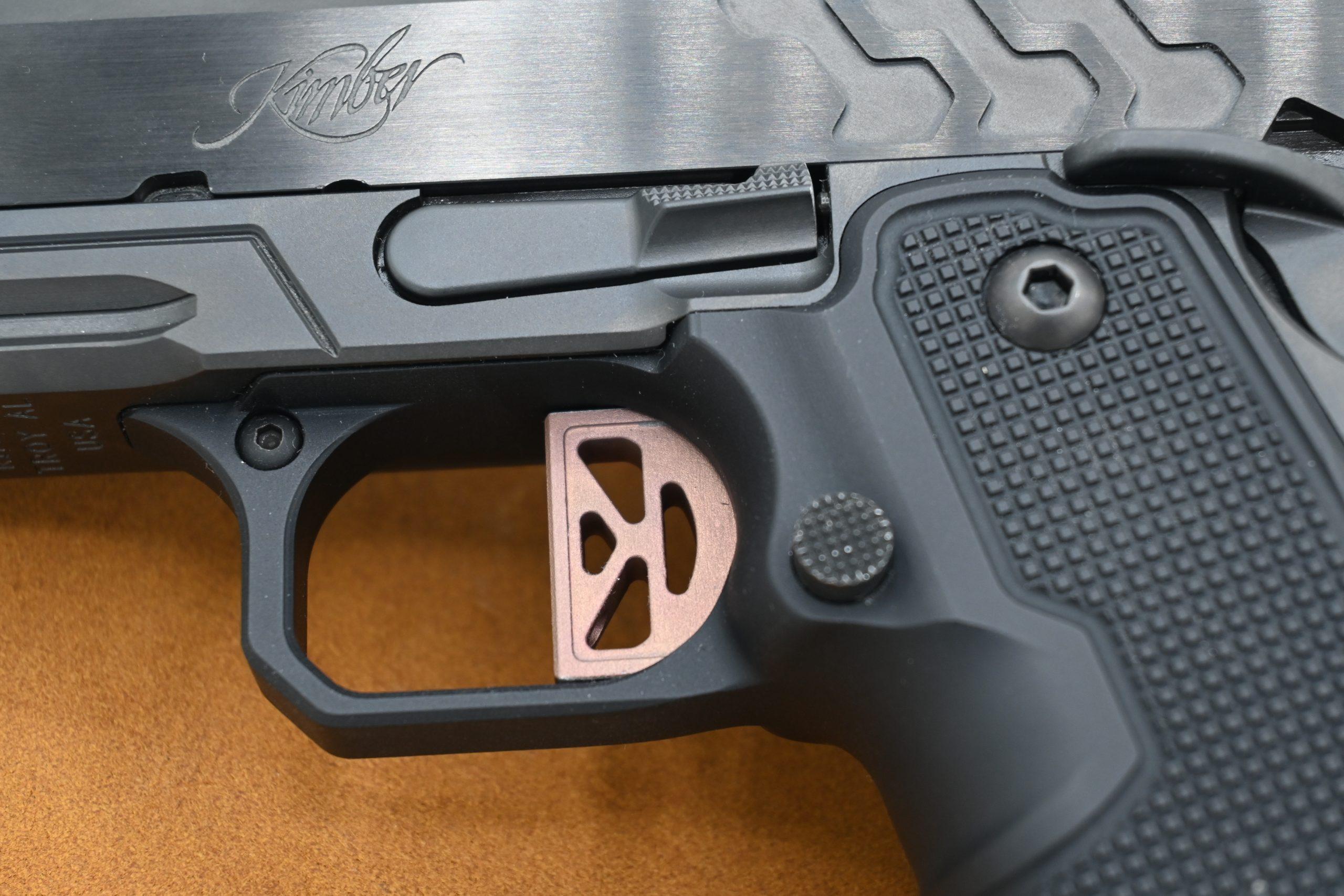
Kimber’s 2K11 sits between the Prodigy and Staccato on price and closer to Staccato on trigger. Over six months and 847 rounds in 9mm and .45 ACP, its GT trigger broke at 3.1 pounds with minimal variation. The 9mm averaged 1.58 inches at 25 yards with Federal Syntech and 1.72 with Winchester NATO, and both test guns hit an 8-inch plate at 50 yards on roughly 80 percent of first shots.
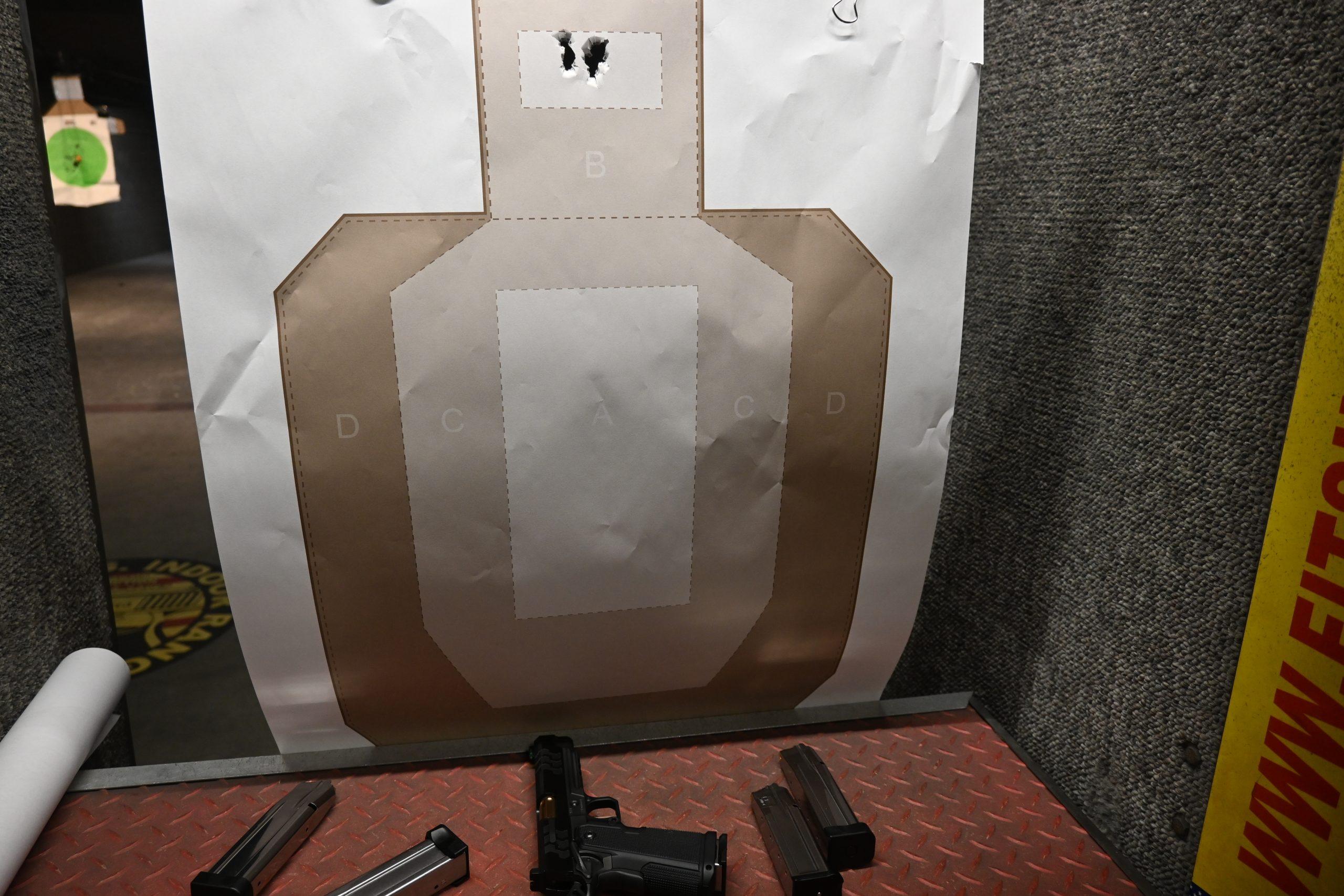
Reliability took a break-in. The 9mm had two failures in its first 75 rounds with Blazer Brass, and the .45 had three stoppages, but both ran clean after 150 to 200 rounds. The machined aluminum grip module over a stainless subframe puts the 9mm at 38.5 ounces, and the gun ships with three magazines and a C&H plate for RMR/SRO-pattern optics. It excels in USPSA Limited Optics, but our testers found it exceeds IDPA equipment limits.
- Key strengths: trigger, accuracy, recoil control, three magazines included
- Possible limitations: break-in period; magazines run $55–$65, and aftermarket 2011 mags need modification; limited holster options
Specs (9mm OR): 17+1 or 20+1 | 5-in. barrel | 38.5 oz | $1,995 MSRP, $1,700–$1,900 street. Read our Kimber 2K11 review.
11. Vudoo Gun Works Priest — Best Precision 2011 for Open and Limited Optics
$3925
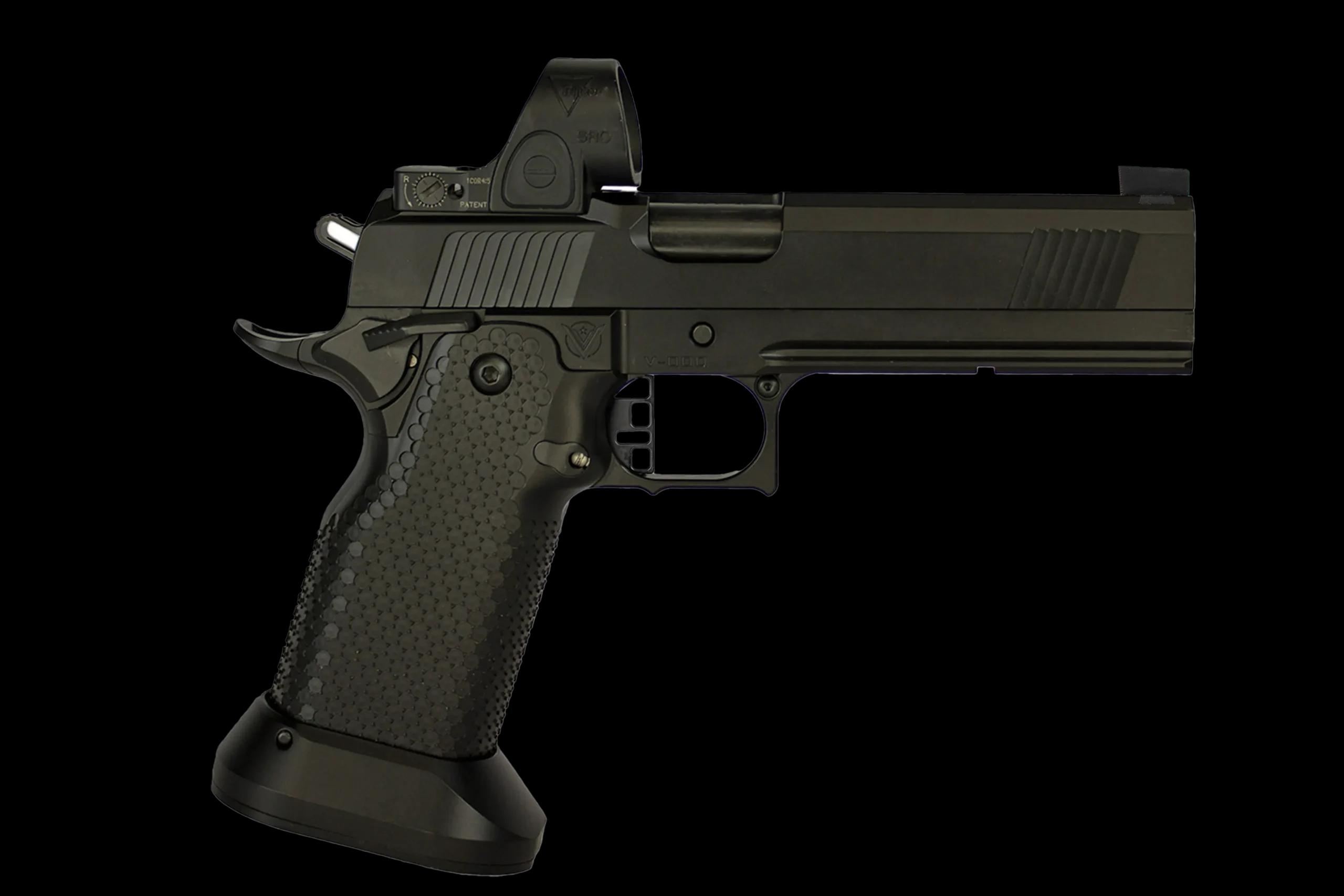
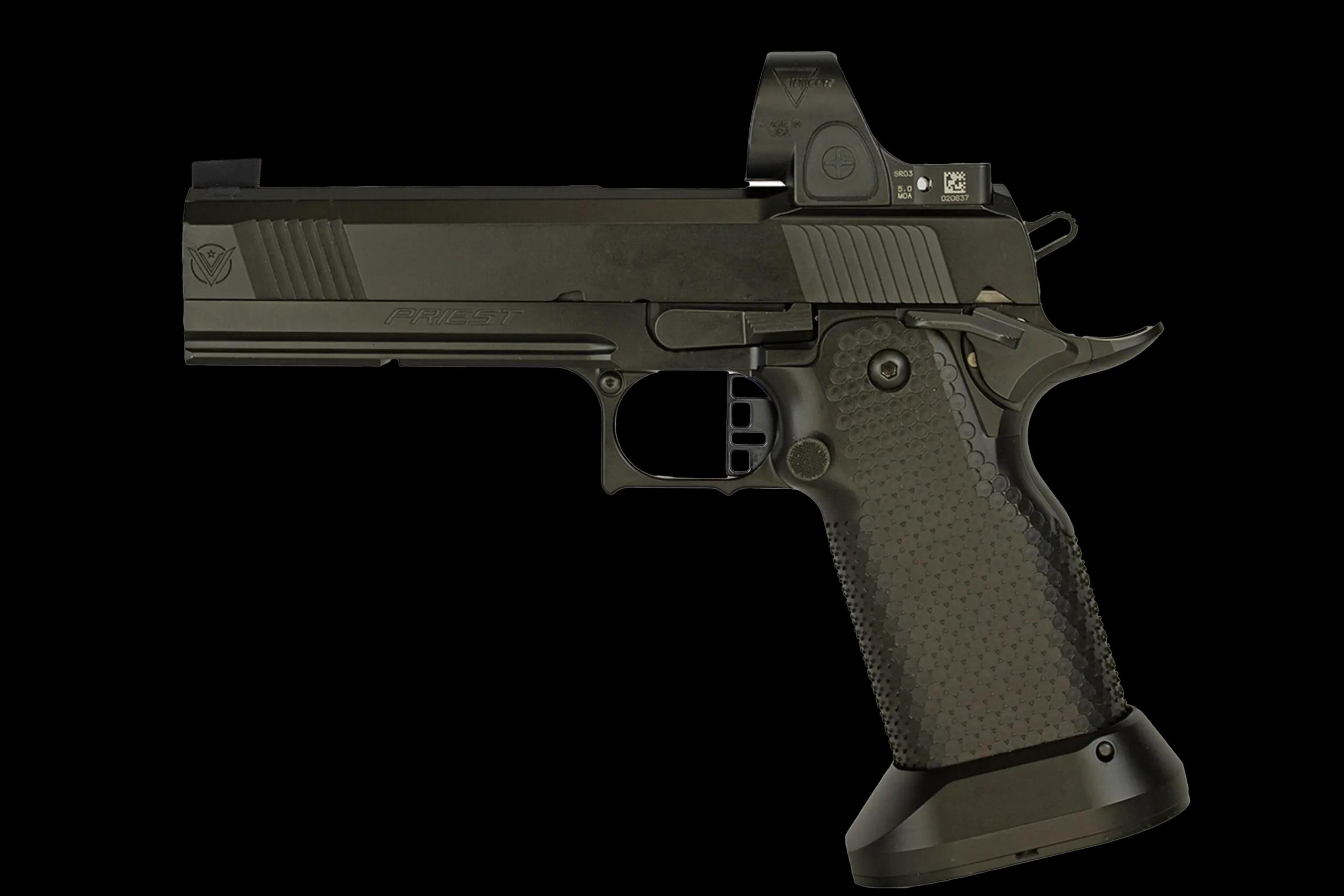
Vudoo built its name on precision rimfire rifles, and the Priest carries that obsession with fit into a double-stack 2011, with slide-to-frame fit carried over from the company’s Mobius 1911. The 5-inch LDC Heavy is the version built for the clock. Its long dust cover runs the full length of the slide to put weight out front, and the grip is aggressively textured stainless steel rather than aluminum, which adds still more mass to soak up recoil. An extra-large magwell takes 140mm and longer magazines, and the gun ships with two 141mm, 20-round STI/SVI-pattern magazines.
The rest of the package is race-ready from the box. The slide wears a contour-matched RMR cut with co-witness irons, and Vudoo fits a Red Dirt F3 flat trigger, an ambidextrous competition-blended safety, a flush-cut bull barrel, and a toolless guide rod. Shooters who want a Priest they can also carry can step down to the 4.25-inch Carry or a standard-dust-cover 5-inch model.
We have not tested the Priest. It earns its place on precision, build quality, and a heavy, recoil-damping configuration that few factory 2011s match. Vudoo does not publish a weight for the LDC Heavy, but with a full-length dust cover and a stainless grip, expect it to sit at the heavy end of this list.
- Key strengths: full-length dust cover and stainless grip for recoil control, 20-round capacity, co-witness RMR cut, match trigger from the factory
- Possible limitations: $3,925 MSRP, the most expensive gun in this guide; no published weight; not sold to California or Massachusetts residents; limited dealers and frequent sellouts
Specs: 9mm | 20+1 | 5-in. flush-cut bull barrel | full-length dust cover, stainless grip | Red Dirt F3 trigger | $3,925 MSRP. See Best 2011 Pistols.
Quick Comparison of the Best Competition Pistols
The table lines up every pick on the specs that matter on the clock. Prices are MSRP unless marked street, and they move often, so check current listings before you buy.
| Pistol | Best for | Action | Capacity | Weight | Trigger | Price | AF Tested |
|---|---|---|---|---|---|---|---|
Canik SFx Rival-S | Budget steel race gun | Striker | 18+1 | 42.72 oz | Flat aluminum | $899.99 | Platform tested |
Springfield Echelon 4.0FC | Carry Optics under $750 | Striker | 17+1 | 24 oz | 5.75 lb (measured) | $599–$650 street | Yes; 2,127 rds |
S&W M&P9 M2.0 Competitor | Value aluminum frame | Striker | 17+1 | 29 oz | Enhanced sear | $999 | No |
Sig P320-AXG Legion | Modular high capacity | Striker | 21+1 | 36.1 oz | Legion flat | ~$1,650 | No |
Shadow Systems DR920 | Glock-pattern option | Striker | 17+1 | 23 oz | 4.5 lb (measured) | $889 | Yes; 6 months |
CZ Shadow 2 Carry | Compete and carry | DA/SA | 15+1 | 30.7 oz | 3.75 lb SA (measured) | $1,350–$1,500 street | Yes; 2,500 rds |
CZ A01-SD OR | Traditional DA/SA match | DA/SA | 19+1 | 47 oz | 3–3.5 lb SA | $2,699 launch | No |
Bersa M2Xi | Value 2011 | SA | 18+1 | 38.5 oz | 2.5–2.75 lb (measured) | $1,479 | Yes; 2,400+ rds |
Springfield Prodigy | 2011 to upgrade | SA | 17+1 / 20+1 | 33 oz | ~4.5 lb (measured) | ~$1,630 | Yes |
Kimber 2K11 | Mid-price 2011 | SA | 17+1 / 20+1 | 38.5 oz | 3.1 lb (measured) | $1,995 | Yes; 847 rds |
Vudoo Priest 5-Inch LDC Heavy | Precision Open / Limited Optics | SA | 20+1 | Not published | Red Dirt F3 flat | $3,925 | No |
Division Rules That Decide Your Pistol
Buy for the division you plan to shoot, because the rulebook decides what is legal long before the timer decides what is fast. Carry Optics accounted for roughly 37 percent of USPSA division activity in 2026, according to Swampfox Optics’ rules guide, which is why most new competitors start there with an optics-ready striker or DA/SA gun from USPSA’s approved handgun list.
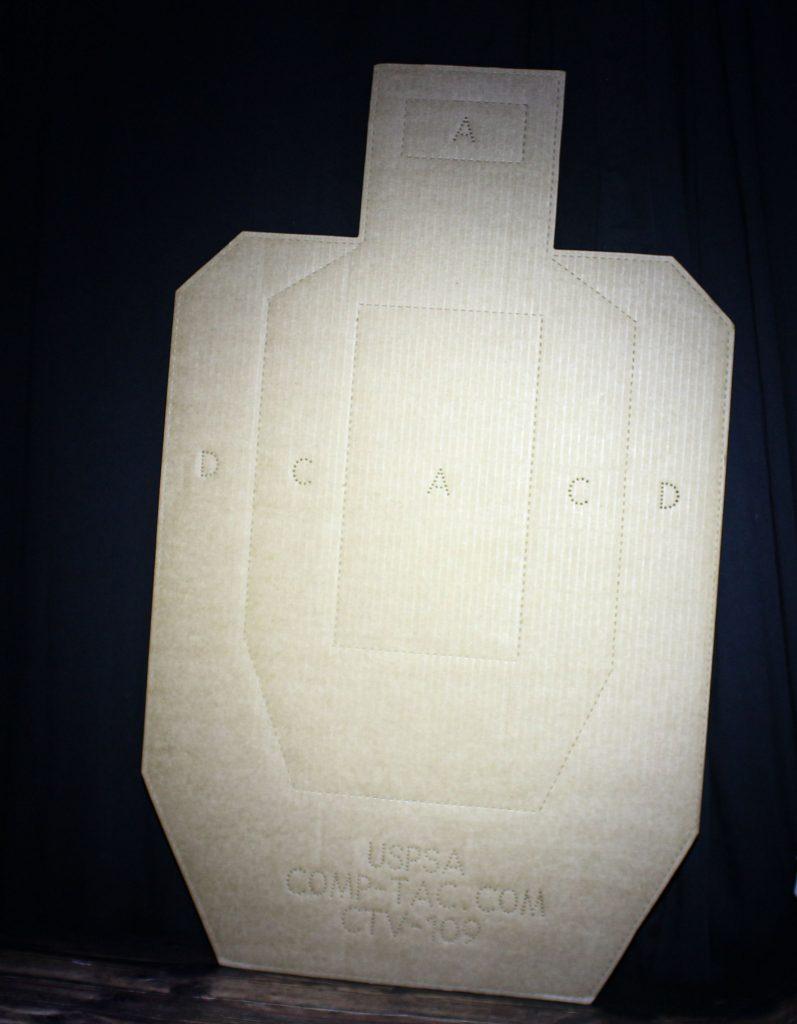
USPSA’s other pistol divisions sort guns by sights, action, and modifications. Production stays with iron sights and largely stock guns. Limited and Limited Optics favor high-capacity single-action guns, the natural home of the 2011s on this list. For example, Kenzie Fitzpatrick runs her 5-inch Prodigy in Limited Optics, and our Kimber testers found the 2K11 at its best there. Open allows compensators and is where race guns like the Priest’s heavier configurations make sense. Single Stack keeps the classic 1911 alive. Scoring adds power factor, bullet weight multiplied by velocity, which sorts loads into minor and major and is why shooters like Fitzpatrick choose ammunition that reliably clears the minimum.
IDPA writes its own equipment limits by division, including Stock Service Pistol, Enhanced Service Pistol, Carry Optics, and Compact Carry Pistol. We shot the Echelon in an IDPA match and found it a natural fit for SSP, while our testers found the full-size 2K11 exceeds IDPA’s dimensional limits. Steel Challenge runs its own centerfire and rimfire divisions with fewer equipment restrictions and rewards pure speed.
Rules change, and features like ported slides, lightening cuts, and aftermarket triggers can move a gun out of a division. Check your exact configuration against the current USPSA rulebook and approved handgun list, the IDPA rulebook, or Steel Challenge rules before you buy.
How To Choose the Right Competition Pistol
Start with recoil, because it is the one trait you cannot fix with a part swap. Then settle the optic question, and only then weigh ergonomics and capacity against what you can spend. Every shooter who skips that order ends up buying a second gun.
Choose Based on Recoil and Follow-Up Speed
Weight is the blunt instrument: a 42-ounce Rival-S or 47-ounce A01 moves less than a 24-ounce Echelon. Bore axis, grip height, and slide mass do the finer work. A deep undercut lets your hand ride closer to the bore, lightening cuts like those on the M&P Competitor reduce the mass flying backward, and ports like the AXG Legion’s expansion chamber redirect gas to push the muzzle down. The only reliable test is your own hands. Borrow guns at a club match, or rent them, and shoot a Bill Drill on each. Watch how far the dot leaves the target and how quickly it comes back, then compare the timer.
Choose Based on Optics and Sights
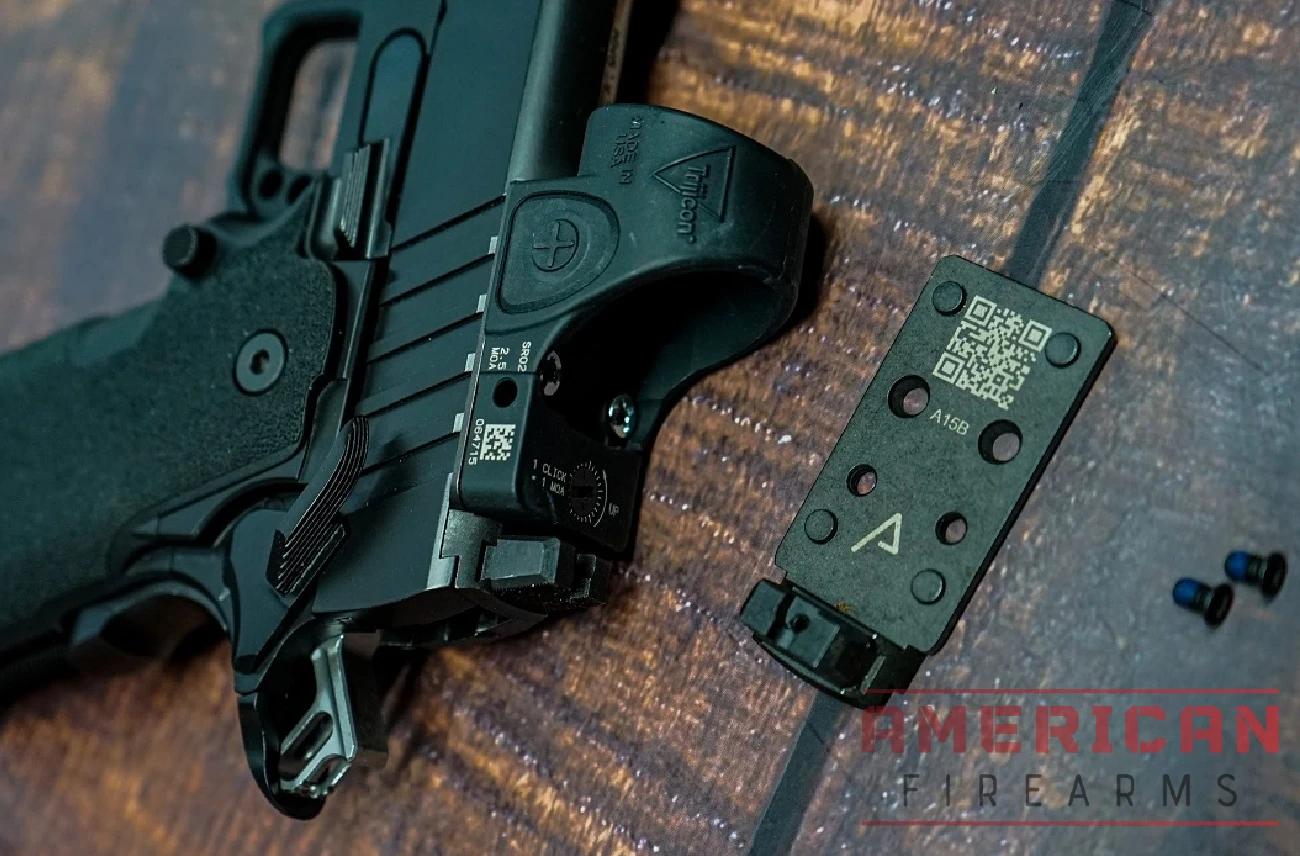
A factory optic cut saves money and height. Direct-mount systems like the Echelon’s VIS and the Shadow 2 Carry’s RMSc cut keep the dot low enough to co-witness with irons, while plate systems like the Prodigy’s AOS add a part and some height. Match your slide to the optic you want before you buy: the Bersa M2Xi takes only the Holosun K-series footprint, and the Kimber’s RMR-pattern plate will not accept a Trijicon RCR despite the shared footprint. For Carry Optics distances, a larger window like the Trijicon SRO or Holosun 507 class makes finding the dot on the draw easier. See our guide to the best pistol red dot sights.
Choose Based on Budget and Self-Defense Potential
Competition tuning and defensive carry pull in opposite directions. Heavy frames, light triggers, flared magwells, and compensators help on the clock and hurt in a waistband. If one gun has to do both jobs, the Echelon, Shadow 2 Carry, M&P Competitor, and DR920 stay practical for carry or home defense. The Shadow 2 Carry in particular was designed for it, with a decocker, firing pin block, and night sights. The Rival-S, A01-SD OR, and full-size 2011s belong in a range bag or a duty-style OWB rig, not concealed. Whatever you choose, budget for a quality belt and holster from our best concealed carry holsters guide.
What It Costs to Shoot Your First Season
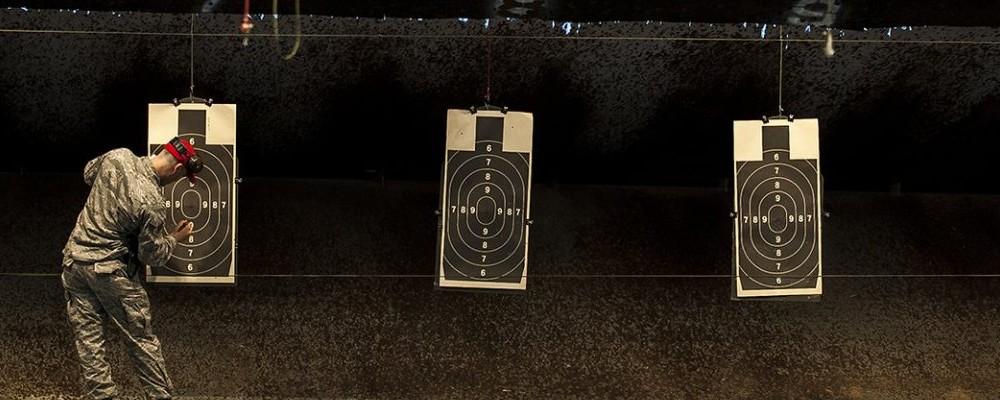
The pistol is often less than half of what you will spend in year one. The table below prices a striker-fired Carry Optics setup and a 2011 Limited Optics setup using figures from our own reviews. Match fees vary by club, so ask your local range.
| Item | Springfield Echelon 4.0FC setup | Kimber 2K11 OR setup |
|---|---|---|
Pistol (street) | $599–$650 | $1,700–$1,900 |
Red dot | $250–$500 (Holosun 507C to Trijicon RMR) | $450–$500 (Trijicon RMR class) |
Four extra magazines | $140–$160 | $220–$260 |
Belt and holster | $150–$190 | $150–$190 |
First-year ammunition (about 2,000 practice and 200 defensive rounds) | $650–$800 | $650–$800 |
Estimated total | $1,789–$2,300 | $3,170–$3,650 |
Add a shot timer and a dry-fire system; both cost far less than ammunition and will improve your times faster than any gun upgrade. Start with our guides to the best shot timers, dry-fire training systems, and best 9mm ammo.
Which Option Is Best for You to Shoot Competitively
Choose the Canik SFx Rival-S if you want steel-frame recoil soak and a complete match kit for under $900. Choose the Springfield Echelon if you want a carry-capable Carry Optics gun with the best optic mounting in the class. Choose the S&W M&P9 M2.0 Competitor if you want an optics-ready aluminum frame that still carries, or the Sig P320-AXG Legion for a modular, 21-round metal-grip setup. Choose the Shadow Systems DR920 to stay in the Glock ecosystem.
DA/SA traditionalists should pick the CZ Shadow 2 Carry if the gun also rides on the belt, or the CZ A01-SD OR if it never leaves the range. Among 2011s, the Bersa M2Xi is the value pick, the Springfield Prodigy is the one to build, the Kimber 2K11 splits the price difference with a crisp 3.1-pound trigger and three magazines in the box, and the Vudoo Priest is the precision choice for Open or Limited Optics shooters.
Competition Pistol FAQs
What division should a beginner shoot?
Can I compete with my carry gun?
Do I need a red dot to compete?
What is power factor?
Is a 2011 worth it for a new shooter?
Final Thoughts on Competition Pistols and Self Defense
The best competition pistol is the one that fits your division, your hands, and your budget, and the gap between a $900 Canik and a $3,925 Vudoo is smaller than it looks on the price tag. Our testing shows that a sub-$700 Echelon ran within a few percent of race guns in Carry Optics, and a $1,479 Bersa printed 1.25-inch groups at 25 yards.
So shoot before you buy. Most clubs welcome new shooters, and someone on the squad will almost always let you try their gun between stages. Run a few drills, watch the dot, and let the timer settle the argument. Then spend what you saved on ammunition and match fees, because reps move the classification needle faster than any upgrade.
Want our next round of range results in your inbox? Sign up for the American Firearms newsletter below.
Meet the Experts

Written By
Michael Crites
Licensed Concealed Carry Holder
- Founder of AmericanFirearms.org
- Licensed Concealed Carry Holder
Pistols & Revolvers
Further Reading
Sign up for our newsletter
Get discounts from top brands and our latest reviews!