The Best Revolvers: Expert-Tested & Rated for Defense, Hunting & Plinking
Our expert-tested guide to the 9 best revolvers available today. From concealed carry to hunting, we've fired 5,000+ rounds to find top performers in .38 Special, .357 Magnum, .44 Special & more.

Written By
Michael Crites
Licensed Concealed Carry Holder
Reviewed by
Editorial Team
Learn About The Editorial Team
Share:
Products are selected by our editors. We may earn a commission on purchases from a link. How we select gear.
Updated
Dec 2025
Revolvers are a staple American firearm and arguably some the best self-defense weapons you can buy. Wheel guns tend to be small, simple to use, easy to conceal and work in any type of holster, either open carry or beneath your shirt.
More than that, most of them are chambered for cartridges that are powerful enough to serve you well when it comes to self-defense. But you can also use revolvers for backyard fun or target practice at the shooting range if you like thanks to a huge variety of barrel lengths.
In This Article
How We Test Revolvers
Accuracy & Shootability
We fire a minimum of five 5-shot cylinders from a bench rest at 25 yards with each revolver to evaluate inherent accuracy, measuring group sizes to assess consistency and precision.
Reliability & Function
Each revolver in our testing receives a minimum of 200-500 rounds, depending on caliber and intended use.
Durability Assessment
After initial accuracy and reliability testing, we evaluate the construction quality and materials, inspecting for any signs of unusual wear.
Concealment & Carry
For defensive and concealed carry revolvers, we test practical concealment in multiple carry positions including IWB (inside the waistband), OWB (outside the waistband), ankle, and pocket carry where appropriate.
More on our testing process
Revolver Comparison
Below is my list of the best revolvers. I list the best choices in terms of value, performance, design, and cost.
Click on the name to head to the product page, read reviews and check prices or skip ahead to the list of revolvers.
| Name | Selection | Price |
|---|---|---|
Best Overall | $849 | |
Best Rimfire/Plinking | $199 | |
Best Optics-Ready Revolver | $412 | |
Budget Pick | $499 | |
Best for Home Defense | $849 | |
CCW Pick | $649 |
Revolver Reviews
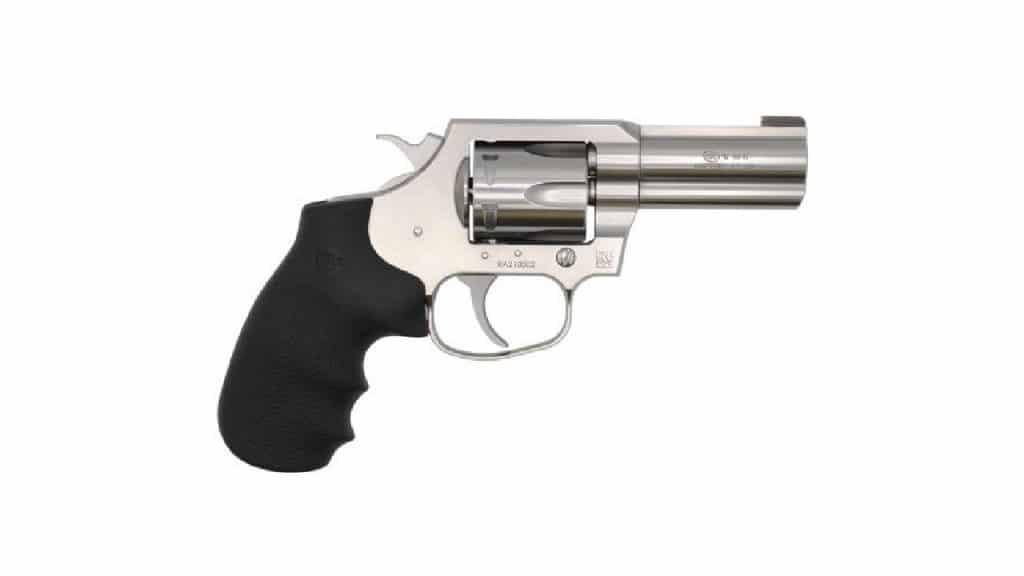
1. Best Overall: Colt King Cobra
$1719.99

29
AVERAGE
2026 Awards & Rankings
Performance Scores
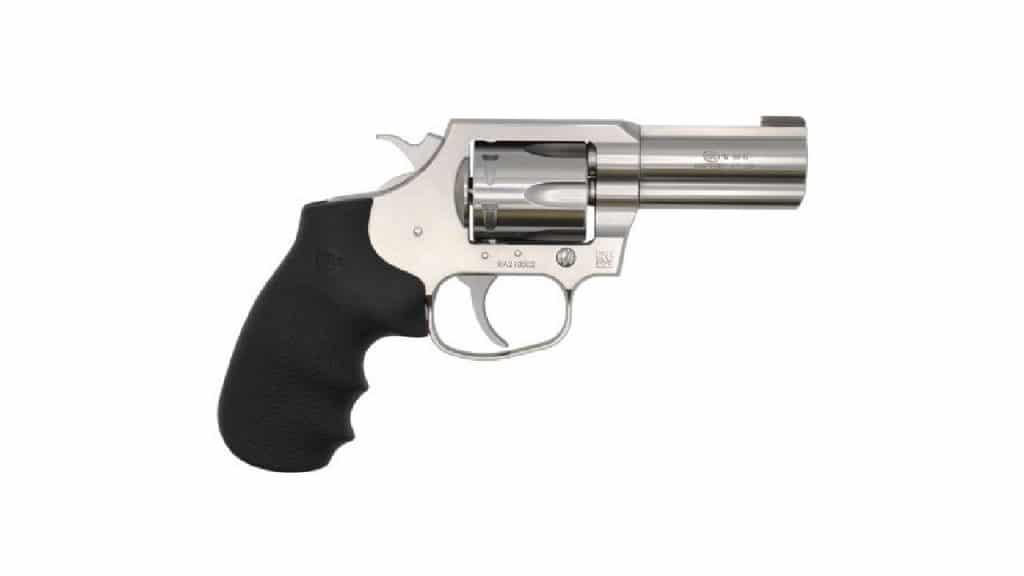
The Colt King Cobra revolver is a pricey but top-tier firearm, chambered in the classic .357 Magnum cartridge that offers both significant stopping power and is common enough to find at any LGS.
There’s a lot to love about the Cobra — beyond its storied past — reimagined in 2019 this new Colt snake gun features a 3-inch barrel which will ensure controllable recoil and reasonable accuracy in close quarters.
Most importantly, it’s constructed with heavy-duty, brushed stainless steel, it’s the kind of revolver that will be a joy to shoot any day of the week, and hand down through generations while performing the way you’d expect from a premium wheel gun.
Pros
- Incredibly durable construction
- Comes with great sights
- .357 chambering can pull double duty
Cons
- Pricy compared to many other revolvers
- 28 oz & 8-inch means not exactly a CCW revolver
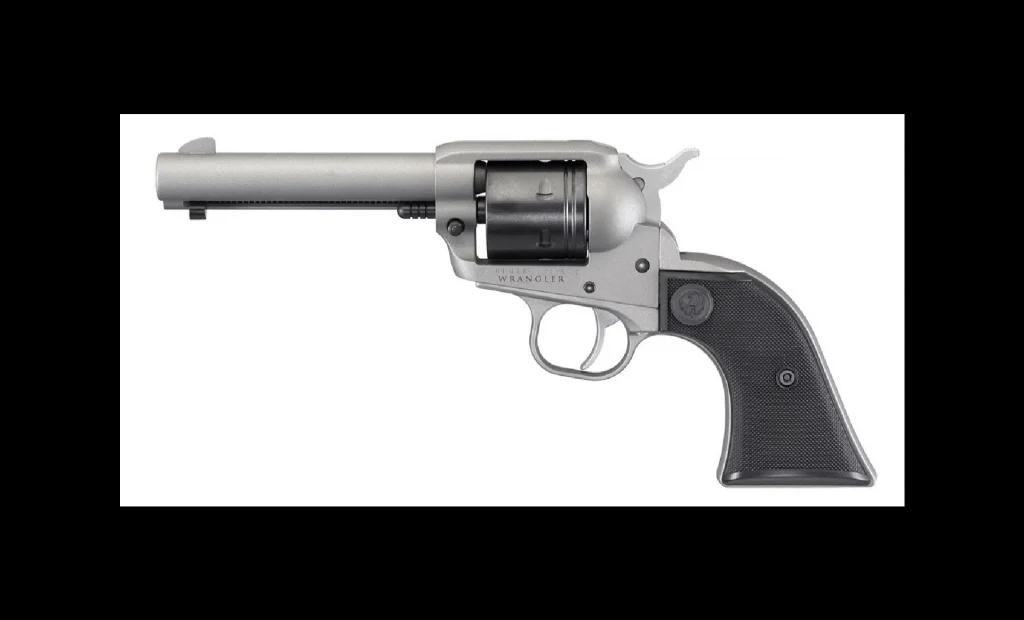
2. Best .22LR Revolver: Heritage Rough Rider
Quick Specs:
- Caliber: .22 LR (Super Wrangler also includes .22 WMR cylinder)
- Capacity: 6 rounds
- Barrel Length: 3.75″ (Birdshead), 4.62″ (Standard), 5.5″ (Super Wrangler), 7.5″ (Cavalry)
- Weight: 27-35 oz depending on variant
- Action: Single-Action
- MSRP: $269-$329 | Street Price: $160-$300 depending on variant
Read our complete Ruger Wrangler review with 500+ rounds tested
Why It Made the List
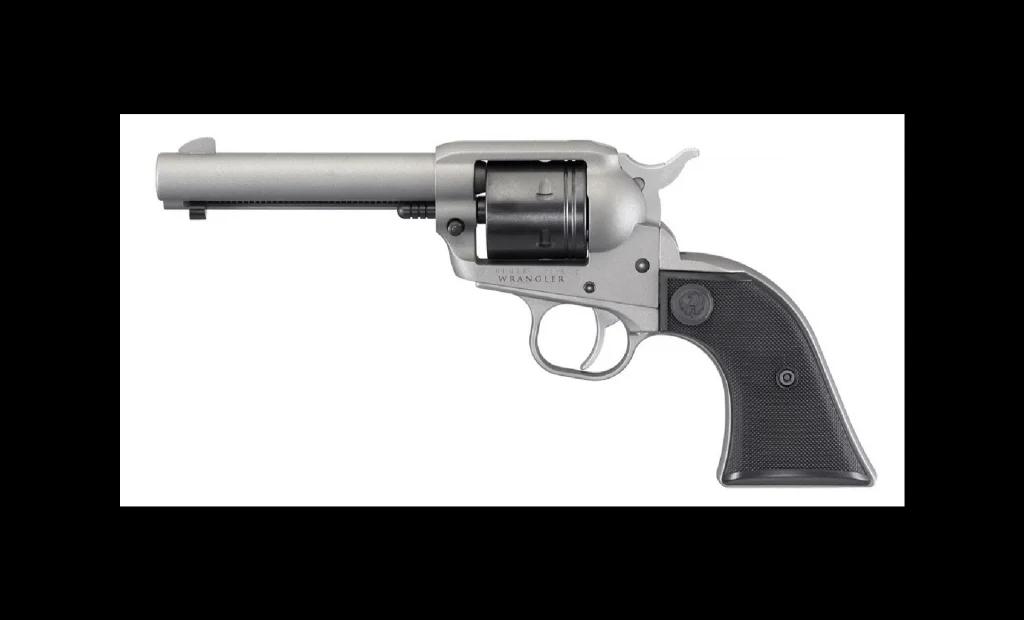
When Ruger introduced the Wrangler in 2019, they set out to answer a simple question: could they build a quality single-action .22 revolver for under $200?
The answer turned out to be a resounding yes. At typical street prices of $160-$180, the Wrangler delivers Ruger’s legendary reliability and quality control at a price point that makes it accessible to virtually any shooter.
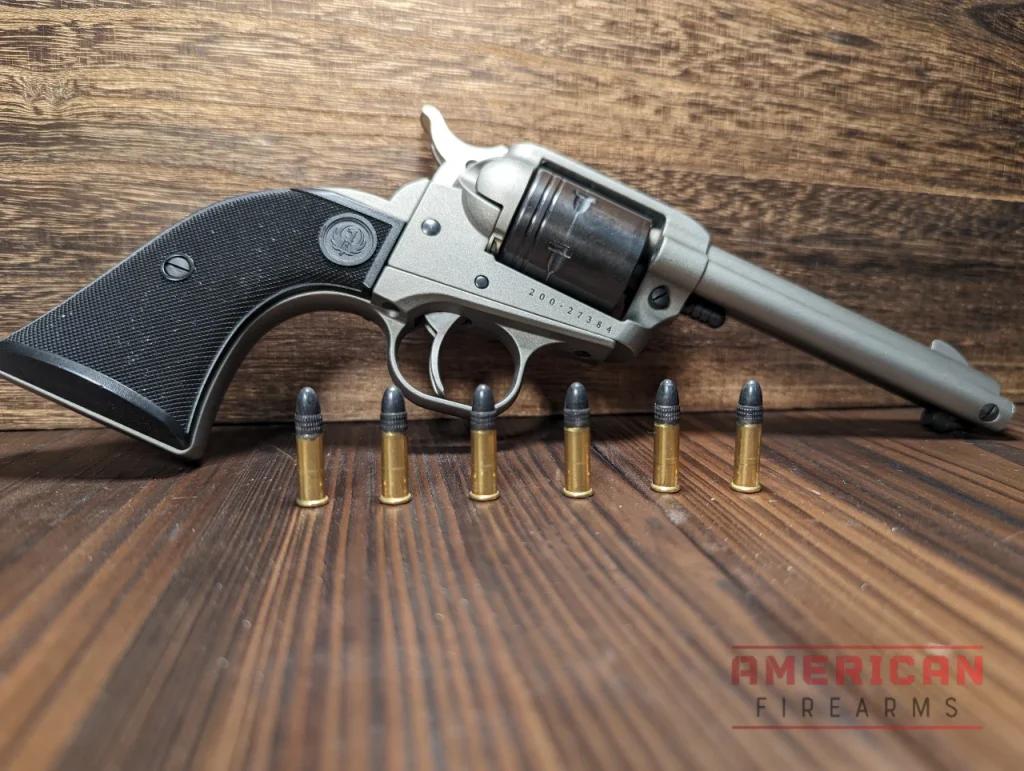
This is a single-action revolver in the classic Colt Single Action Army tradition—the same basic design that’s been pointing skyward in countless Western films since 1872.
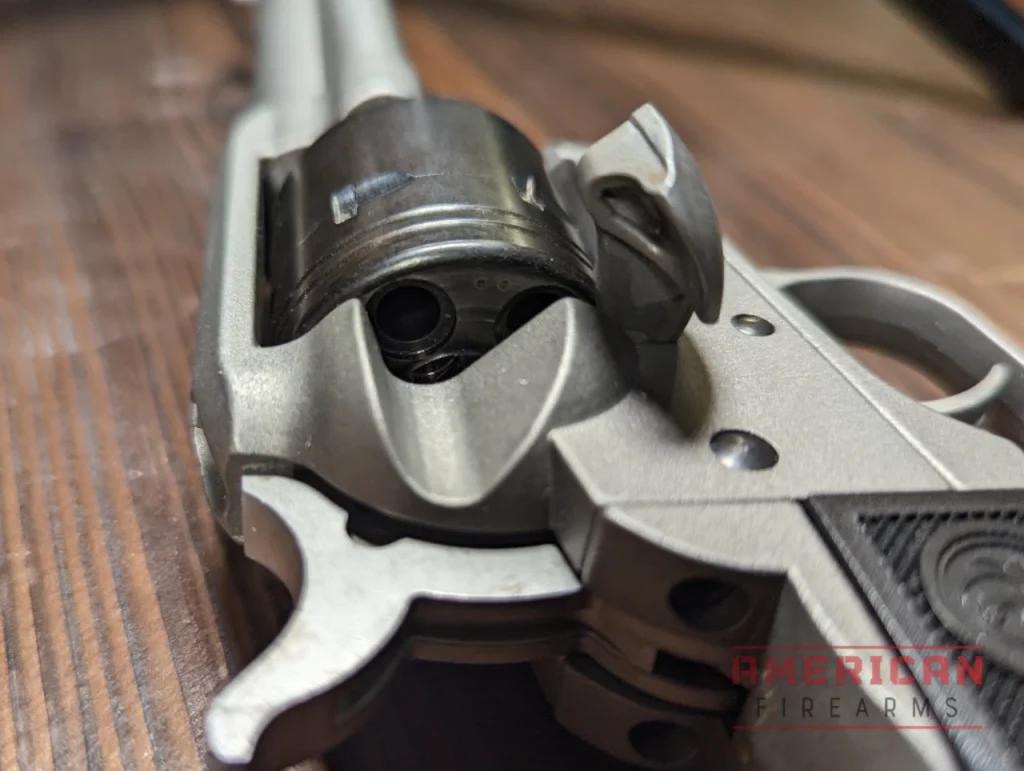
Load it through a side loading gate, cock the hammer for each shot, and enjoy the satisfying mechanical precision of a design that’s proven itself for over a century and a half.
What makes the Wrangler special isn’t reinventing that wheel—it’s executing the fundamentals flawlessly at an entry-level price. The aluminum alloy frame keeps weight down to 30 ounces (standard model), while the steel barrel and cylinder provide durability where it counts.
Ruger’s cold hammer-forged barrel, transfer bar safety, and loading gate interlock demonstrate that “budget” doesn’t mean “cheap” when Ruger’s engineering it.
Since launch, Ruger has expanded the lineup to four distinct variants: the standard 4.62-inch model, the compact 3.75-inch Birdshead, the 7.5-inch Cavalry, and most recently, the Super Wrangler with convertible .22 LR/.22 WMR cylinders and adjustable sights. This gives you options whether you’re prioritizing portability, accuracy, versatility, or pure classic aesthetics.
Real-World Performance
Over our extended testing period, we fired more than 500 rounds through the standard Wrangler, including bulk-pack Remington Thunderbolt, CCI Stinger, and premium SK Match ammunition. We also put another 250+ rounds through the gun via multiple shooters with different hand sizes and experience levels.
The results? The Wrangler performed flawlessly. Zero malfunctions, consistent cylinder timing, and reliable extraction across every ammunition type. This is exactly what you expect from both Ruger and the revolver platform—it simply works.
Accuracy proved more than adequate for the gun’s intended purposes. At 7 yards with bulk Remington Thunderbolt (the cheap green-box stuff most people will actually shoot), we consistently kept groups in the 3-4 inch range shooting offhand.
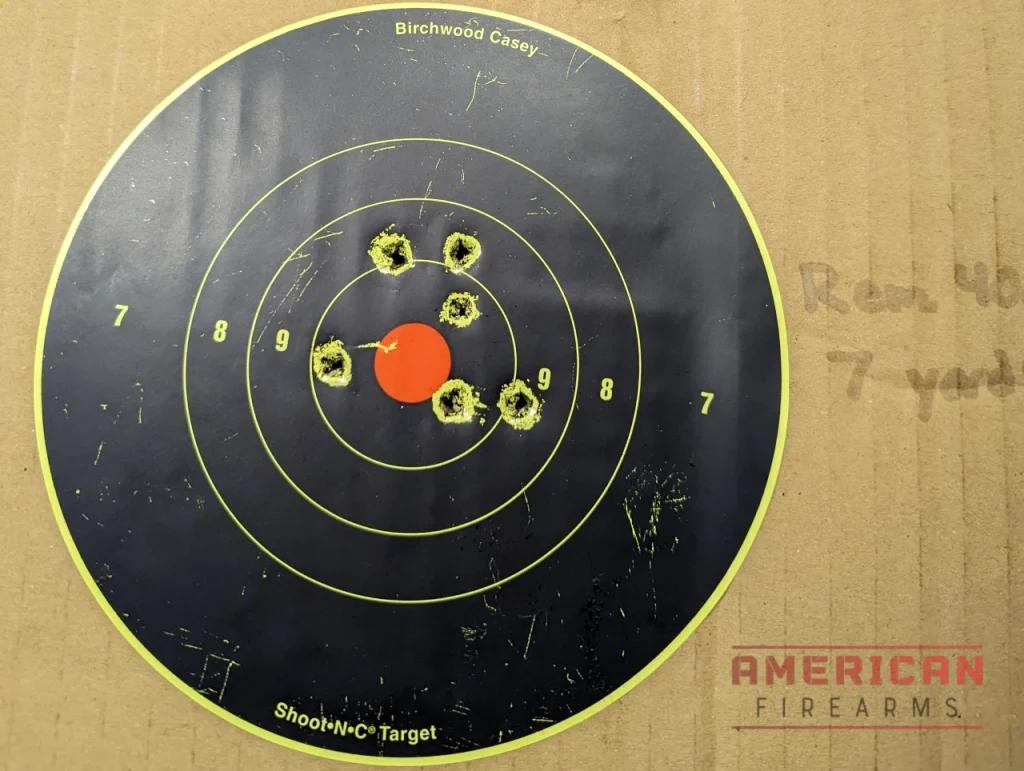
At 10 yards, groups stayed within about 2 inches with most ammunition, tightening down to approximately 1.3 inches with premium SK Match. Beyond 15 yards, groups naturally opened up, but remained perfectly adequate for plinking and small pest control.
The 6.8-pound single-action trigger is heavier than I’d prefer for a .22 rimfire revolver, and there’s more creep than you’d find on a higher-end Single Six. However, the break is consistent and the trigger proved perfectly adequate for the casual shooting and basic pest control this revolver will see. Is it a target-grade trigger? No. Will it stop you from hitting what you’re aiming at within reasonable plinking distances? Also no.
Recoil with .22 LR is essentially nonexistent, making the Wrangler an ideal platform for introducing new shooters to firearms. The light aluminum frame could theoretically make felt recoil more noticeable, but we’re talking .22 LR—even with the lightweight construction, there’s simply not much recoil to manage.
Practical Considerations
The Wrangler’s single-action loading system takes some getting used to if you’re accustomed to swing-out cylinder revolvers. You load through a side gate one round at a time, and extraction requires manually ejecting each spent case with the spring-loaded rod. It’s slower than a modern swing-out design, but it’s also part of the charm for those who appreciate traditional single-action revolvers.
The loading gate arrives fairly stiff from the factory but breaks in quickly with use. Ours loosened up considerably after the first 100 rounds. The cylinder itself can be easily removed for cleaning by pressing the base pin latch and sliding the pin forward—this is also how you’d swap cylinders on the Super Wrangler variant.
The fixed blade front sight and integral rear notch sight are basic but functional. They provide a clear sight picture and proved durable throughout testing. The lack of adjustable sights is one way Ruger keeps costs down compared to the $600+ Single Six, and for plinking purposes, the fixed sights work fine. If you want adjustable sights and the ability to switch to .22 WMR, the Super Wrangler variant adds both for about $110 more than the standard model.
The synthetic checkered grips are comfortable enough, though shooters with larger hands may find them a bit cramped. The good news: the grips are identical to those on the Ruger New Model Single Six, so you have numerous aftermarket options including wood, pearl, and custom designs from companies like Premium Gun Grips. Swapping them is a simple affair requiring just one screw.
The Variant Question
With four variants now available, which Wrangler should you buy?
The standard 4.62-inch model ($160-$180) is the Goldilocks choice for most shooters—balanced, versatile, and perfect for general plinking. It’s the one we tested most extensively and the one I’d recommend if you’re unsure.
The Birdshead 3.75-inch ($180-$200) trades some sight radius for improved portability, making it ideal as a compact trail or camp gun. The distinctive grip style is a love-it-or-hate-it proposition.
The Cavalry 7.5-inch ($170-$190) delivers maximum velocity and the longest sight radius if you want every advantage for accuracy-focused shooting or small game hunting. It’s also the most historically authentic if you’re drawn to the classic cavalry revolver aesthetic.
The Super Wrangler 5.5-inch ($270-$300) is the most capable variant, adding a steel frame, adjustable rear sight, and—critically—a second cylinder chambered for .22 WMR. This transforms the gun from a plinker into a legitimate small game hunting tool. At $329 MSRP, it’s still less than half the cost of a comparable Single Six Convertible while delivering similar versatility.
The Value Proposition
Here’s the bottom line on value: at typical street prices under $200, the standard Wrangler represents exceptional bang for your buck. Two of our range companions liked our test gun so much they ordered their own before leaving the range—and these are experienced shooters who know what they’re looking at.
Compare the Wrangler to its main competitor, the Heritage Rough Rider, which typically runs $100-$120. Yes, the Heritage is cheaper, but the Wrangler feels significantly better made. Where Heritage revolvers often show visible machine marks and inconsistent fit, the Wrangler demonstrates Ruger’s quality control. The extra $40-60 buys you noticeably superior manufacturing and the peace of mind that comes with Ruger’s customer service.
Want convertible cylinders for .22 WMR without stepping up to the Super Wrangler? The Heritage Rough Rider does offer that option. But if you’re serious enough about versatility to want .22 WMR capability, you’re probably better served spending the extra money for the Super Wrangler’s steel frame and adjustable sights rather than saving money with the Heritage.
Who Should Buy It
The Ruger Wrangler is perfect for several specific use cases:
First, it’s an outstanding gun for introducing new shooters to firearms. The single-action manual of arms is straightforward, the light .22 LR recoil is forgiving, and the overall platform is simple to understand and maintain. You can hand this to someone who’s never fired a gun and have them making hits downrange within minutes.
Second, it’s an ideal plinking revolver. At under $200, you won’t feel guilty about putting thousands of rounds of bulk .22 LR through it. The reliable function and adequate accuracy mean you’ll actually enjoy those range sessions rather than fighting the gun.
Third, it serves well for basic small pest control around a property—dispatching barn rats, garden pests, and similar varmints within 15-20 yards. The accuracy is certainly sufficient for this purpose, and the single-action design is actually safer for this application than you might think.
Finally, it’s a solid entry point for anyone interested in cowboy action shooting or who simply appreciates classic single-action revolver design. While serious competitors will eventually want to upgrade, the Wrangler provides an affordable way to see if the discipline appeals to you.
What It’s Not
The Wrangler isn’t a precision target pistol—the fixed sights, heavy trigger, and budget construction preclude that. It’s also not ideal for serious small game hunting unless you opt for the Super Wrangler with .22 WMR capability. And with only six rounds loaded slowly through a side gate, it’s definitely not a defensive option.
But here’s the thing: the Wrangler never pretends to be any of those things. It’s engineered to be exactly what it is—a fun, reliable, affordable single-action .22 that you can shoot all day without breaking the bank or your shooting hand. In that mission, it succeeds completely.
The Wrangler feels like distilled engineering—anyone can build a bridge that stands, but it takes an engineer to build one for as cheap as possible. That’s what Ruger accomplished here. They’ve stripped away everything non-essential while maintaining the fundamentals that matter: reliability, safety, and shootability.
Pros:
- Exceptional value at $160-$180 street price
- Ruger quality control and reliability
- Four variants available for different needs
- Transfer bar and loading gate interlock safeties
- Essentially zero felt recoil with .22 LR
- Perfect for new shooters
- Cold hammer-forged barrel
- Grips compatible with Single Six aftermarket options
- Super Wrangler adds .22 WMR capability at reasonable cost
Cons:
- Heavy 6.8-pound trigger pull with creep
- Fixed sights on standard models (adjustable only on Super Wrangler)
- No interchangeable cylinders on standard models
- Grip may feel cramped for larger hands
- Single-action loading is slower than swing-out designs
- Only 6-round capacity
4. Optics-Ready Pick: Taurus 856 TORO
Quick Specs:
- Caliber: .38 Special +P
- Capacity: 6 rounds
- Barrel Length: 3 inches
- Weight: 23.5 oz (unloaded), ~28 oz loaded with optic
- Action: DA/SA
- MSRP: $445.99 | Street Price: ~$350-400
Read our complete Taurus 856 TORO review
Why It Made the List
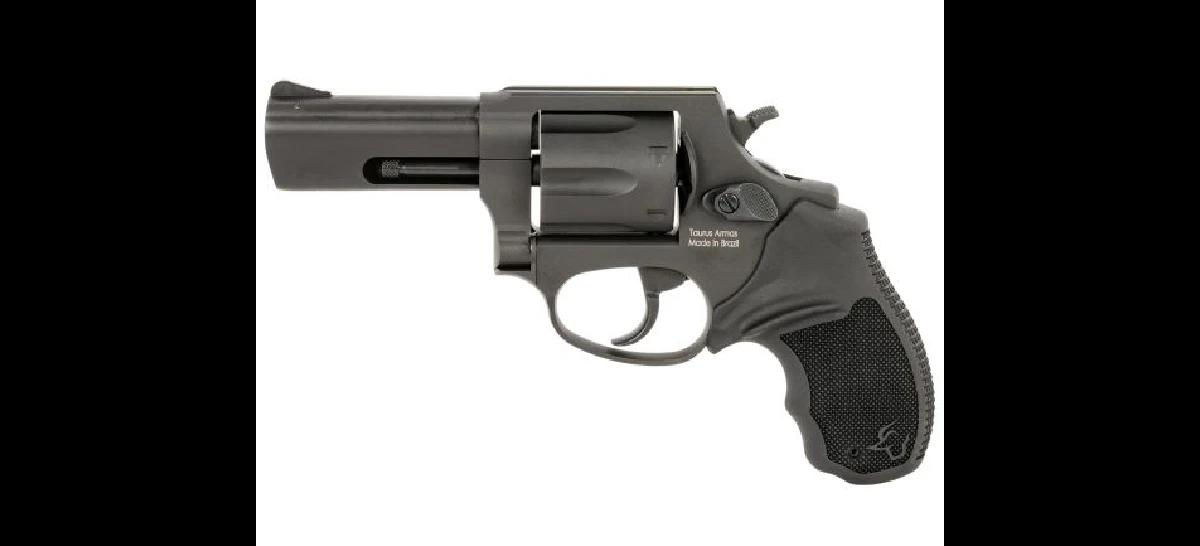
The firearms industry has seen plenty of innovations over the years, but an optics-ready small-frame revolver? That’s genuinely new territory. Taurus pulled off something remarkable with the 856 TORO—creating the first factory small-frame revolver designed to mount a red dot from day one.
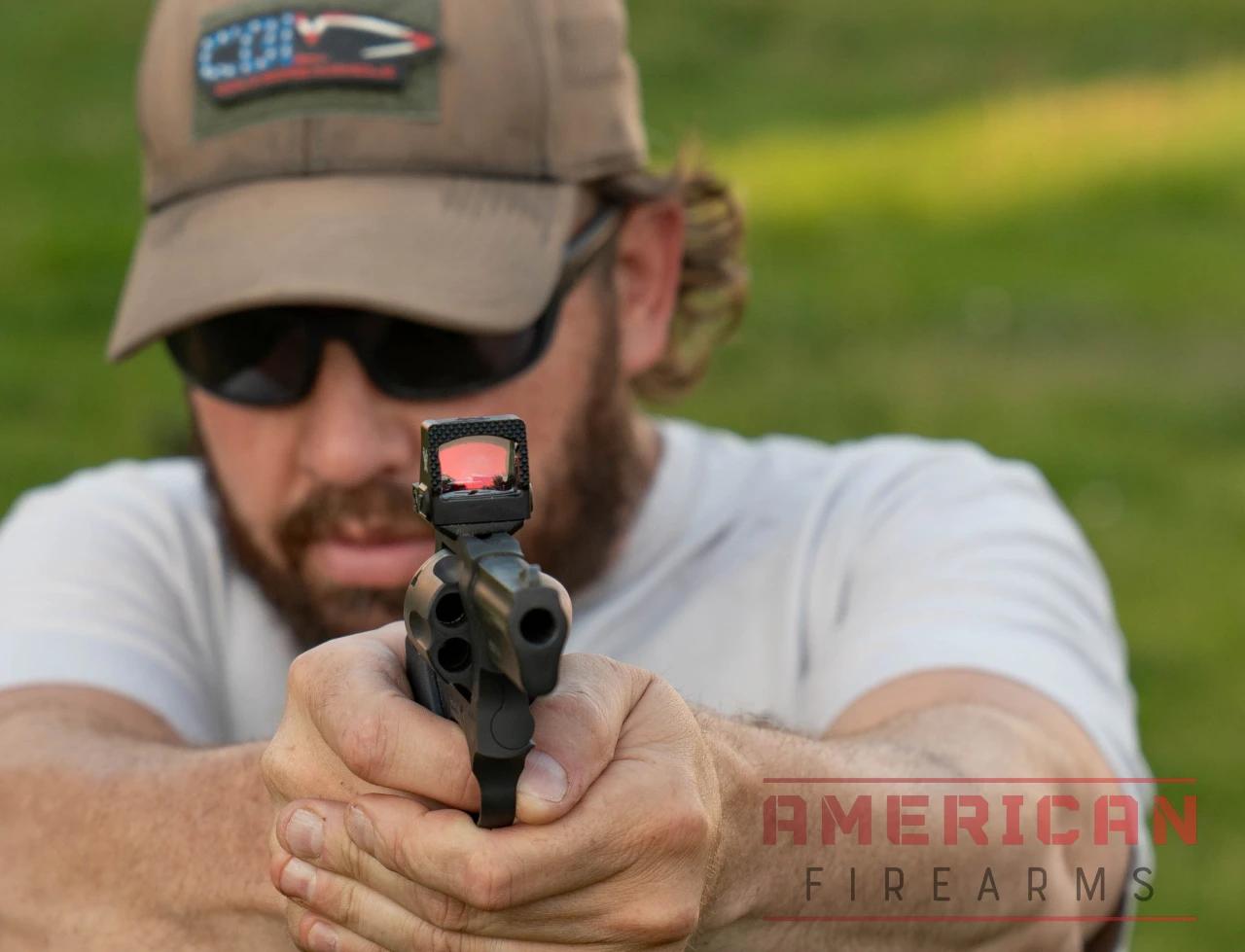
The TORO (Taurus Optics Ready Option) system uses a machined plate that fits precisely over the top strap, secured with two torx screws and mechanical engagement to lock against recoil.
It’s designed specifically for the Holosun K footprint (407K, 507K), though we also tested it successfully with the Vortex Defender-CCW. The fit was impressively tight—the plate practically stuck to the frame before we even tightened the screws.
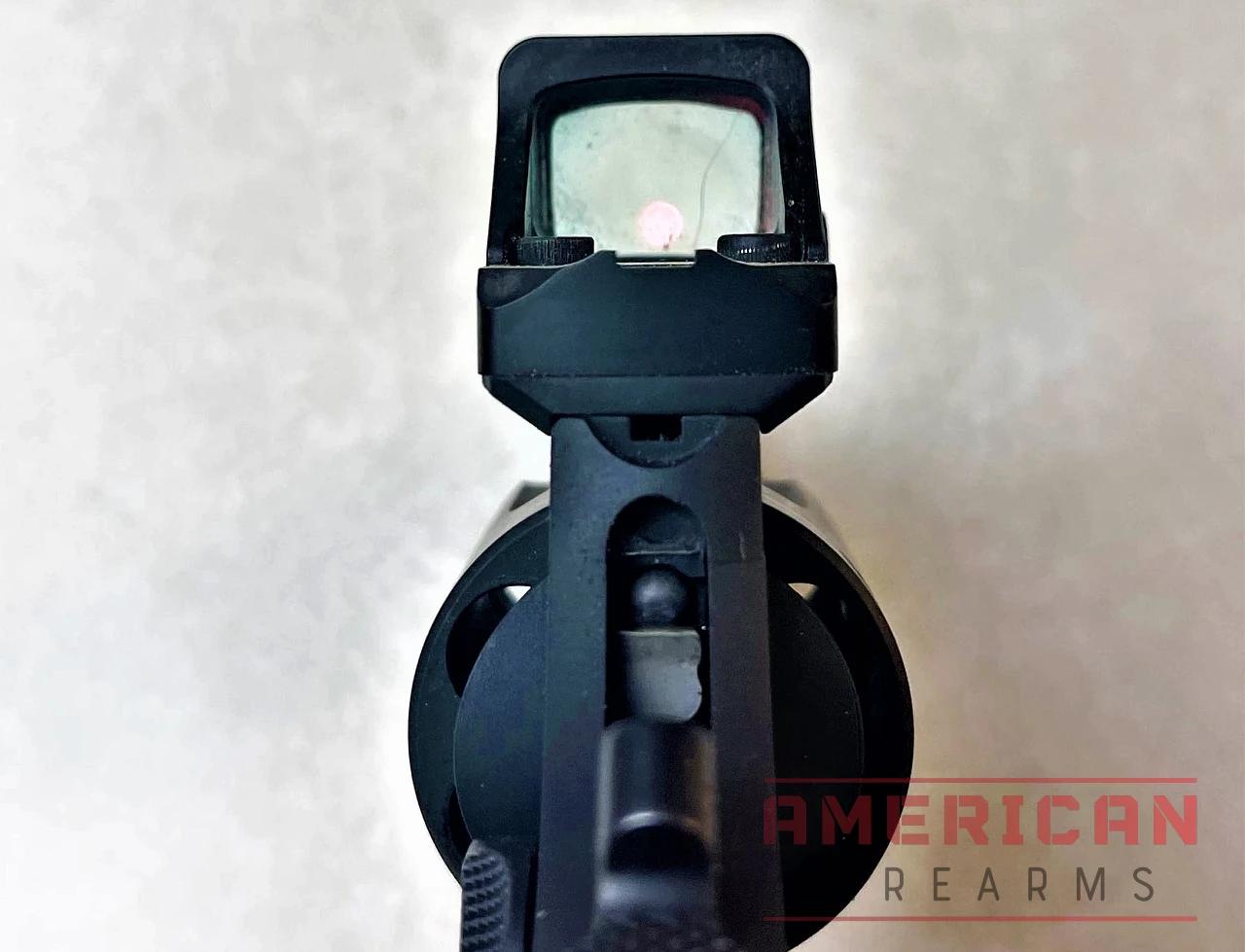
Built on the steel-framed Defender 856 platform, this revolver gives you one more round than comparable small-frames like the Ruger LCR or Smith & Wesson 642, packing six shots of .38 Special instead of five.
The 3-inch barrel provides enough velocity to make defensive ammunition perform properly, and the full-length ejector rod (not always a given on 3-inch models) ensures reliable extraction.
Real-World Performance
Over several range sessions, we put more than 200 rounds through the 856 TORO, including both handloaded 150-grain semi-wadcutters and factory Hornady Critical Defense ammunition. Accuracy proved better than expected for a compact defensive revolver—we consistently printed 3-5 inch groups at 10 yards, and hitting man-sized targets at 15 yards was straightforward.
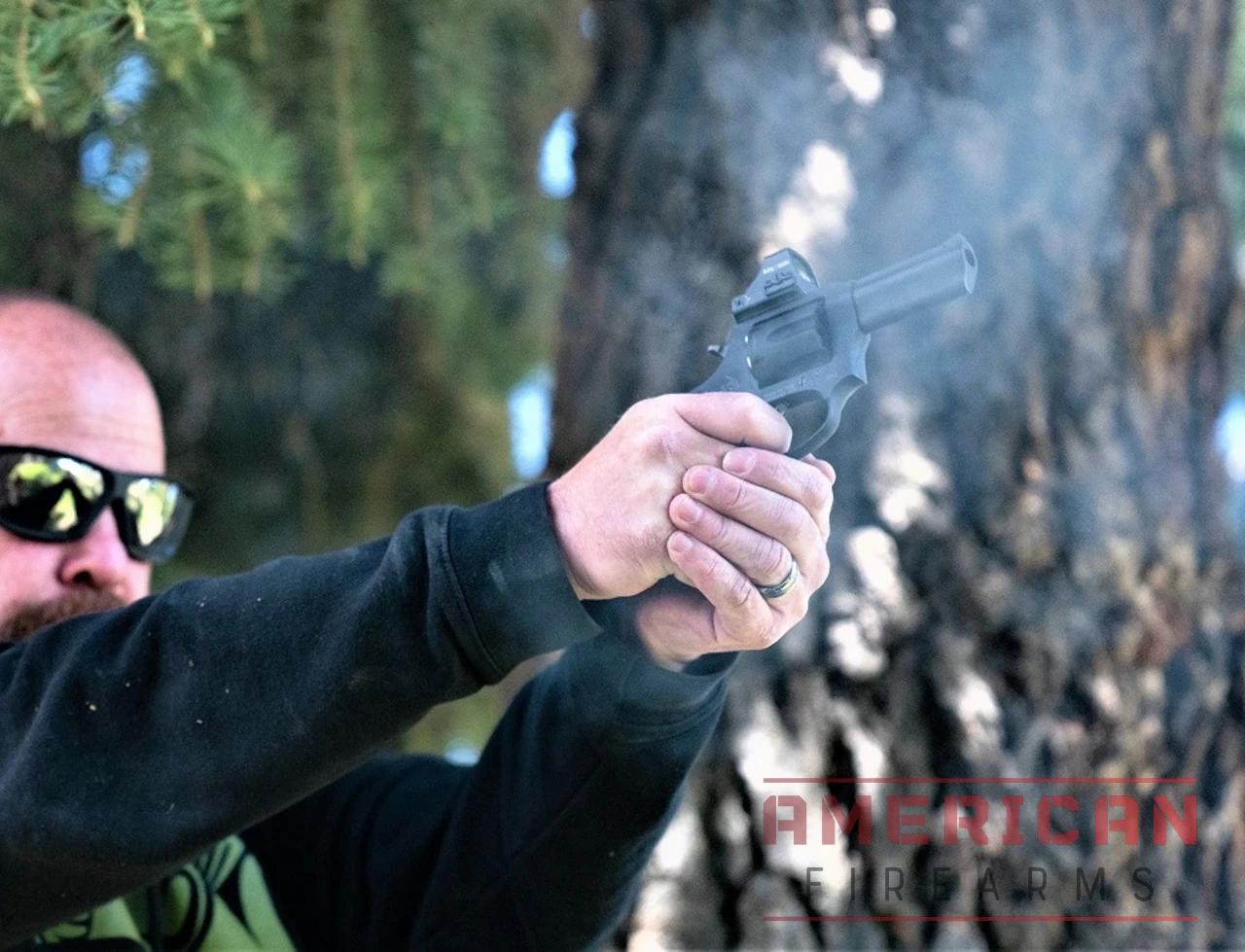
The double-action trigger felt perfectly adequate for a defensive revolver. It’s a bit long and definitely on the heavy side, but that’s exactly what you want in a gun you might be drawing from under a jacket. It reminded me of a Smith & Wesson J-frame trigger—nothing fancy, but reliable and safe. The trigger improves with dry-fire practice, though it never becomes particularly light.
Finding the dot proved easier than anticipated despite the high-mounted optic. Yes, you’re looking noticeably higher than you would with iron sights, and there’s no practical way to co-witness.
The optic sits about half an inch above the bore axis, which is simply the reality of mounting an optic on a revolver’s top strap. But after the initial adjustment period, target acquisition felt natural.
Important note on zeroing: The elevated mount position can create challenges. We were fortunate that our 407K lined up well with the iron sights without adjustment, but it’s entirely possible to run out of elevation adjustment before achieving zero.
If this happens, you’ll always shoot high. Taurus has confirmed that certain optics zero more reliably—specifically the Primary Arms Micro Reflex, Riton X3 Tactix MPRD, and Swampfox Sentinel. They’re also developing an angled mounting plate to address this issue.
Practical Considerations
The rubber grip provides excellent purchase despite being slightly small for my preference. For a concealed carry gun, the compact grip is actually an advantage, though shooters with larger hands might want to explore aftermarket options from VZ or Hogue.
Reliability was flawless throughout testing—exactly what you expect from a revolver. The cylinder timing remained consistent, extraction was positive with all ammunition types, and we experienced zero malfunctions. The transfer bar safety design adds a welcome layer of protection for carry use.
The real challenge is holster availability. With the optic mounted, the 856 TORO won’t fit standard 856 holsters. We’ve heard several manufacturers are working on compatible options, but at the time of testing, you’re looking at limited choices or DIY modifications.
Weight is another consideration. Unloaded, the 856 weighs 23.5 ounces. Add the optic, mounting plate, and six rounds of ammunition, and you’re carrying just over 28 ounces—closer to a Ruger SP101 or Kimber K6s than a lightweight LCR. The extra weight does help tame .38 Special recoil, making the gun pleasant to shoot for extended practice sessions.
The Value Proposition
Here’s where the 856 TORO really shines: at a street price around $350-400, it’s essentially the same cost as the standard 856 Defender. You’re getting factory optics capability for roughly $15 more than the non-TORO version.
Even if you decide red dots on revolvers aren’t your thing, you can remove the optic, add a fiber optic front sight, and have yourself a perfectly capable 6-shot .38 Special carry gun for less than competitors charge for 5-shot models.
The finish quality doesn’t match what you’ll find on higher-end Smith & Wesson or Ruger revolvers—it looks a bit thin in spots and some sharp edges show bare metal. But at this price point, Taurus had to make some compromises, and they wisely prioritized function over finish.
Who Should Buy It
The 856 TORO is ideal for shooters who want to experiment with red dot-equipped revolvers without the cost of custom gunsmithing or premium models. At under $400, it’s an affordable way to see if you prefer optics on a defensive revolver. Even if red dots aren’t your preference, you’re getting a solid 6-shot .38 Special at a competitive price.
This represents a genuine innovation in the revolver market. Whether optics-ready wheelguns become mainstream or remain a niche offering, Taurus deserves credit for being first to market with a practical, affordable solution.
The 856 TORO isn’t perfect—holster availability and potential zeroing challenges are real concerns—but it’s a well-executed concept at an exceptional price point.
Pros:
- First factory small-frame revolver with optics mounting
- Excellent value at $350-400 street price
- 6-round capacity vs. competitors’ 5 rounds
- Full-length ejector rod on 3-inch barrel
- Flawless reliability through 200+ rounds
- Compatible with popular Holosun K footprint optics
- Transfer bar safety for secure carry
Cons:
- High optic mount can create zeroing challenges
- Limited holster availability with optic installed
- Finish quality not as durable as premium brands
- Grip slightly small for larger hands
- Heavy when loaded with optic (28+ oz)
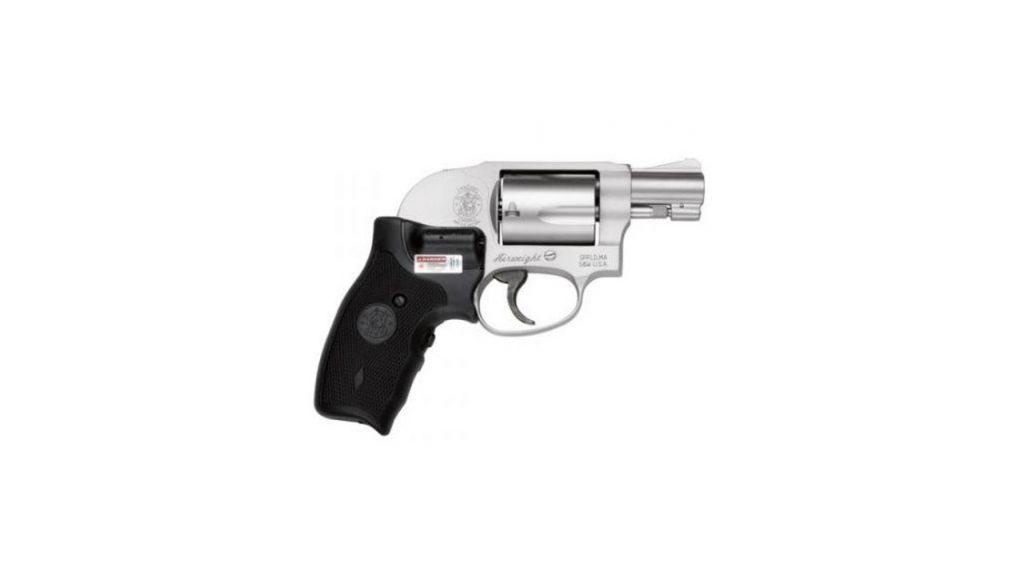
5. Smith & Wesson 642 Airweight
$539.99
31
AVERAGE
2026 Awards & Rankings
Performance Scores
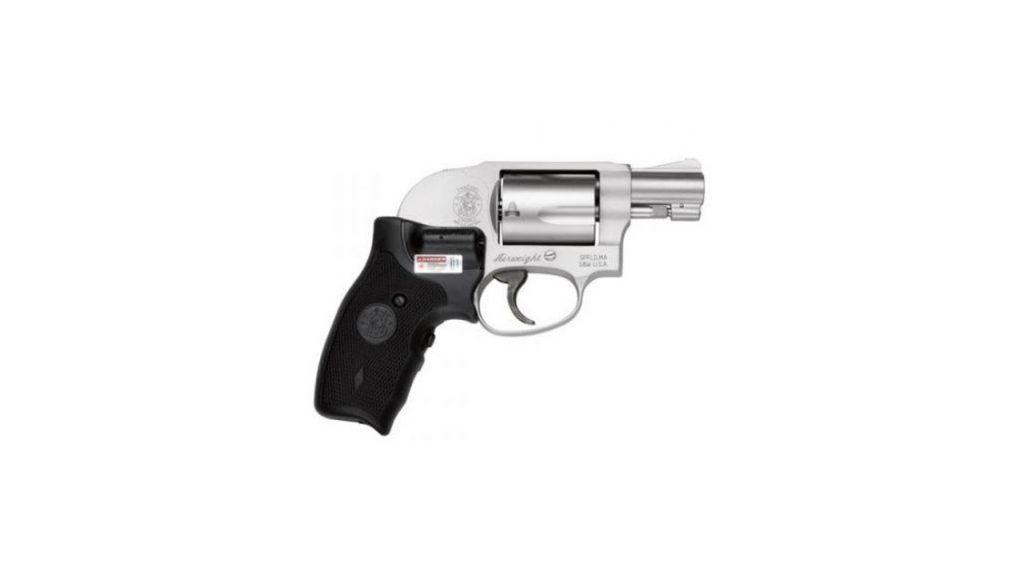
This is another Smith & Wesson revolver but excels when paired with .38 special caliber rounds. The S&W 642 Airweight comes with a textured synthetic grip that’s comfortable to hold and adds to its controllability — making the weapon difficult to drop even when operating in a tense situation or with sweaty palms.
The Airweight pairs a couple of useful features to create a uniquely effective firearm — an internal hammer and aluminium alloy frame with a stainless steel cylinder. You get a revolver that’s both incredibly durable and lightweight at just 15 ounces. The additional of fixed front and rear sights make for a classic, robust firearm.
Pros
- Comes with a textured, rubber grip
- Proven frame durability and design
- Consistent performer
- Built from the Model 42 Centennial Airweight
Cons
- Non-adjustable sights
- Some may prefer an external hammer for additional control
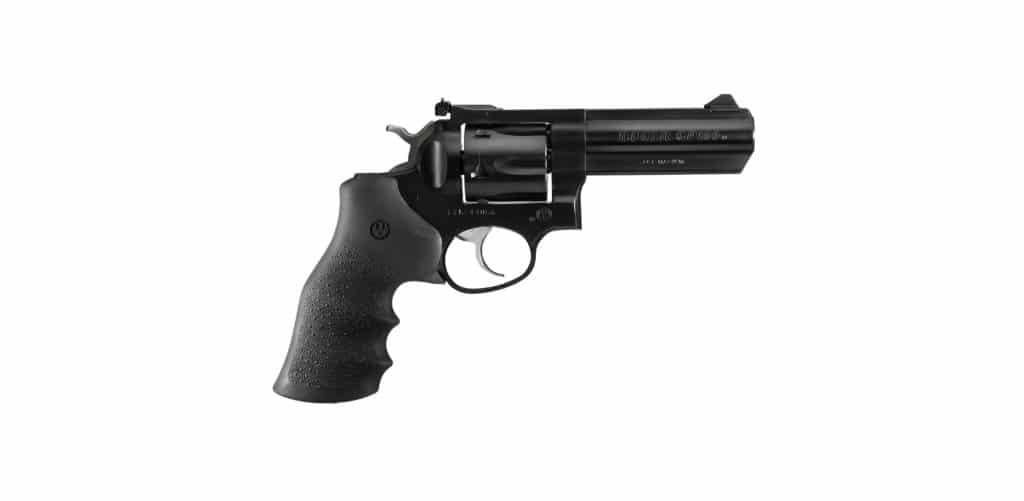
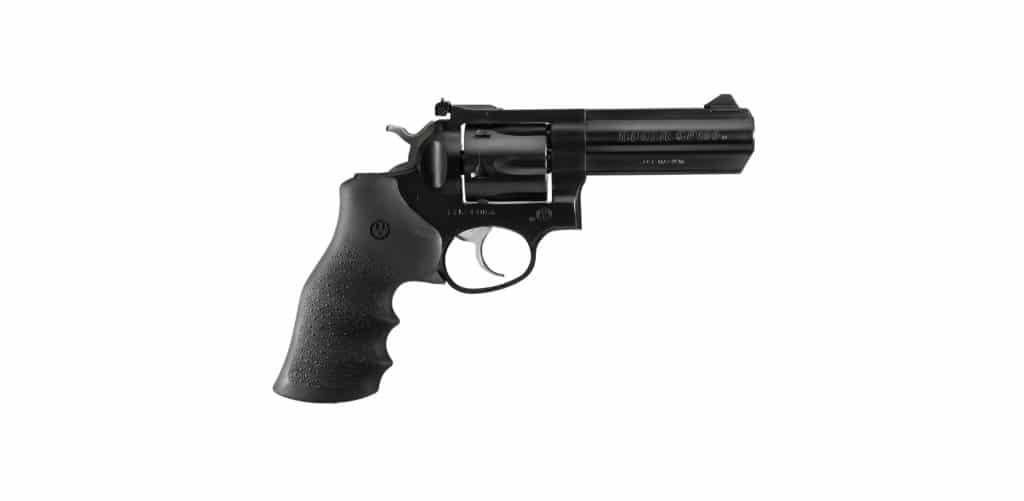
6. Best for Home Defense: Ruger GP100 Revolver
$824.99
31
AVERAGE
2026 Awards & Rankings
Performance Scores
This Ruger revolver is chambered for .357 Magnum loads which provide more than enough firepower to stop an attacker in a self or home defense situation.
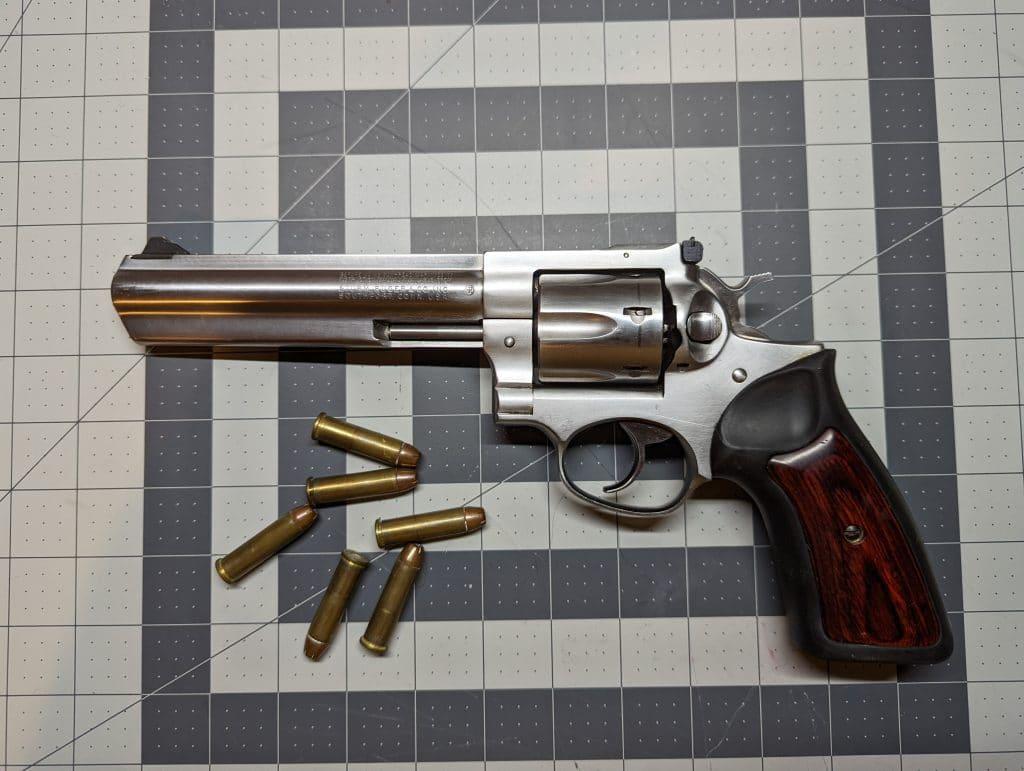
The GP100 revolver also features a cushioned grip that provides more than enough control for the additional power — ensuring you can fire the weapon repeatedly while staying on target and avoiding unnecessary hand or wrist fatigue. Of course, custom grips are available by the ton, so there’s lots of room to bet the grip just right.
While you get a steel alloy frame for performance and durability, the really interesting bits all involve Ruger’s focus on performance. The Hiviz fiber optic front sight gives you both fast target acquisition and the advantage of day and night performance. Paired with the 2.5″ barrel you have a seriously effective personal defense firearm.
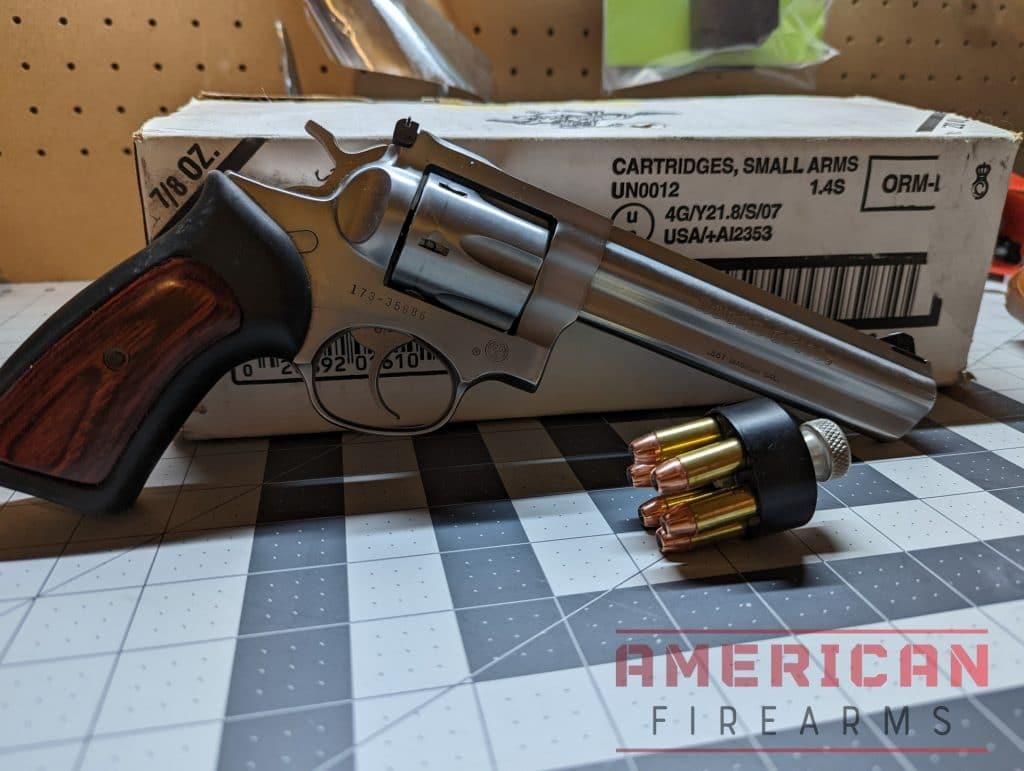
It’s a shade heavy at 36 ounces but if you’re looking for a revolver that offers day and nighttime performance in a smaller package the GP100 is hard to beat.
Pros
- Very durable design
- Excellent size and shape as a concealed carry revolver
- Chambered for powerful cartridges
- Has an excellent grip
Cons
- A bit heavy for some
- Quite pricey;
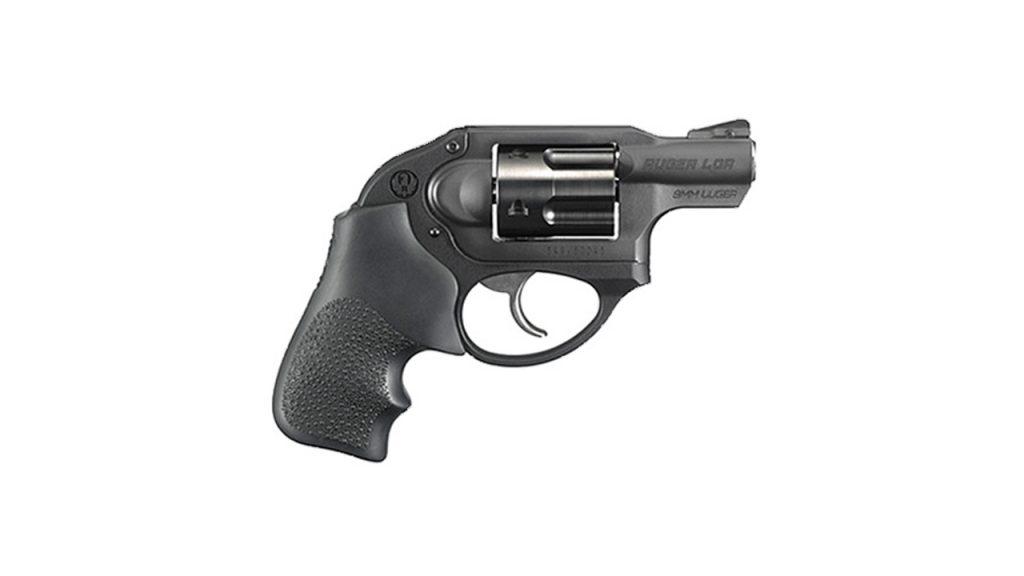
6. Best Concealed Carry Revolver: Ruger LCRx
$720.99
30
AVERAGE
2026 Awards & Rankings
Performance Scores
Ruger LCRx revolver is extremely small — with a sub 2″ barrel length — and makes a perfect choice for self-defense and concealed carry applications.
Its sub-2 inch barrel and unique 400-series stainless steel frame paired with the polymer fire control housing help keep it extraordinarily lightweight at only 17 ounces, meaning it’s really just designed for all-day carry comfort.
Ruger puts quite a bit of stock in their patented friction-reducing cam which helps improve control and smooths the trigger pull.
Its smaller size means you have five rounds on tap vs. other revolvers six, but its light weight and Lilliputian form factor give it more than enough advantages to overcome the lack of capacity. If you want to carry an innovative CCW revolver that gives you a lightweight performer, look no further than the LCRx.
Pros
- Has a textured polymer grip
- Very small and lightweight
- Good for left or right-handed users
Cons
- Only chambered for 5 rounds
Detailed Revolver Buying Guide
Choosing your first revolver—or adding another to your collection—requires understanding several key factors that dramatically affect how the gun will perform for your intended purpose. After testing dozens of revolvers over my 25+ years in firearms, I’ve learned that the “best” revolver depends entirely on matching the right specifications to your specific needs. Let me walk you through the critical considerations.
Understanding Frame Sizes
Revolver frames come in distinct size categories, and understanding these matters more than you might think. The frame size determines not just how the gun carries, but also what calibers it can handle, how much recoil you’ll feel, and how comfortably you can shoot it.
Small Frames (J-Frame and similar): These are your classic snub-nose carry guns. Smith & Wesson’s J-frame established this category, but you’ll find equivalents from Ruger (LCR), Taurus (Model 85 series), and others.
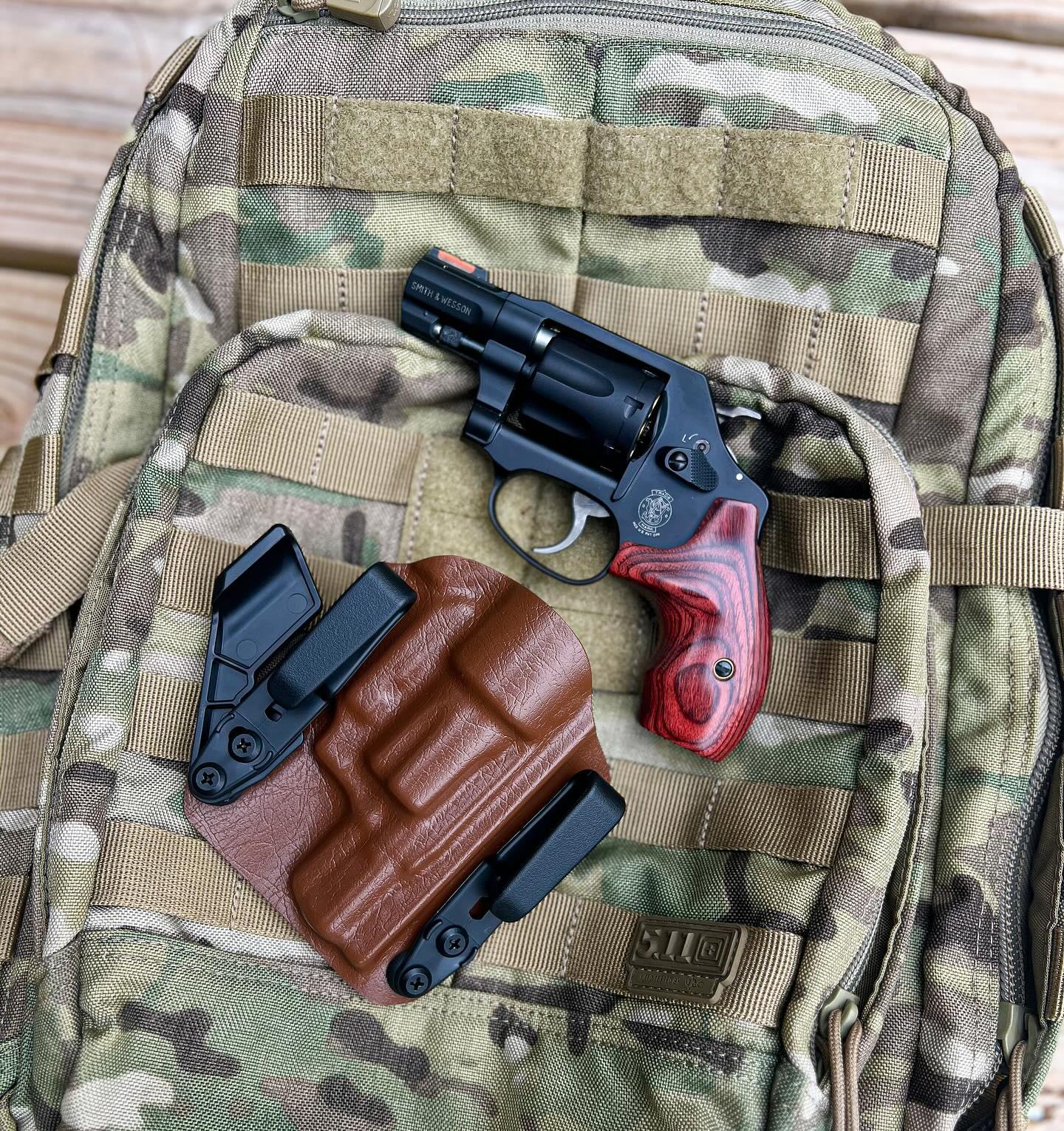
These typically measure around 6.5 inches overall length with 2-inch barrels and weigh 14-17 ounces for lightweight models. They’re purpose-built for concealed carry—easy to hide, comfortable to carry all day, but harder to shoot accurately due to short sight radius and abbreviated grips. Most hold 5 rounds in .38 Special/.357 Magnum or 6 in .327 Federal Magnum.
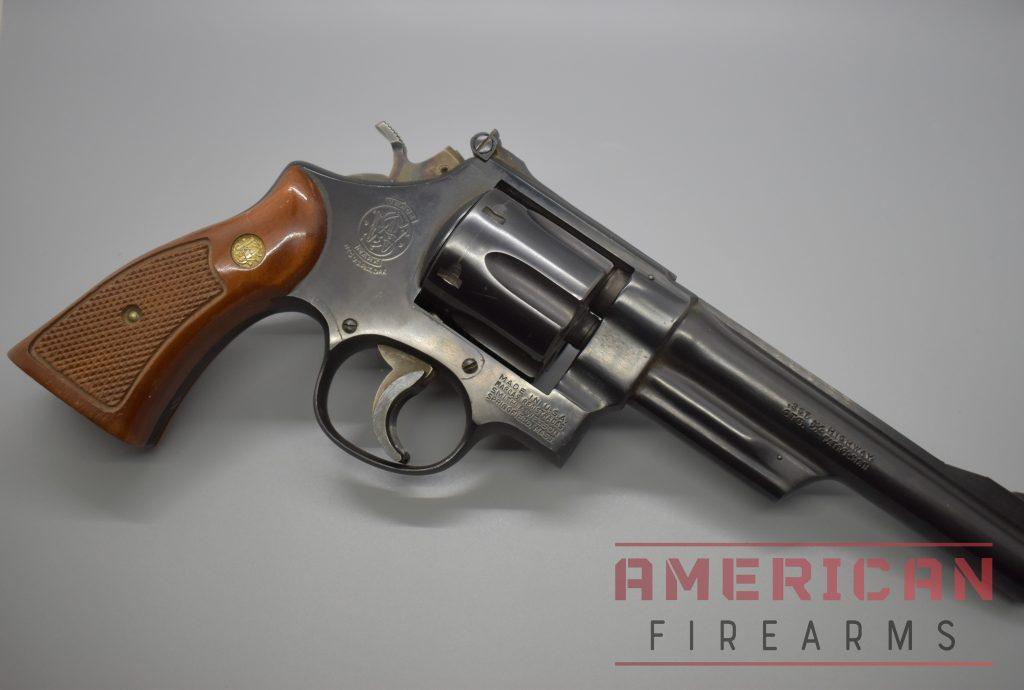
Medium Frames (K-Frame and L-Frame): This is the Goldilocks zone for most shooters. K-frames (Smith & Wesson Model 10, 19, 66) and L-frames (686, GP100) typically feature 3-4 inch barrels, weigh 32-40 ounces, and provide excellent balance between shootability and portability.
These were the standard police service revolvers for decades because they’re large enough to control magnum recoil yet still concealable under a jacket. If you’re buying one revolver to do everything reasonably well, start here. Capacity runs 6 rounds in most models, with some modern variants holding 7.
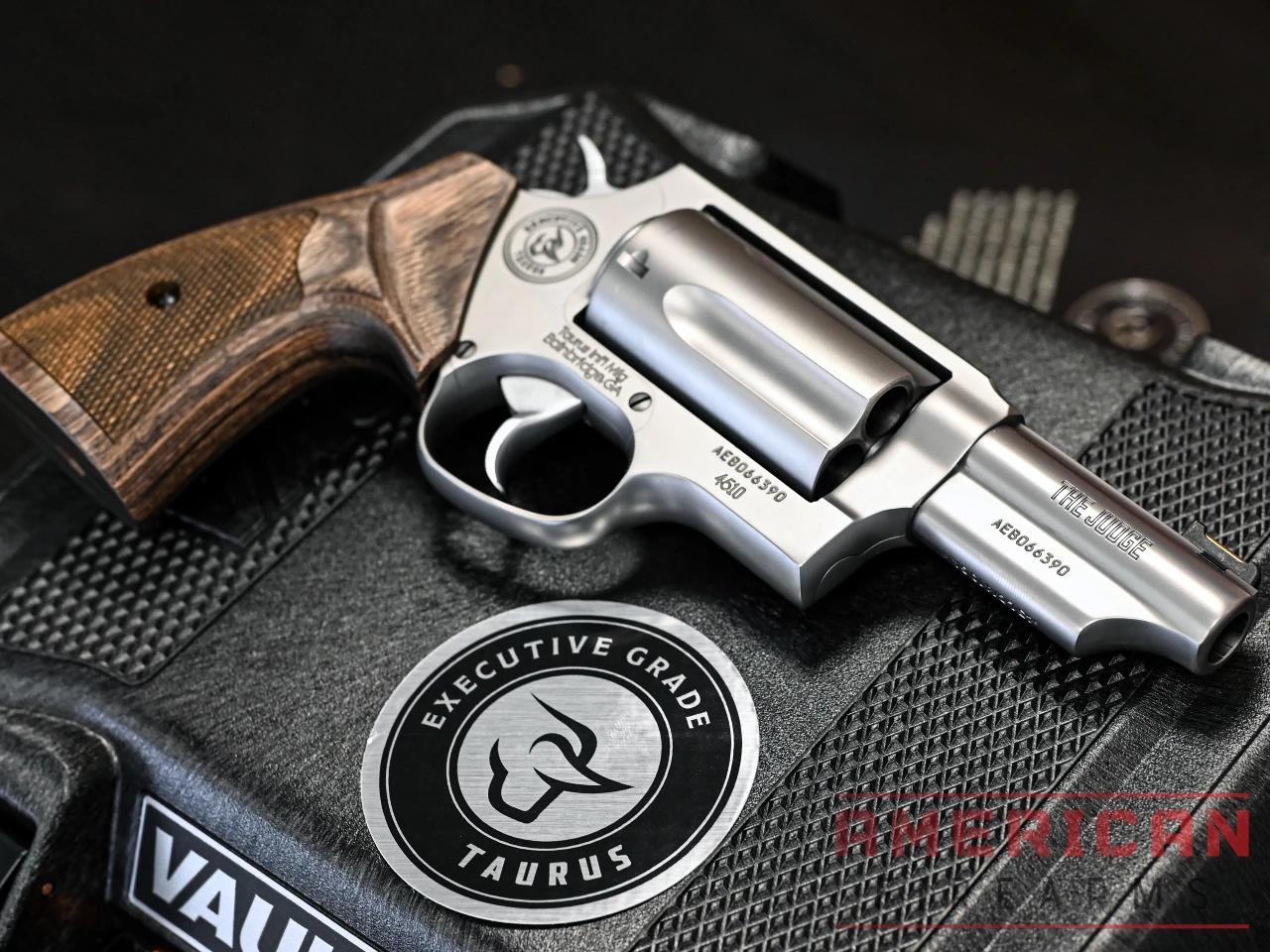
Large Frames (N-Frame, Redhawk): Built for magnum calibers and hunting applications. These beasts typically wear 4-6 inch barrels (or longer), weigh 40-50+ ounces, and chamber serious cartridges like .44 Magnum, .45 Colt, and .454 Casull.
The extra weight tames recoil from powerful rounds, and the larger grip accommodates more hand. They’re not practical for everyday carry unless you’re hiking in bear country, but they’re outstanding for hunting, long-range target work, or simply enjoying shooting big-bore revolvers without punishing your hands.
Extra-Large Frames (X-Frame, Super Redhawk): These chambers for true hand-cannon cartridges like .500 S&W Magnum and .460 S&W.
Unless you’re planning serious big-game handgun hunting or simply want bragging rights at the range, you can skip this category. They’re specialized tools, not general-purpose firearms.
Caliber Selection: Power vs. Practicality
Your caliber choice should match your primary use case, not your ego.
.22 LR is perfect for plinking, training new shooters, and developing fundamentals without recoil fatigue or ammunition cost concerns. Don’t dismiss it—I’ve seen more proficient shooters built on .22 revolvers than any other platform. It’s also surprisingly effective for small pest control within 25 yards.
.38 Special remains the classic defensive revolver cartridge for good reason. Mild recoil, adequate stopping power with modern hollow points, widely available, and affordable for practice. The +P variant bumps performance without excessive recoil. If you’re new to revolvers or recoil-sensitive, start here.
.357 Magnum offers versatility—you can shoot .38 Special for practice and .357 for serious work. However, magnum loads from short-barreled revolvers produce significant muzzle blast and recoil. In barrels under 3 inches, you’re often better served with good .38 Special +P ammunition anyway, as the shorter barrel doesn’t allow full powder burn.
.327 Federal Magnum is an underappreciated option that splits the difference between .38 Special and .357 Magnum in power while allowing 6 rounds in J-frame-sized cylinders that typically hold only 5. Recoil is quite manageable, and you can also shoot .32 H&R Magnum and .32 S&W Long for reduced-recoil practice.
.44 Special delivers serious stopping power with moderate recoil from a large-frame revolver. It’s an excellent choice if you want more authority than .357 Magnum without the punishing recoil of .44 Magnum. Ammunition costs more and availability varies.
.44 Magnum, .454 Casull, and larger are hunting and outdoor protection calibers. They’re overpowered for personal defense and unpleasant to shoot in quantity. Choose these only if you have specific hunting applications or need true “stopping power” for dangerous game.
Material Considerations
The frame material dramatically affects weight, durability, and price.
Stainless steel is the gold standard for defensive revolvers. It resists corrosion, handles holster wear well, and provides excellent durability. The weight helps manage recoil, though it makes all-day carry more tiring. Most defensive revolvers use stainless for good reason—it works.
Carbon steel with blued or Cerakote finish offers classic aesthetics at potentially lower cost. Blued finishes require more maintenance to prevent rust, especially in humid climates or with perspiration from carry. Modern Cerakote finishes provide better corrosion resistance while maintaining the traditional look.
Aluminum alloy frames dramatically reduce weight—often 30-50% lighter than steel equivalents. This makes concealed carry much more comfortable, but the reduced weight amplifies felt recoil. Aluminum frames are typically limited to .38 Special and smaller calibers. They’ll show holster wear faster than steel, though this is purely cosmetic. If you’re carrying daily, the comfort advantage often outweighs the durability concerns.
Scandium and titanium alloys represent the ultralight category, typically found in premium models. A scandium-framed .357 Magnum might weigh only 11-13 ounces, making it disappear on your belt. However, shooting full-power magnums through these featherweights is genuinely unpleasant. These are “carry often, shoot occasionally” guns. They’re expensive but unmatched for deep concealment.
Sight Options: From Basic to Battle-Ready
Fixed sights are simple, durable, and require zero adjustment. Most defensive revolvers ship with fixed sights—typically a ramp or blade front with an integral rear notch cut into the topstrap. They’re perfectly adequate for close-range defensive work and won’t snag on clothing or break from dropping.
The downside? You’re stuck with whatever point of impact the factory set. If your chosen defensive ammunition shoots 6 inches low at 15 yards, you’re adjusting your hold rather than the sights.
Adjustable sights allow you to dial in perfect zero for your specific ammunition. They’re essential for hunting, target work, or if you plan to shoot multiple ammunition types.
The trade-off is increased bulk, more snag points for concealed carry, and potential fragility if you drop the gun. Target and hunting revolvers should have adjustable sights; dedicated carry guns rarely need them.
Fiber optic sights use colored rods that gather ambient light, making the front sight highly visible in varied lighting conditions. They’re excellent for fast target acquisition and increasingly common on defensive revolvers.
The fiber optic rod can break if you drop the gun, but replacements are inexpensive and easy to install.
Tritium night sights use radioactive isotopes to create self-illuminating sights that glow in darkness without batteries.
They’re outstanding for defensive revolvers that might be used in low-light conditions. Tritium has a half-life of about 12 years, so the glow gradually dims over time. Budget $150-200 for quality tritium sight upgrades.
Red dot optics are the newest trend, with several manufacturers now offering optics-ready revolvers or mounting plates. They provide fast target acquisition and work well for shooters with aging eyes who struggle with iron sights.
The challenge with revolver optics is mounting height—since there’s no slide to mill, the optic sits high on the topstrap. This creates a higher bore axis and can make zeroing difficult. If you’re interested in optics on a revolver, the Taurus TORO series offers the most affordable entry point.
Double-Action vs. Single-Action vs. Double-Action-Only
This choice fundamentally affects how you’ll shoot the revolver.
Double-Action/Single-Action (DA/SA) revolvers can be fired two ways: pulling the trigger both cocks and drops the hammer (double-action), or manually cocking the hammer and then pressing the trigger (single-action).
This versatility is ideal for target shooting—use single-action for precision—and defensive work, where the first shot comes from double-action but follow-ups can be single-action if time permits. Most traditional revolvers use this system. The exposed hammer provides flexibility but can snag on clothing during concealed carry.
Double-Action-Only (DAO) revolvers eliminate the single-action option, typically by shrouding or removing the hammer spur. Every trigger pull cocks and drops the hammer, creating consistency and eliminating the snag hazard.
This is the preferred setup for dedicated concealed carry—think Smith & Wesson Model 642 or Ruger LCR. The heavier trigger pull (typically 10-12 pounds) adds a safety margin against negligent discharges, though it requires more practice to shoot accurately.
Single-Action-Only revolvers require manually cocking the hammer before each shot. This is the classic cowboy-gun design (Colt SAA, Ruger Wrangler) and creates the lightest, crispest trigger pulls—often 3-4 pounds with minimal travel.
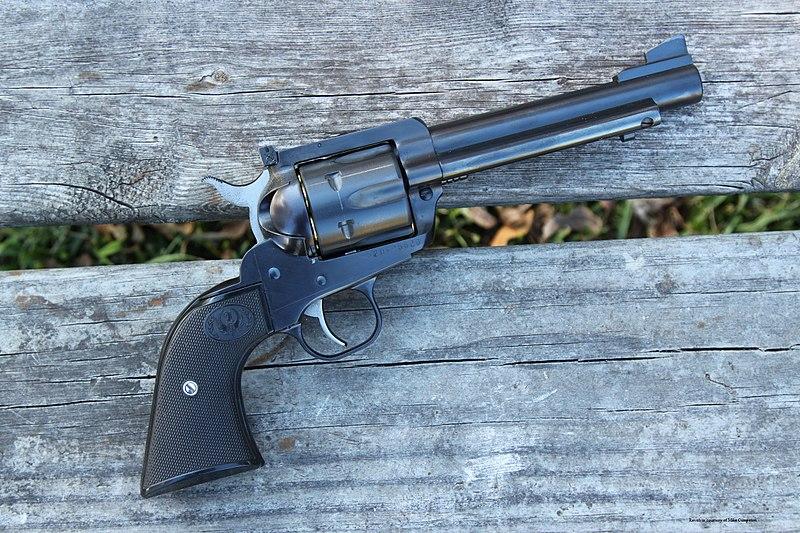
They’re outstanding for target work and recreational shooting but impractical for defensive use. Loading is slower through a side gate rather than a swing-out cylinder. These guns are about enjoyment and tradition rather than tactical efficiency.
Grip Considerations
The factory grips on most revolvers are compromises that work adequately for many shooters but ideally for few. Fortunately, aftermarket grip options abound for popular models.
Size matters tremendously. Larger grips distribute recoil over more hand surface, making powerful calibers more comfortable to shoot.
However, large grips print more obviously when concealed and can be difficult to reach around for shooters with small hands. Compact “boot” grips minimize printing but concentrate recoil into less hand surface—manageable with .38 Special, punishing with .357 Magnum.
Material affects both comfort and control. Rubber grips (Hogue, Pachmayr) absorb recoil effectively and provide excellent traction, even with wet or sweaty hands. Wood grips look classic but can be slippery and transmit more felt recoil. G10 and other synthetic materials split the difference—attractive, durable, and functional.
Grip shape must match your hand size. Small-frame revolvers often come with grips designed to minimize size rather than maximize comfort. If you have larger hands, your pinky finger will dangle off the bottom—annoying but not dysfunctional.
Conversely, if you have small hands, oversized grips force you to stretch your trigger finger, compromising control. Before buying aftermarket grips, handle different styles at a gun store if possible.
Popular revolver models enjoy extensive aftermarket support—you’ll find dozens of grip options for Smith & Wesson J-frames, K-frames, Ruger GP100s, and other common models. More obscure revolvers may have limited choices.
Speed Loaders, Moon Clips, and Reloading Options
Reloading a revolver is inherently slower than swapping a magazine, but the right equipment narrows that gap.
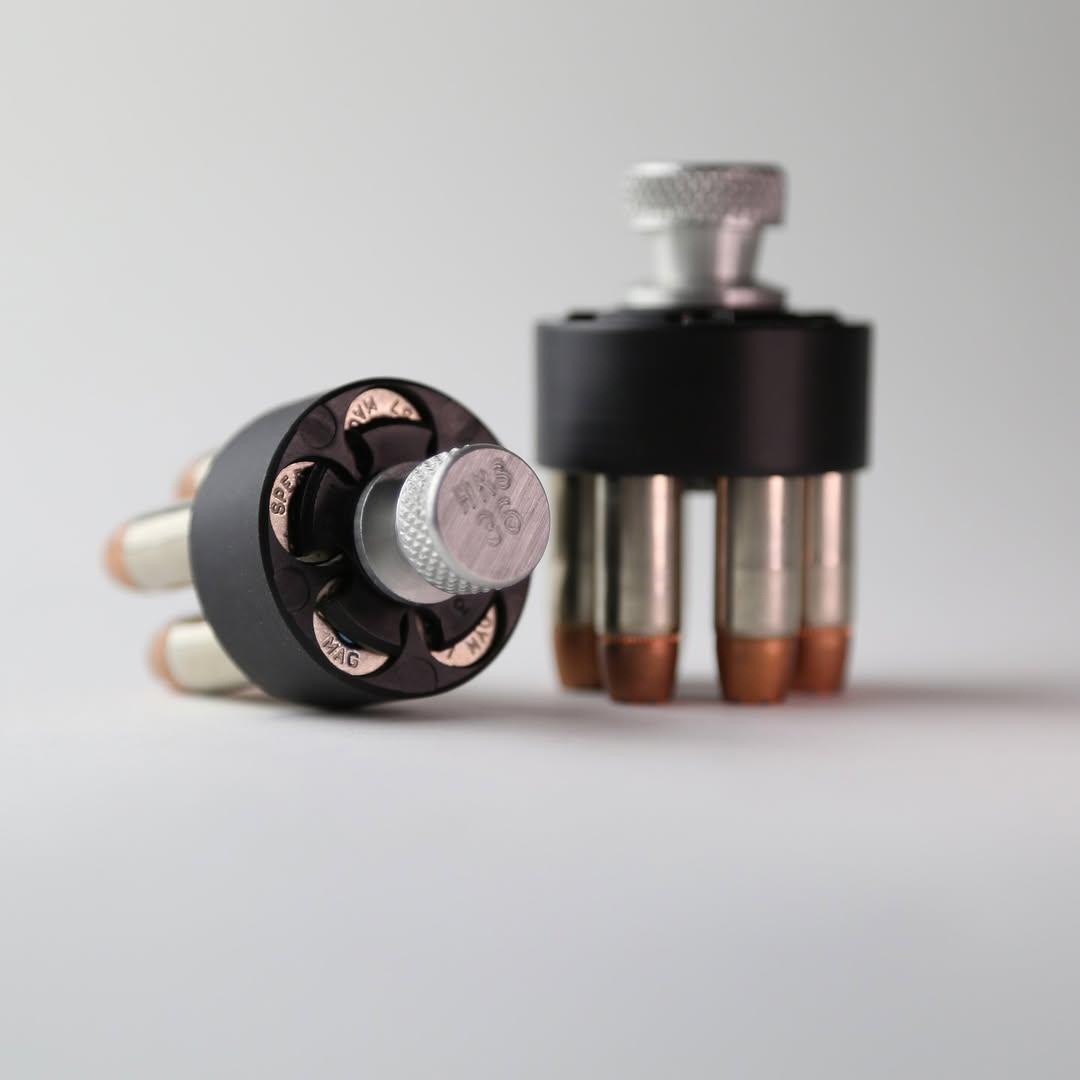
Speed loaders hold a full cylinder’s worth of ammunition in the exact pattern needed. Align the loader with the cylinder, twist or press the release, and all rounds drop in simultaneously. Quality speed loaders from HKS or Safariland run $10-15 each and are the standard reloading solution. The downside is bulk—they’re wider than the gun itself, making pocket carry awkward. Plan to carry them in a dedicated pouch.
Speed strips hold 5-6 rounds in a flexible rubber strip. You load two rounds at a time rather than all simultaneously, so they’re slower than speed loaders but dramatically slimmer and more comfortable in a pocket. They’re an excellent compromise for concealed carry.
Moon clips are thin metal discs that hold rimless cartridges (typically 9mm, .45 ACP, or .40 S&W in revolvers specifically cut for them). They allow lightning-fast reloads—actually faster than speed loaders since you’re not aligning individual chambers.
Extraction is also faster as the moon clip pulls all cases simultaneously. Some revolvers like the S&W Model 625 or 610 are specifically designed for moon clips, while others can be converted by a gunsmith. The trade-off is the moon clips themselves are somewhat fragile and require careful handling.
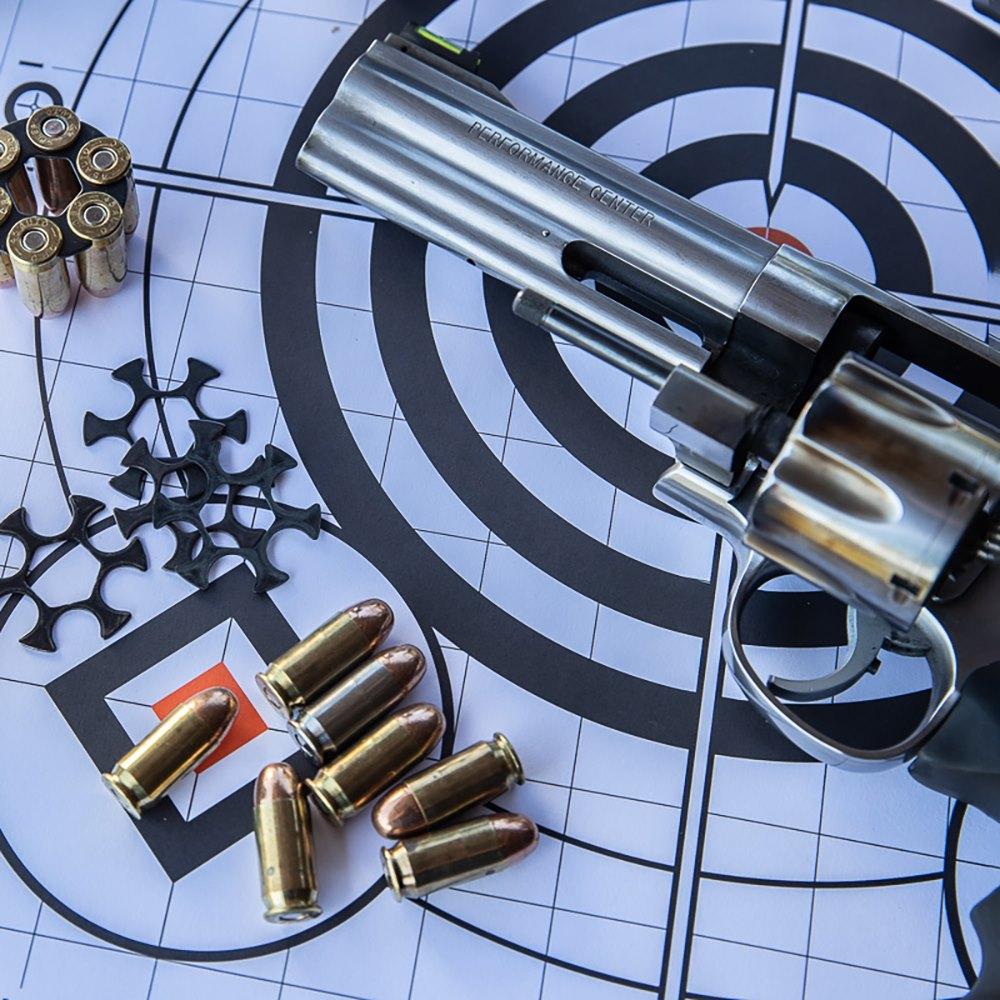
Loose rounds from a pocket represent your backup plan when you’ve exhausted prepared reloads. It’s slow and awkward, but it works. Keep loose rounds in a dedicated pocket separate from keys, coins, or anything else.
Holster Selection for Revolvers
Revolvers present unique holster challenges due to their cylinder bulk and lack of consistent mounting points.
Inside-the-waistband (IWB) holsters work well for small-frame revolvers but become uncomfortable with larger models due to cylinder thickness. The cylinder creates a bulge at your belt line that’s harder to conceal than a slim semi-automatic. If you’re carrying IWB, position the revolver at 3:30-4:00 (right-hand carry) where your arm naturally covers the cylinder bulge.
Outside-the-waistband (OWB) holsters suit revolvers better, especially medium and large frames. The cylinder rides outside your waistline, eliminating the discomfort issue. Concealment requires a covering garment like a jacket or untucked shirt. This is how most law enforcement carried revolvers in the revolver era.
Pocket holsters are perfect for small-frame revolvers like J-frames or LCR models. The holster breaks up the gun’s outline, protects the trigger, and keeps the gun oriented properly. Ensure your pockets are large enough and reinforced enough to support the weight—cargo pants or jacket pockets work better than dress slacks.
Ankle holsters work for backup guns or deep concealment but are slow to access and uncomfortable for heavy revolvers. They work best with lightweight, compact models and require practice to draw smoothly.
Chest holsters suit hiking and outdoor activities where you need quick access but don’t want hip weight. They work well with larger hunting revolvers.
One significant advantage of revolvers: retention isn’t as critical as with semi-automatics. There’s no slide to grab, and the cylinder won’t function if someone grabs it during a struggle. Simple friction-retention holsters work fine for most applications.
Maintenance Requirements
Revolvers earn their reputation for reliability partly through simplicity, but they’re not maintenance-free.
Routine cleaning after each range session involves removing the cylinder, cleaning the barrel from the breech end, wiping down the cylinder face and chambers, and removing carbon buildup from the forcing cone (the barrel’s rear taper where the cylinder meets). Neglecting the forcing cone can lead to accuracy degradation and increased lead spitting.
Cylinder crane alignment needs occasional checking. The crane is the arm on which the cylinder swings out. Over time, heavy use or dropping the gun can bend the crane slightly, causing the cylinder to misalign with the barrel. This affects accuracy and can damage the gun. If you notice degraded accuracy or see flame cutting on the topstrap, have a gunsmith check crane alignment.
Timing issues occasionally develop in well-used revolvers. Proper timing means the cylinder chambers align perfectly with the barrel as the hammer falls. If timing is off, bullets strike the forcing cone off-center, causing accuracy problems and potential safety hazards. If you notice any light strikes, double-fires, or unusual behavior, stop shooting and have a gunsmith inspect the gun.
Internal parts will eventually need replacement after thousands of rounds. Springs weaken, hand springs wear, and trigger return springs lose tension. This is normal wear and tear. Budget $100-200 for professional service every few thousand rounds for heavily-used revolvers.
Stainless steel revolvers tolerate more neglect than blued carbon steel, but even stainless will rust if consistently exposed to moisture without basic maintenance. A light coat of oil on external surfaces prevents corrosion. After carrying against sweaty skin, wipe down the gun and reapply a thin protective layer.
Common Beginner Mistakes to Avoid
After decades of watching new revolver shooters, I’ve seen the same mistakes repeatedly. Here’s how to avoid them:
Buying too light for the caliber. That 11-ounce scandium .357 Magnum looks perfect for concealed carry until you actually shoot it. The recoil is genuinely brutal, and most people end up shooting it once and then leaving it in the safe. If you’re new to revolvers, buy a gun you’ll actually practice with—typically a steel-framed .38 Special or a lightweight .38 (not magnum-loaded).
Ignoring grip fit. If the grip doesn’t fit your hand properly, you won’t shoot the gun well. Period. Don’t convince yourself you’ll adapt—either the grip works for your hand or it doesn’t. Be honest during the purchase process, and budget for aftermarket grips if the factory options don’t suit you.
Assuming all revolvers are equally reliable. Quality varies significantly between manufacturers and even between product lines from the same manufacturer. Stick with established brands (Smith & Wesson, Ruger, Colt) for your first revolver. Once you understand the platform, branch out if you’d like.
Neglecting trigger practice. Revolver triggers, especially double-action, require more technique than semi-automatic triggers. You’re both cocking and releasing the hammer with one long pull, making it easy to disturb your sight picture. Invest in snap caps and practice dry firing extensively. The trigger pull doesn’t get lighter, but your control of it improves dramatically with practice.
Short-stroking the trigger. In double-action, you must pull the trigger fully to the rear and let it completely forward for reset. Lots of new shooters rush, release the trigger partway, and wonder why the gun won’t fire. Slow down and feel the complete cycle—the problem usually self-corrects with conscious attention.
Expecting semi-automatic capacity. If you’re transitioning from a 15-round 9mm to a 5-shot J-frame, adjust your mindset accordingly. Revolvers hold fewer rounds, reload slower, and require more careful shot placement. They excel in reliability and simplicity, not magazine capacity. Choose the right tool for your specific needs.
The key to choosing your ideal revolver is matching specifications to your intended use while being honest about your skill level and commitment to practice. A perfect target revolver makes a terrible concealed carry gun and vice versa. Understand your priorities, handle as many options as possible before buying, and remember that even a budget revolver from a quality manufacturer will serve you well if it fits your needs.
FAQs
What is the most reliable revolver?
Are revolvers better than semi-automatic pistols for self-defense?
What is the best revolver for home defense?
What is the best revolver caliber for beginners?
How many bullets does a revolver hold?
What is a double-action revolver?
What is a single-action revolver?
Can a revolver jam?
Can you dry fire a revolver?
Can you put a suppressor on a revolver?
Wrapping it up
Ultimately, the Colt King Cobra .357 Magnum is the perfect revolver for most users. It balances durability and user comfort better than most pistols on the market and it’s designed for concealed carrying or general open carrying depending on your preference.
But overall, any of the above revolvers should perform well and will be top purchases, so long as you use them as intended. Thanks for reading!
Meet the Experts

Written By
Michael Crites
Licensed Concealed Carry Holder
- Founder of AmericanFirearms.org
- Licensed Concealed Carry Holder
Guides
Further Reading
![In-Depth Review: M&P Shield 2.0 Compact [Hands-On]](/_next/image/?url=https%3A%2F%2Fcms.americanfirearms.org%2Fwp-content%2Fuploads%2F2023%2F01%2Ftmpkho7avde.jpg&w=3840&q=75)

Updated
December 28, 2025 — Added comprehensive “How We Test” methodology detailing our testing protocols. Replaced Heritage Rough Rider with detailed Ruger Wrangler review covering all four variants. Added Taurus 856 TORO as first optics-ready small-frame revolver.